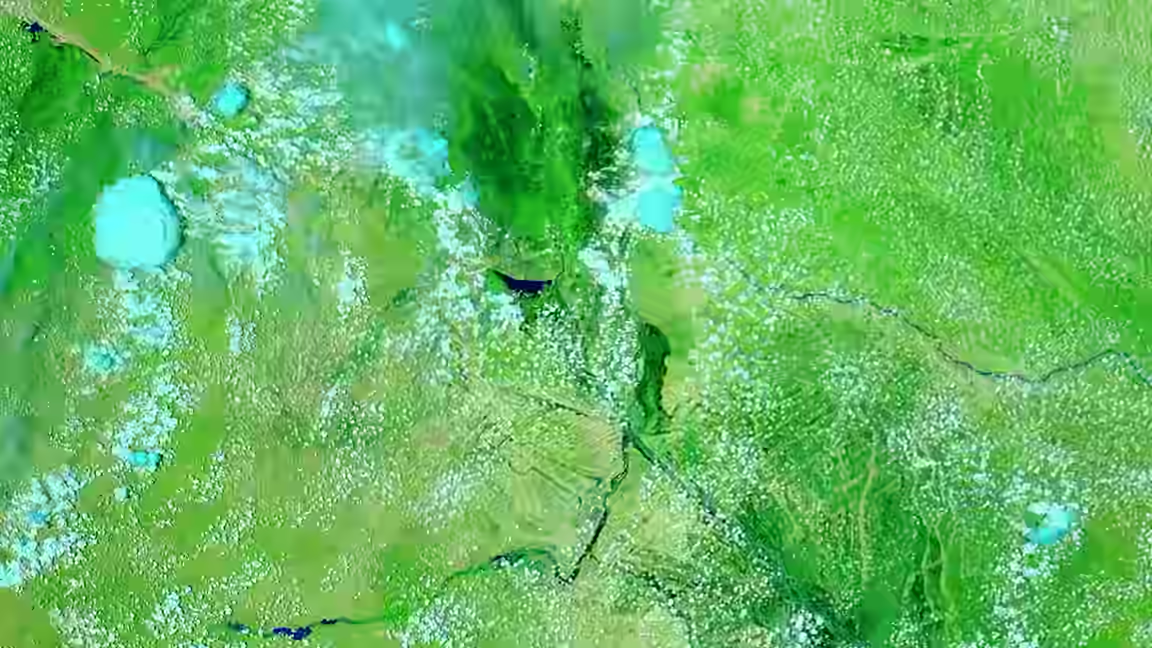
Nigeria was dealing with severe flooding in the northeast on Aug. 26, 2024, after heavy rains killed at least 49 people and displaced 41,344 others, according to the National Emergency Management Agency. The agency said Jigawa, Adamawa and Taraba were the hardest-hit states.
The scale of the displacement is as important as the death toll. NEMA said the floods affected tens of thousands of people, with families forced out of their homes while the rainy season had not even reached its peak. That alone made the event a warning rather than a finished disaster report.
Officials also said the floods had destroyed farmlands, with about 693 hectares of agricultural land affected. In a country where food prices are already under pressure, that matters because flooding can quickly turn into a broader food and inflation problem when harvests are lost or planting is interrupted.
The source packet also points to the wider pattern of risk. NEMA said 31 of Nigeria’s 36 states were at risk of experiencing high flood conditions this year, and officials said there was concern about heavy rainfall and high water moving in from upriver areas before reaching Nigeria. That means the reported damage could still grow.
The report recalled Nigeria’s devastating 2022 floods, which killed more than 600 people, displaced around 1.4 million and destroyed 440,000 hectares of farmland. That comparison does not mean the 2024 flood would reach the same scale, but it does show why authorities were already sounding the alarm.
Haruna Mairiga of the Jigawa Emergency Management Agency warned that September and October could be even wetter, saying the state was only beginning to see the full force of the season. His comments underline the central problem in the story: the crisis was unfolding while more rain was still ahead.
That makes the verified facts straightforward but serious. Flooding had already killed dozens, forced more than 41,000 people from their homes and damaged farmland across three states. With the rainy season still peaking ahead, the event was as much a live emergency as a completed one.
The agency's warning matters because the rainy season had not yet peaked, so the current toll was not necessarily the final one. That means the figures already reported can be read as a midpoint in a larger emergency rather than the end of the damage. Officials were effectively saying that more rain could still translate into more displacement, more losses and more pressure on emergency services.
The comparison with 2022 is the clearest sign of why the report matters beyond the immediate casualty count. Nigeria has already seen how fast floods can turn into a national-scale disaster, and the current losses in Jigawa, Adamawa and Taraba show the same vulnerability pattern: homes, farmland and livelihoods hit at the same time. That is why even a single flood report can carry food-security implications well beyond the northeast.
For that reason, the reported toll should be read as a warning about what the rest of the season could still bring, not as the final word on the flood emergency.


