Local reporting in Sudan said the Arbaat Dam north of Port Sudan burst on the night of Aug. 24, 2024, after heavy seasonal rainfall, leaving dozens dead and many more missing. Al Jazeera said the Federal Ministry of Health first reported four deaths, but later local outlets put the toll at at least 60.
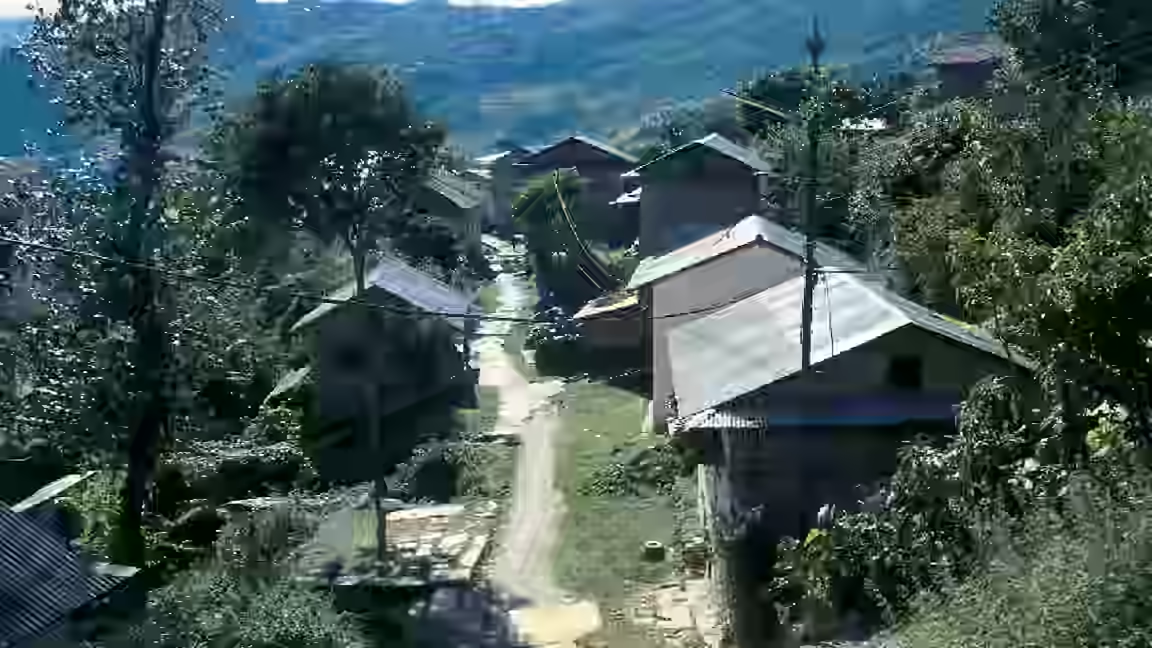
The collapse sent floodwater through the area around Port Sudan, sweeping away homes and damaging villages. The UN said 20 villages had been destroyed and that the homes of 50,000 people were destroyed or damaged. That gives the disaster both a death toll and a major housing crisis.
The dam is especially important because it is the main water supply for Port Sudan, which has become the administrative capital while fighting has overtaken Khartoum. The collapse therefore raised fears not only about lives lost in the flood but also about drinking-water shortages for a city already under strain.
The report said exact details were hard to verify because of mobile network outages. That means the numbers are still fluid, but the direction of the story is not: a dam failure in a country already facing war has added another emergency on top of an existing humanitarian disaster.
The wider context is severe. Sudan has been at war since April 2023, with the army fighting the paramilitary Rapid Support Forces. The conflict has driven displacement, damaged infrastructure and made aid work far harder. Flooding since the end of June had already affected an estimated 317,000 people across 16 states before the dam collapse was added to the list of crises.
The Ministry of Health also said the nationwide flood death toll had risen to 132. That figure shows how the dam collapse sits inside a broader seasonal disaster rather than standing alone as an isolated event.
Even with the uncertainty around exact casualty counts, the scale of destruction is obvious. Villages were lost, water infrastructure was hit and tens of thousands of households were affected. The report points to a disaster that is both immediate and cumulative, because it lands in a country that is already overloaded.
For Port Sudan, the key question now is whether water access can be maintained while rescue and damage assessment continue. The evidence supplied here does not answer that question, but it makes clear why the collapse is being treated as one of Sudan’s most serious flood-related disasters of the season.
The packet gives both a lower and a higher death toll because the reporting was still fluid. That uncertainty is not a weakness of the article; it reflects the real conditions on the ground, where outages and wartime disruption make verification difficult.
The collapse also matters beyond the immediate flood zone because Port Sudan depends on the dam for water. That means the crisis is not just about destroyed villages or missing people. It is also about whether a city already under pressure can keep enough drinking water flowing.
The scale of the farmland damage matters because it turns flooding into a food-security issue as well as a casualty story. With inflation already high, any additional loss of crops or planting area can hit households far beyond the immediate flood zone. That is why officials are treating the season as a continuing threat.