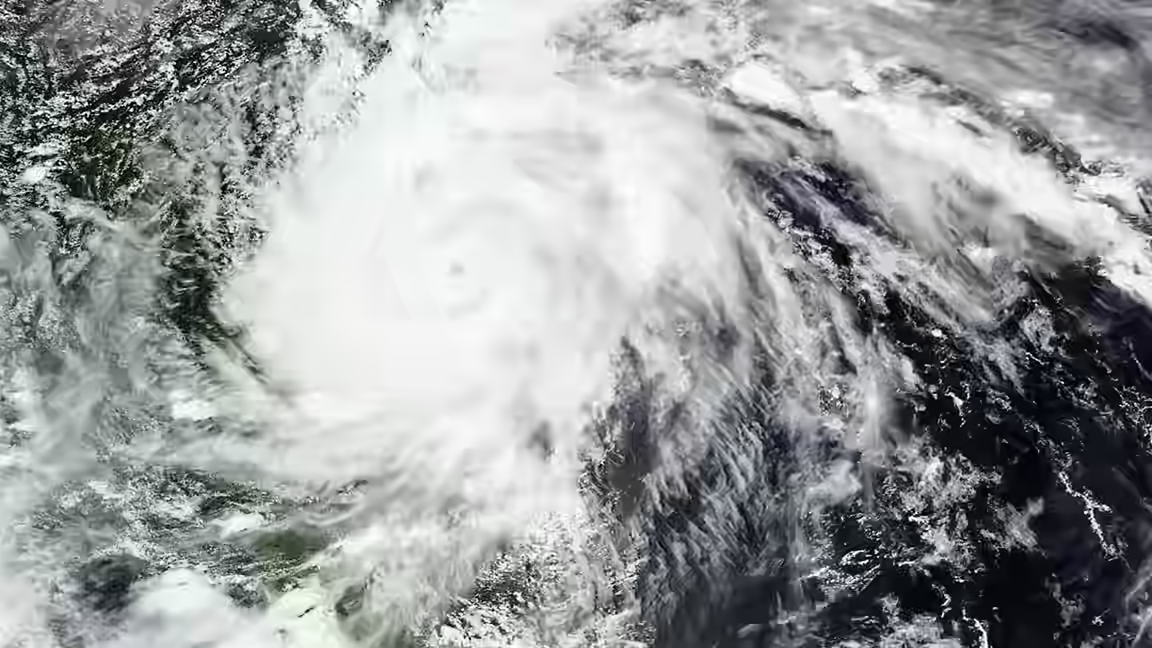
Typhoon Yagi tore across northern Vietnam and left at least 59 people dead and hundreds injured, according to the supplied BBC report on the event date. Although the storm has since been downgraded to a tropical depression, officials warned that more flooding and landslides remained possible as it moved westward.
The source says Yagi made landfall in Vietnam on Saturday and hit Hai Phong and Quang Ninh provinces with winds of up to 203 km/h. Those winds lifted roofs, uprooted trees and cut power across the region, including in Hanoi. The storm then continued to cause deaths and damage through landslides, flooding and infrastructure collapse.
At least 44 of the victims were killed by landslides, according to the Ministry of Agriculture and Rural Development. The report also describes a deadly hillside collapse in Hoa Binh province that killed four family members, and a landslide in Sa Pa that buried 17 people and left nine injured. These incidents show that the danger was not limited to the immediate coastline; inland slopes were also deadly.
The human and economic damage was widespread. The report says a bridge in Phu Tho province collapsed, sending vehicles into the Red River, with people still missing at the time of reporting. Some 41 fishing boats were sunk or left adrift, and search teams found people drifting at sea after fishermen were reported missing. In Hai Phong, floodwaters reached half a metre in places and damaged power lines and poles.
Nearly 50,000 people were evacuated from coastal towns, and schools were temporarily closed in 12 northern provinces, including Hanoi. That scale of preventive action suggests officials had to respond not only to the storm itself but to the secondary hazards created by saturated land, damaged infrastructure and the risk of further collapses.
The report places the storm in a regional context too. Before reaching Vietnam, Yagi had caused devastation in China’s Hainan island and in the Philippines, where it killed at least 24 people, according to AFP. The broader picture is of a powerful tropical system moving across several countries and leaving fatalities and destruction in its path.
The source also notes that a super typhoon is equivalent to a Category 5 hurricane, and it briefly explains how warmer oceans and a warmer atmosphere can intensify storms. That context is useful because Yagi’s scale and persistence fit the wider pattern of stronger tropical systems producing heavier rainfall and more severe damage.
For Vietnam, the event date toll was already heavy and still likely changing as rescue work continued. The numbers in the report are a reminder that the deadliest impacts of major storms often come not just from wind, but from landslides, floods and infrastructure failure after landfall.
The confirmed picture is grim: at least 59 dead, hundreds injured, widespread evacuations and a continuing threat of flooding as Typhoon Yagi weakened but did not stop causing harm.