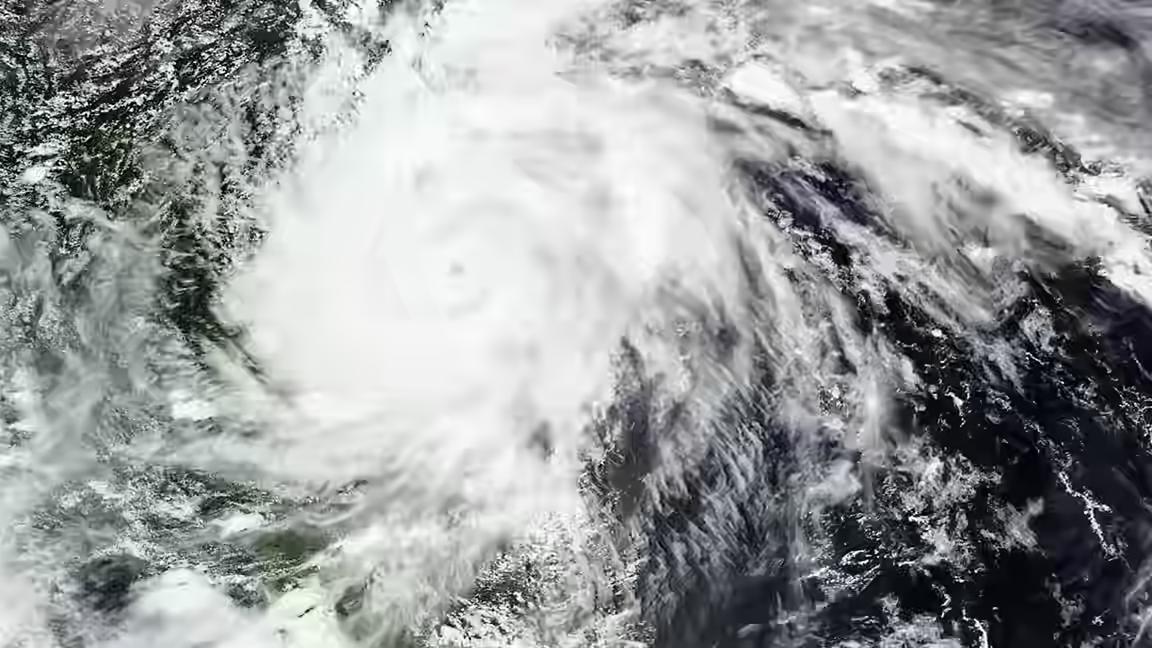
Vietnam’s death toll from Typhoon Yagi rose to 233 on Friday as authorities and rescue workers kept searching damaged areas hit by landslides and flooding across the north of the country.
The updated toll reflects new bodies found in places battered by the storm’s aftermath. Yagi was described as the strongest typhoon to hit Vietnam in decades, and it left a wide trail of destruction even as floodwaters began to slowly recede in some neighborhoods around Hanoi.
In An Lac village on the outskirts of the capital, residents used boats to reach flooded homes and began cleaning up as water levels dropped. The Cau river nearby had swelled during the storm, sending floodwaters into homes and streets. AP images from the area showed people paddling through submerged roads, wading through water with cleaning tools and returning to damage that had only just become visible as the floods eased.
The storm’s effects were not limited to Vietnam. The AP report noted continuing flooding and landslide risks in neighboring countries, including Thailand and Myanmar, where officials were also dealing with deaths, displacement and emergency shelter needs. That wider regional context underscored how severe Yagi had become as it moved through Southeast Asia.
Within Vietnam, search operations continued in provinces hit hardest by landslides and flooding. The report said rescue workers were looking for people still missing after a flash flood buried a hamlet in mud and debris in Lao Cai province. The scale of the disaster was still unfolding even as the water started to retreat in low-lying parts of Hanoi.
The human toll was already severe. More than 820 people were reported injured, and 103 remained missing, according to the event summary tied to the AP reporting. The numbers pointed to a disaster with consequences that would continue long after the rain passed, especially in rural and mountainous areas where landslides can cut off roads and slow rescue efforts.
The storm also highlighted the vulnerability of fast-growing cities and river communities to flooding. In Hanoi’s An Lac village, the return of residents to clean up did not signal a return to normal. Instead, it marked the beginning of a longer recovery, with damaged homes, blocked roads and uncertainty over the missing.
As responders kept working, the focus shifted from immediate survival to accounting for the dead and missing, repairing critical infrastructure and finding temporary shelter for people whose homes were no longer livable. The latest figures suggested that even after Yagi had weakened, its consequences were still mounting across northern Vietnam.