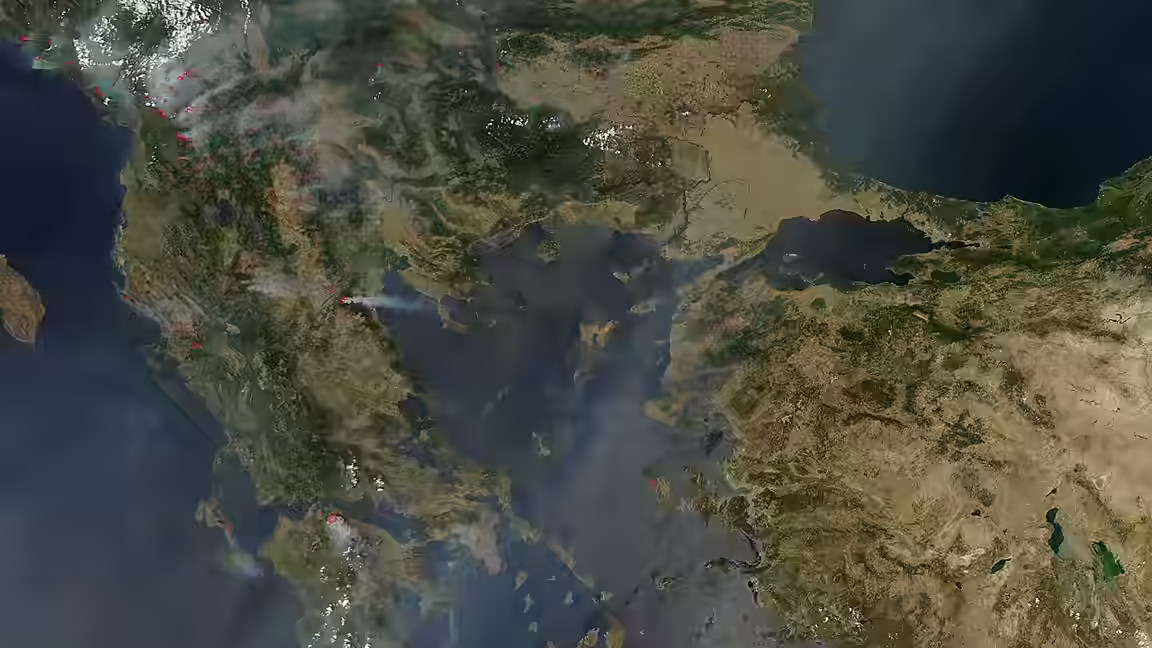
Greek authorities said four people died after a small boat carrying migrants sank off the island of Samos in the eastern Aegean Sea.
The event date for this report is Sept. 23. The packet says the bodies of three women and a girl were found in the water, while five other people were rescued from the sea and 26 more made it safely to shore. A large search and rescue operation remained under way because survivors said one or two additional people might still be missing.
The boat had been travelling from nearby Turkey in windy waters off Samos when it ran into trouble. The source material does not say exactly how the dinghy sank, and it does not identify the dead or the survivors. That leaves important gaps, but not enough gaps to obscure the core facts: a short crossing turned into a fatal shipwreck, and rescue teams were still searching for anyone left behind.
A local resident alerted authorities after hearing screams and cries for help from the sea. That detail highlights how quickly these incidents can unfold and how often nearby people are the first to realise something has gone wrong. It also shows the role ordinary residents can play in alerting coast guards to an emergency before the full scale of the disaster becomes visible.
Sonia Balleron, head of the Greece mission for Doctors Without Borders, said the group was shocked and outraged by the sinking and was providing emergency support to survivors. The packet also quotes her as blaming inhumane migration policies for the deaths. That is a political judgment, not a fact to be presented as settled, but it reflects the broader debate over why people continue to risk these crossings.
Greece lies on one of the most heavily used routes into the European Union for people fleeing conflict and poverty in the Middle East, Africa and Asia. Despite increased patrols along the land and sea border with Turkey, thousands still attempt the crossing, often in flimsy inflatable dinghies. The packet also says smugglers have increasingly used powerful speedboats in recent months, which suggests the methods are evolving even as the danger remains.
The Samos incident is another reminder that migration deaths are often counted in fragments: first the bodies recovered, then the survivors, then the missing. The initial toll in this case was four dead, five rescued and 26 on land, with the possibility that one or two more people had not yet been found. That means the outcome was still unsettled when the report was written.
The story carries the familiar tension of the eastern Mediterranean migration route: close to shore but still deadly, visible to rescue crews but not always reachable in time. For the people on board, the crossing was a bid for safety or opportunity. For rescue workers, it became another operation in a long chain of emergencies. And for Europe, it is one more example of how the migration question keeps returning in the form of human loss at sea.