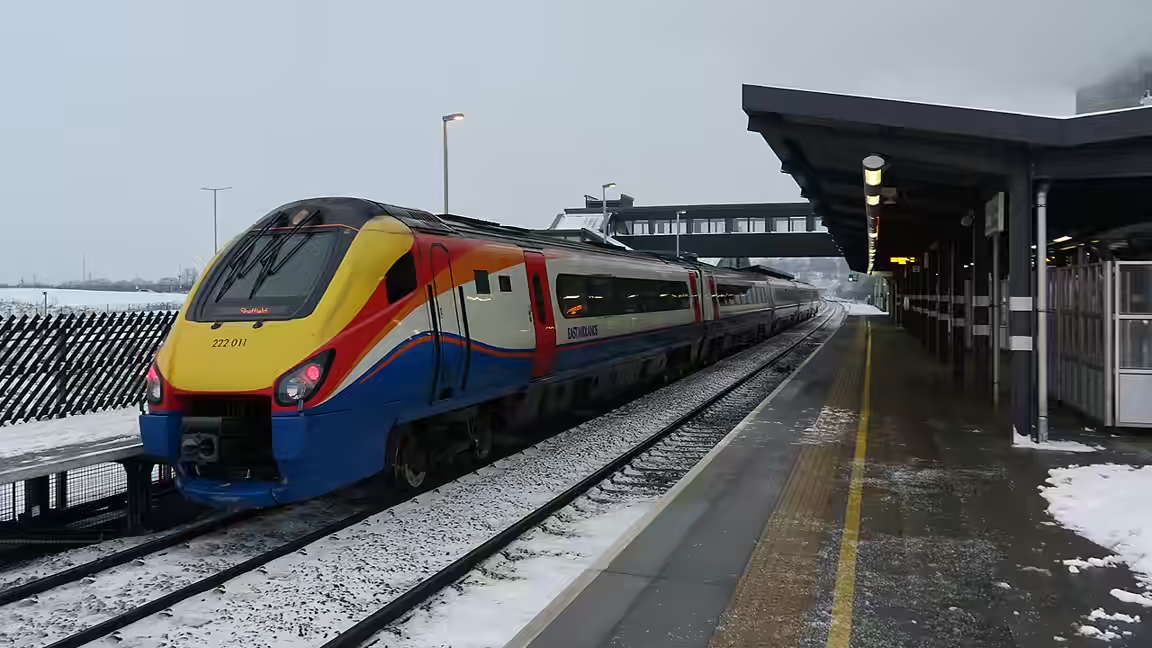
A passenger died and 15 others were injured when two trains collided in Powys, mid Wales, on the event date. The Rail Accident Investigation Branch said a westbound service went about 1,000 metres beyond its stopping point before hitting a stationary train on a single-track line. The crash happened near the village of Llanbrynmair at about 19:30 BST, and the collision was described by Network Rail and Transport for Wales as low-speed. Even at low speed, the impact was enough to cause a fatality, multiple serious injuries and a full investigation.
The man who died was in his 60s and had been travelling from Shrewsbury. British Transport Police said they did not at that stage believe his death was caused by injuries from the crash, which means the medical and legal picture was still being sorted out. Four other people were seriously injured, and a further 11 required hospital treatment. The Welsh Ambulance Service took seven patients to hospital by ambulance, while other casualties were transported or treated through a larger emergency response.
The RAIB's initial inspection suggested the train may have entered wheel slide when braking. It also said preliminary evidence indicated the collision occurred at about 24 km/h, or 15 mph. That detail matters because it points to a technical or operational problem rather than a high-speed derailment or catastrophic failure. Transport for Wales said the line is made up of stretches of single track with passing loops, which means trains are supposed to stop and pass each other at controlled points. The central question is why that process failed.
Witnesses described a scene of shock and confusion. Passenger Anthony Hurford said he felt shell-shocked and described the incident as brutal, while Ifan Edwards, who lives nearby, said he saw ambulances, an air ambulance and coastguard helicopters. Their accounts show how a relatively low-speed collision still produces a major emergency operation when passengers are hurt and the train line is blocked. The line east of Machynlleth was closed while investigators worked, and road replacement services were put in place.
The incident prompted immediate political attention. Welsh First Minister Eluned Morgan said her thoughts were with those involved, while UK Transport Secretary Louise Haigh said she was incredibly sorry and stressed that safety on the railways was her absolute priority. Transport Minister Ken Skates told the Senedd that lessons would be learned as soon as possible. Those responses underline that train safety is not just a technical issue but a public one, especially on a rural line where passing loops, braking and slippery conditions all matter.
The source also notes that services on the Heart of Wales line were suspended because of poor rail conditions, and that earlier warnings had mentioned extremely slippery track near Dovey Junction. That context does not prove the cause of the crash, but it does show the operating environment was difficult on the day. The investigation will take months, Transport for Wales said, and the central question remains simple: why did one train fail to stop where it should have stopped? Until investigators answer that, the collision stands as a grim reminder that even a low-speed crash can turn fatal.