Nearly half a million children in the Amazon were facing shortages of water and food or limited access to school as of Nov. 7, 2024, according to a UNICEF-backed UN report cited by The Guardian. Two years of severe drought had drained rivers that communities rely on for transport, leaving remote settlements cut off and making the rainforest far less accessible than usual. The story is about climate, but it is also about how climate stress quickly becomes a child-protection problem.
The report says more than 1,700 schools and 760 health centers in the Amazon had become inaccessible or out of reach because the rivers were too low for boats to navigate. That matters because, in much of the region, rivers are roads. When they disappear into sandbanks, families lose access not only to food and water but also to routine education and medical care. The result is a cascading form of isolation that hits children first.
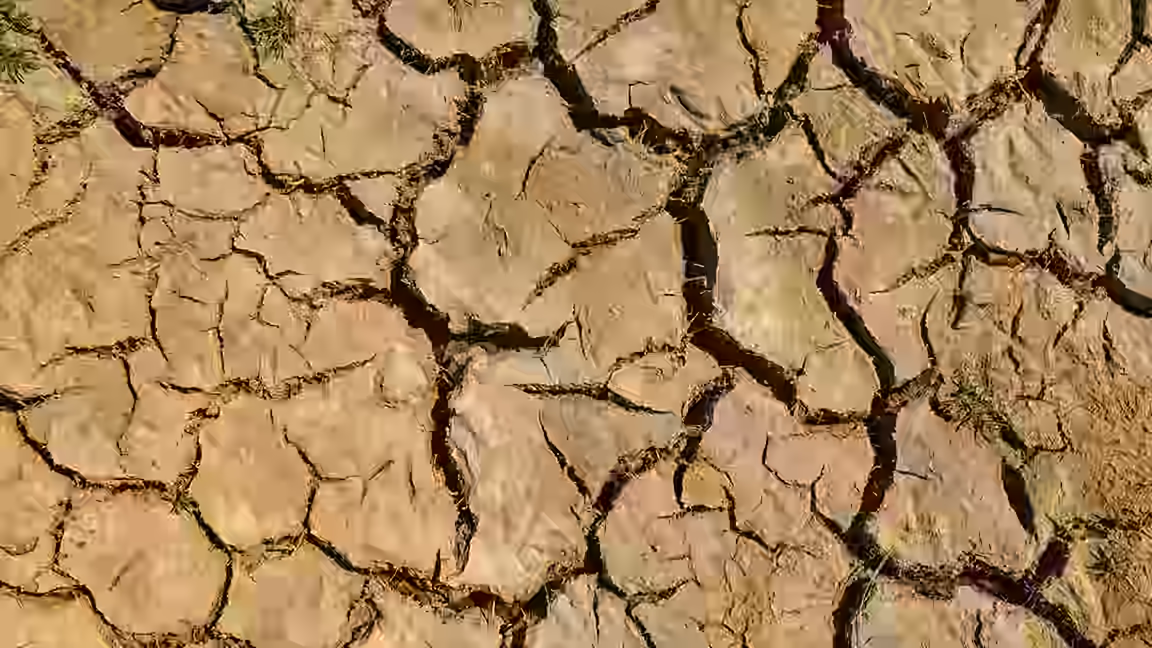
The drought itself was extreme. In October, the Solimões and Rio Negro, two of the Amazon's major tributaries, reached their lowest levels since records began in 1902. The report says rivers have been pulled back so far that travel by boat has been paralyzed in many places. UNICEF manager Antonio Marro described the situation for the most remote communities as life-threatening, saying children are contracting dengue fever, malaria and other serious diseases while struggling to reach treatment.
The effects go beyond illness. In 14 communities in the southern Amazon in Brazil, half of the families surveyed said their children were currently out of school because the dry conditions had made it too hard for teachers and students to travel. The report also says children under five face higher risks of infections, malaria and malnutrition, and that babies born during extreme drought or flooding have been found more likely to be premature or underweight.
UNICEF estimated that $10 million was needed in the coming months for urgent supplies, medicines and support to public services in Indigenous communities in Brazil, Colombia and Peru. It also noted that the health of the Amazon affects the health of everyone who depends on the region's climate function. The article should keep that link clear: this is a local drought story with regional human consequences and a wider environmental meaning.
The report's school and clinic numbers show why the drought is more than an environmental headline. When rivers retreat so far that teachers and health workers cannot reach communities, children lose both education and routine medical support at the same time. That combination helps explain why UNICEF treats the emergency as a child-welfare problem as much as a climate one.
The Amazon also matters beyond the region itself because it regulates weather patterns and stores carbon. The packet does not turn that into policy argument, but it does say the health of the Amazon affects the health of everyone. That is the larger point behind the report's funding request: a relatively small amount of emergency money is needed now to protect communities whose river access, schools and clinics have been cut off by drought.