At least 15 people were killed and 113 others were missing after landslides hit eastern Uganda’s Bulambuli district, according to Al Jazeera’s report based on police and local official updates. The disaster came after heavy rains destabilized hillsides in the mountainous area and buried homes in at least six villages.
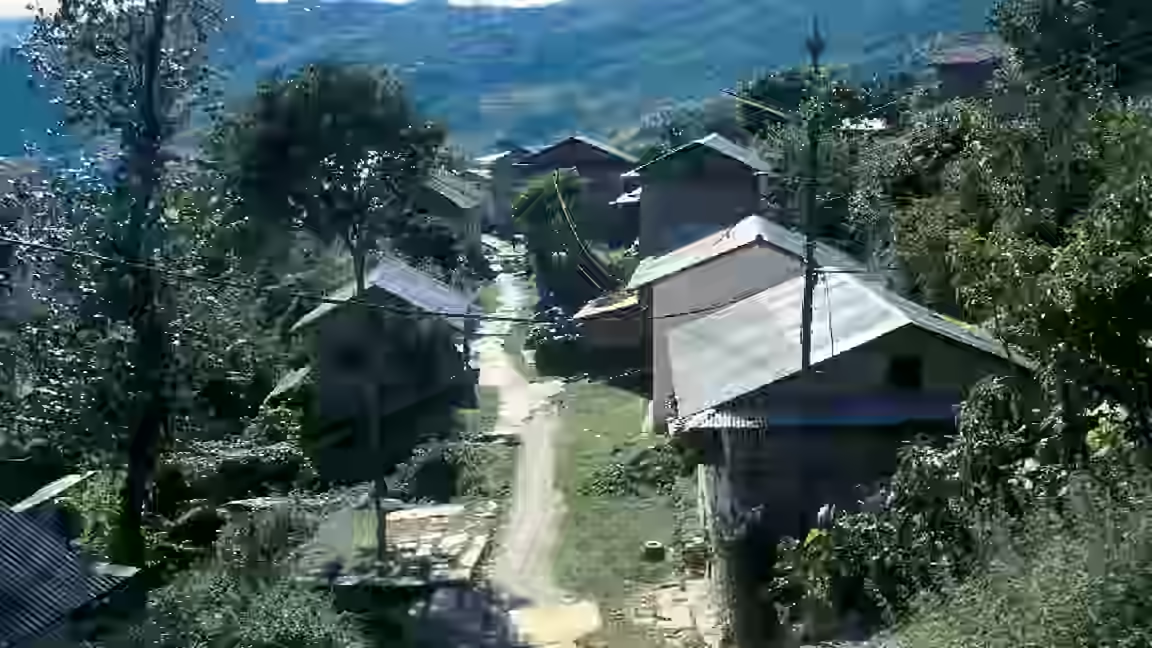
Police said the death toll rose to 15 on Thursday after landslides the previous night. The missing were spread across six villages in Bulambuli, a district that sits in a vulnerable, steeply sloped part of the country. Images from local media showed broad swaths of earth covering houses in Masugu, while social-media video appeared to show residents digging through debris in Kimono in search of survivors.
The Uganda Red Cross Society said the rescue effort was still underway and warned that the number of dead was likely to rise. District commissioner Faheera Mpalanyi told AFP that six bodies, including that of a baby, had already been recovered and that roughly 30 people may have been lost. Her account captured the scale of the devastation: families were not simply reporting missing neighbors, they were describing people who may already be buried under the mud and rock.
The landslides were part of a wider weather emergency in Uganda. Heavy rains in recent days also caused flooding in the northwest after a tributary of the Nile River burst its banks. The prime minister’s office issued a disaster alert on Wednesday, saying main roads across the country had been cut off. Emergency teams were sent to rescue stranded motorists, showing that the weather system was disrupting transport far beyond the initial landslide zone.
The report also noted that a road connecting Uganda with South Sudan became impassable and that emergency boat crews were deployed near Pakwach. One of those boats later capsized, killing one engineer from Uganda’s defence forces. That detail illustrates how quickly one weather emergency can cascade into another when transport routes are cut and rescue operations have to improvise.
Bulambuli’s topography helps explain why the damage was so severe. In mountainous districts, saturated soil can give way suddenly, especially after prolonged or intense rain. Once the slope fails, houses can be buried in minutes. That is why landslide disasters often produce a painful mismatch between the speed of the event and the slow, uncertain pace of rescue.
The number of missing people remains the central concern. A missing-person count of 113 implies a search that is still very much in its earliest and most uncertain phase. In disasters like this, initial tolls tend to shift as teams reach isolated villages, compare family reports with recovery efforts and clear debris enough to know which houses were occupied.
For now, the confirmed facts are stark enough: a heavy-rain event hit one of eastern Uganda’s most vulnerable districts, buried villages and left dozens of families waiting for news. The final death toll could be higher, and rescuers were still working against time and terrain to determine how many people remain trapped below the earth.
The landslides also highlight a broader challenge that many countries face as weather patterns intensify: even where warnings exist, steep communities can be exposed long before emergency resources arrive. In Bulambuli, the combination of rain, slope and settlement has already turned into a catastrophe.