# South Korea impeaches President Yoon after martial law shock
South Korea’s parliament has voted to impeach President Yoon Suk Yeol after his short-lived declaration of martial law threw the country into its worst political crisis in years. The evidence for 2024-12-14 says the motion passed by just more than the required two-thirds majority after 12 members of Yoon’s own party sided with the opposition.
The vote marks a dramatic fall for the conservative president, but it does not end the process. Under South Korea’s system, the Constitutional Court must now decide whether to uphold the impeachment and remove Yoon from office or reject it and restore his powers. That judicial phase is now the main political test.
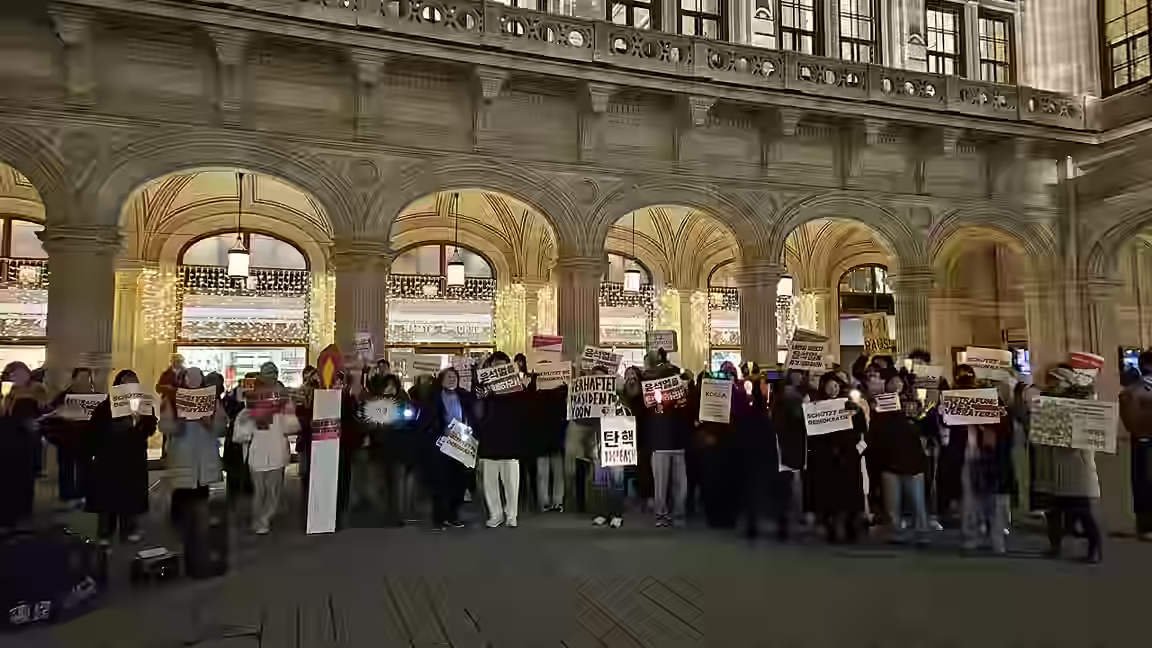
The evidence describes huge crowds gathering outside the National Assembly to celebrate the vote. It also says the prime minister, Han Duck-soo, who is now acting president, vowed to ensure stable governance and avoid any vacuum in state affairs. The government’s message was intended to reassure allies and markets that the state would keep functioning.
Yoon’s decision to declare martial law two weeks earlier was the trigger for the crisis. The evidence says that move plunged the country into turmoil and turned the impeachment vote into a test of institutional resilience. Once parliament acted, the focus shifted from whether Yoon could survive politically to how the courts would respond.
The vote also revealed deep divisions inside the ruling camp. Without support from 12 members of Yoon’s party, the opposition would not have reached the threshold needed to impeach him. That internal break shows the president’s authority had already been badly weakened before the vote was held.
South Korea now faces an unusual constitutional moment. The impeachment has been passed, but the presidency has not yet ended. Protesters may have celebrated outside parliament, but the legal and political battle is still unfolding in the court system and within the ruling conservative bloc.
The event date is 2024-12-14, and the evidence makes clear that this was not a routine parliamentary dispute. It was a direct response to a martial law declaration that upended normal politics and forced South Korea’s institutions to decide how far executive power can go before parliament and the courts step in.
The court phase will determine whether the impeachment becomes permanent or whether Yoon returns to office. That makes the coming weeks crucial not just for the president but for South Korea’s wider political balance, because the impeachment revealed both public anger and an internal split inside the ruling camp. The evidence suggests the crisis is no longer just about martial law itself; it is about how much authority an elected president can lose once parliament and the streets turn against him.


