A speedboat carrying migrants capsized off the eastern Greek island of Rhodes on the event date of December 20, 2024, killing eight people, including a child, and leaving 18 others rescued from the sea.
According to the AP report, the vessel was moving in the southeastern Aegean Sea when it made what the coast guard described as dangerous maneuvers in an apparent attempt to evade a patrol boat. That movement appears to have been the immediate trigger for the disaster: migrants fell into the water, the boat overturned and rescuers were left to pull survivors from a busy smuggling route in winter conditions. The source says rescue crews worked from three coast guard vessels and a helicopter near Afantou Beach on the northeast side of the island.
The human toll was immediate. Shipping Minister Christos Stylianides said a child was among the dead, and local officials said eight of the survivors were hospitalized, including one in critical condition. The source also says two of the survivors were arrested on people-smuggling charges, which makes clear that Greek authorities viewed the incident not just as a maritime accident but as part of a trafficking operation. That distinction matters because the event sits at the intersection of migration pressure and criminal logistics, where the dangers are amplified by the speed and secrecy of the journey.
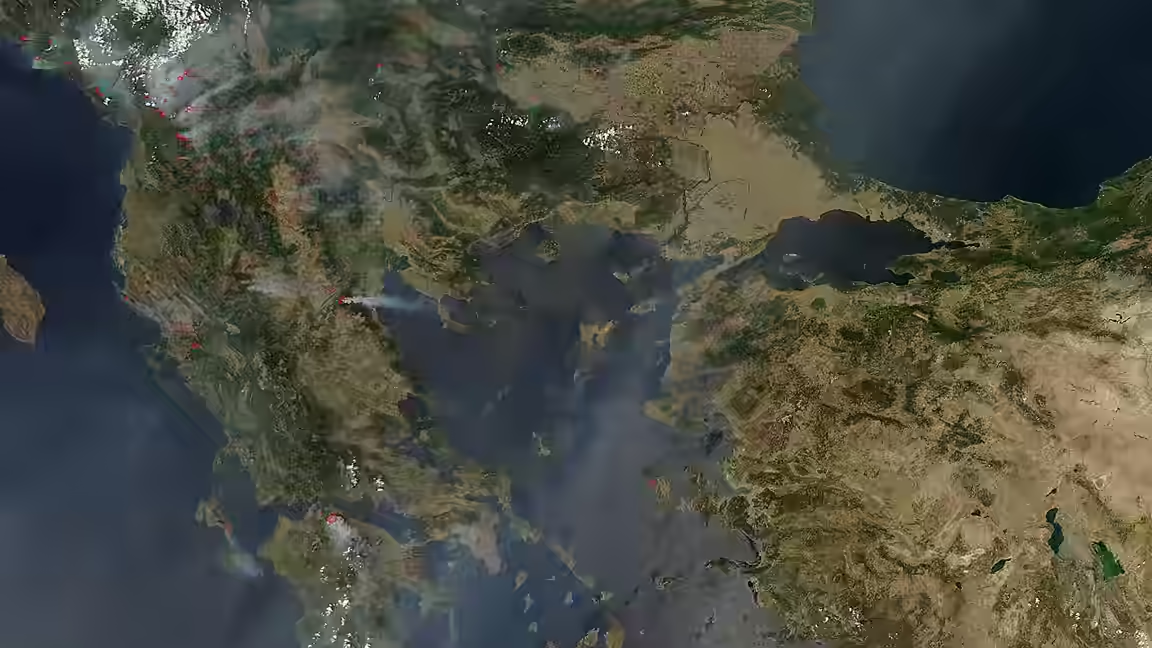
Rhodes is one of the Greek islands closest to Turkey and sits on a route that smugglers use to move people into the European Union. The AP report says the island is on a busy illegal smuggling route in the eastern Mediterranean, a simple line that explains why such boats keep appearing in Greek waters despite repeated enforcement efforts. When traffickers use fast, overloaded craft and try to outrun patrols, passengers often pay the price long before they reach shore.
The statement from Stylianides was blunt about that broader reality. He said a ruthless trafficking network had sacrificed eight lives, including a young child, in pursuit of profit. That assessment reflects the policy framing Greek officials often use after migrant tragedies: the deaths are not treated as isolated misfortunes but as evidence of an organized business model built on dangerous crossings and disposable passengers.
The source also indicates the search did not stop with the first 18 rescues. It says authorities were still trying to determine whether other passengers remained missing, and it notes that some bodies were carried into ambulances at the main port under tarps held by police and emergency workers. That detail underscores the speed with which a smuggling voyage can become a recovery operation.
This event is part of a larger and continuing pattern in the central and eastern Mediterranean, where crossings from North Africa and Turkey have repeatedly ended in drownings, arrests and mass rescue operations. The packet does not provide a final passenger count or a full account of who organized the crossing, but it does provide enough to establish the verified core: a speedboat capsized while evading patrols, eight migrants died, 18 were saved and Greek authorities moved quickly against suspected smugglers.