# Peru Beach Communities Protest PetroPeru After Spill Cleanup Claims
*Event date: December 24, 2024*
By IO Digest Desk
Residents of Lobitos and Cabo Blanco in northern Peru protested on December 24 after state-owned oil company PetroPeru said beaches affected by a recent spill had been cleaned completely, with local people insisting that crude residue was still visible onshore and that the contamination had already damaged fishing, tourism and daily income.
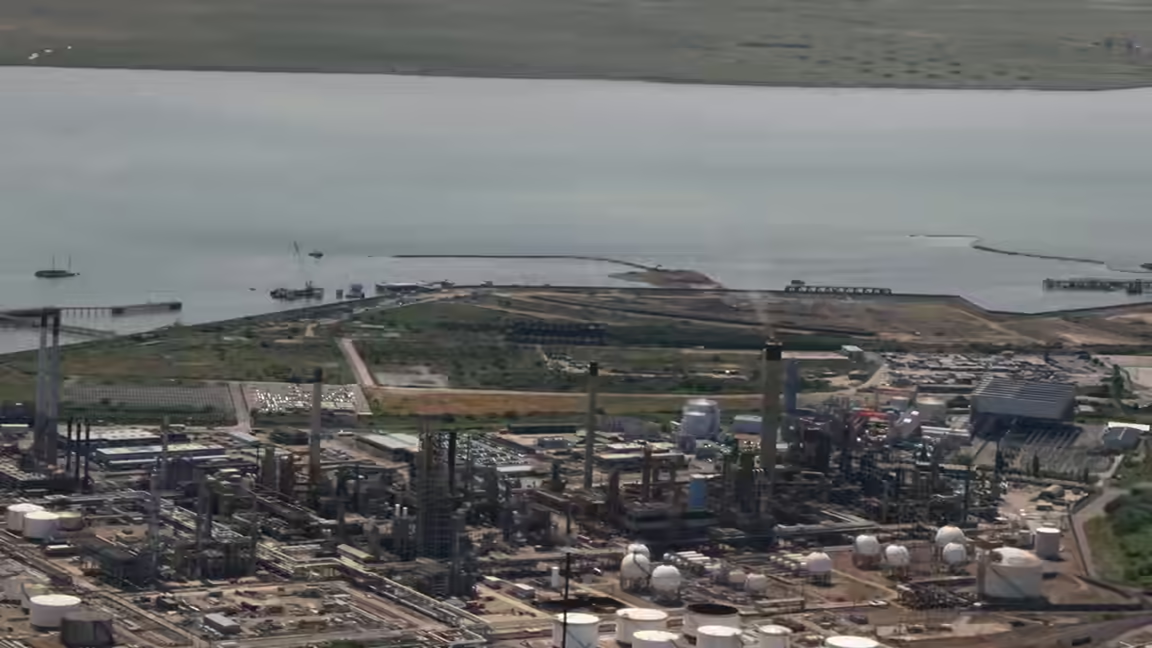
According to La República, residents in Lobitos blocked access to the district while chanting “Lobitos se respeta,” a demonstration aimed at rejecting statements by PetroPeru general manager Óscar Vera that the contaminated beaches were “100%” clean. The dispute followed what the company had described as a “small leak” during operations at the submarine terminal of the Talara refinery, an incident that residents said ended up contaminating six beaches. The report identified Las Capullas as the hardest-hit beach.
The heart of the protest was a direct clash over conditions on the ground. Community members said beaches including La Palizada and Peña Negra still showed the presence of crude. A tourism guide from Lobitos shared video from La Palizada that, according to the report, showed oil residue still on the beach. Fishers also described long-lasting damage to shoreline rocks and marine life, arguing that cleanup crews had left behind both hydrocarbon contamination and waste.
For residents, the issue was not only environmental but economic. Lobitos depends heavily on fishing and tourism, and protesters said both had effectively stalled after crude reached the coast. A resident quoted by the paper described empty lodging facilities, restaurant owners unable to support their families and artisans losing their source of income. Those claims help explain why the confrontation escalated beyond a technical debate over cleanup standards into a broader local emergency involving livelihoods, public health and trust in the company’s response.
In Cabo Blanco, the Asociación de Pescadores Artesanales echoed the same complaint. Its members said crude was still present at Peña Negra beach and showed, according to the report, that sand contaminated with hydrocarbons could still be brought up by hand. The group’s vice president, Max Floriano, said the association had already filed two complaints with prosecutors over two spills that occurred during the year and accused PetroPeru’s management of refusing to recognize the real extent of the damage.
That testimony mattered because it widened the dispute from a single day’s protest to a longer pattern of tension between coastal communities and the state company. Protesters argued that the official declaration of completed cleanup did not match their own observation of the beaches, while the existence of prior legal complaints suggested deeper frustration over how oil incidents had been handled.
La República reported that representatives of PetroPeru and artisanal fishers from Lobitos were scheduled to meet later that same day. The fishers planned to demand an adequate cleanup and compensation for affected residents. That upcoming meeting gave the protests a practical near-term objective: forcing a more formal response from the company after public statements residents viewed as dismissive or misleading.
The December 24 demonstrations therefore became more than a symbolic outcry. They were an attempt by fishing and tourism communities to assert their own account of the damage, challenge a state company’s public narrative and press for recognition that an oil spill on six beaches had not ended when officials said the sand was clean.