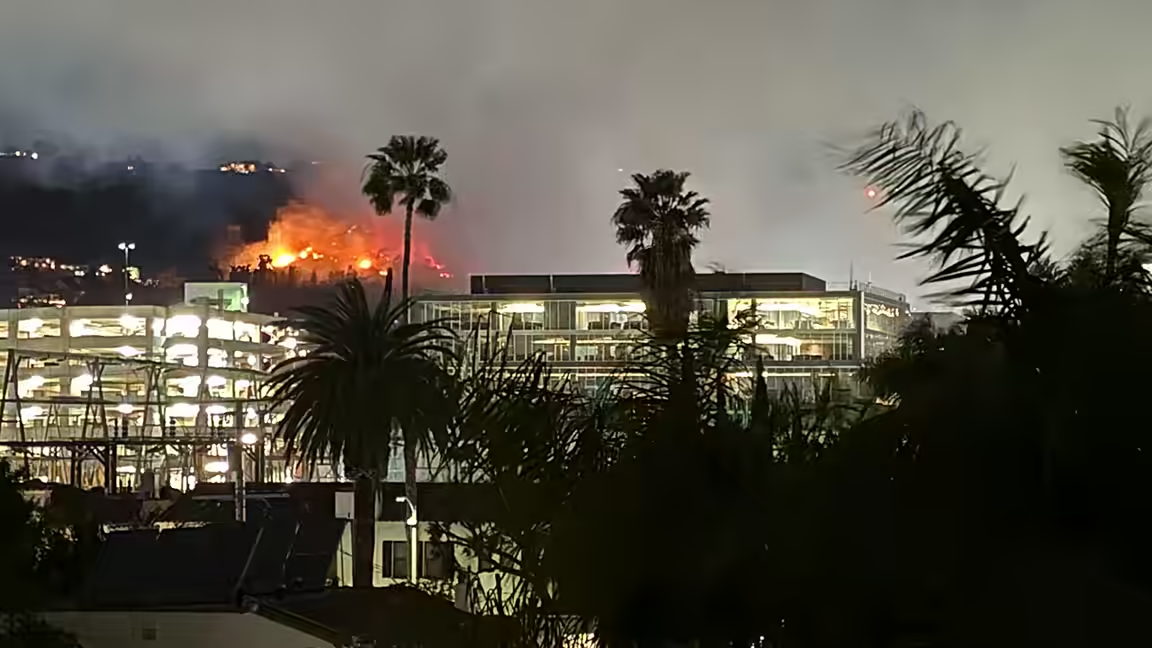
California has deployed 939 incarcerated men and women to help fight record-breaking wildfires burning across southern California, according to the BBC.
The prisoners are part of a long-running volunteer programme run by the California Department of Corrections and Rehabilitation. Their role places them on the front lines of a fast-moving emergency that has already destroyed more than 10,000 structures and burned 37,000 acres in the Los Angeles area, while thousands of emergency workers continue to pour into the region.
At least 11 people have been killed in the fires, officials said in the BBC report. The number of incarcerated firefighters has risen steadily since the blazes began spreading uncontrollably, and the total now represents roughly half of the 1,870 prisoner-firefighters available in the state scheme. The crews are drawn from 35 conservation fire camps, minimum-security facilities where incarcerated people serve time and receive training. Two of the camps are for women.
The programme is not new, but the scale of the current deployment has again raised debate about the use of prison labour in emergency response. Critics say the system relies on cheap labour. Supporters argue it gives participants skills and a route to rehabilitation. The BBC report framed the debate as part of a wider social and political discussion about how California manages wildfire risk and who does the hardest and most dangerous work when the state is under pressure.
What makes the current emergency especially severe is not only the number of fires, but the speed at which they spread. The BBC said the deadly fires began spreading uncontrollably on Tuesday, overwhelming parts of Los Angeles County and prompting a large-scale response from fire crews and other emergency workers. The destruction of buildings and the sheer acreage burned underline how quickly the situation moved beyond routine containment efforts.
The incarcerated crews are described as working in prison-orange jumpsuits embedded alongside professional responders, a visible sign of how central they have become to California’s wildfire strategy. Their presence also highlights a policy choice: the state relies on a volunteer pool of prisoners who can be trained for emergency work and deployed when fire danger peaks.
The BBC’s reporting makes clear that the immediate emergency is still the priority. Lives have been lost, communities have been damaged, and officials are racing to contain the fires before they spread further. But the article also shows how a disaster of this size reopens longstanding questions about the structure of California’s firefighting system and the role of incarcerated workers within it.
For now, the state is leaning heavily on every available resource. That includes the 939 incarcerated firefighters already at work, a number that may continue to rise as the fires evolve and emergency managers decide where to send reinforcements next.
The broader image is of a state that depends on a mixed civilian-prisoner firefighting model to cope with emergencies that are growing more destructive. Supporters see that as practical and rehabilitative; critics see structural dependence on incarcerated labour. The current deployment puts both arguments back into sharp relief as crews continue to work in dangerous conditions.


