*Event date: 2025-01-13.*
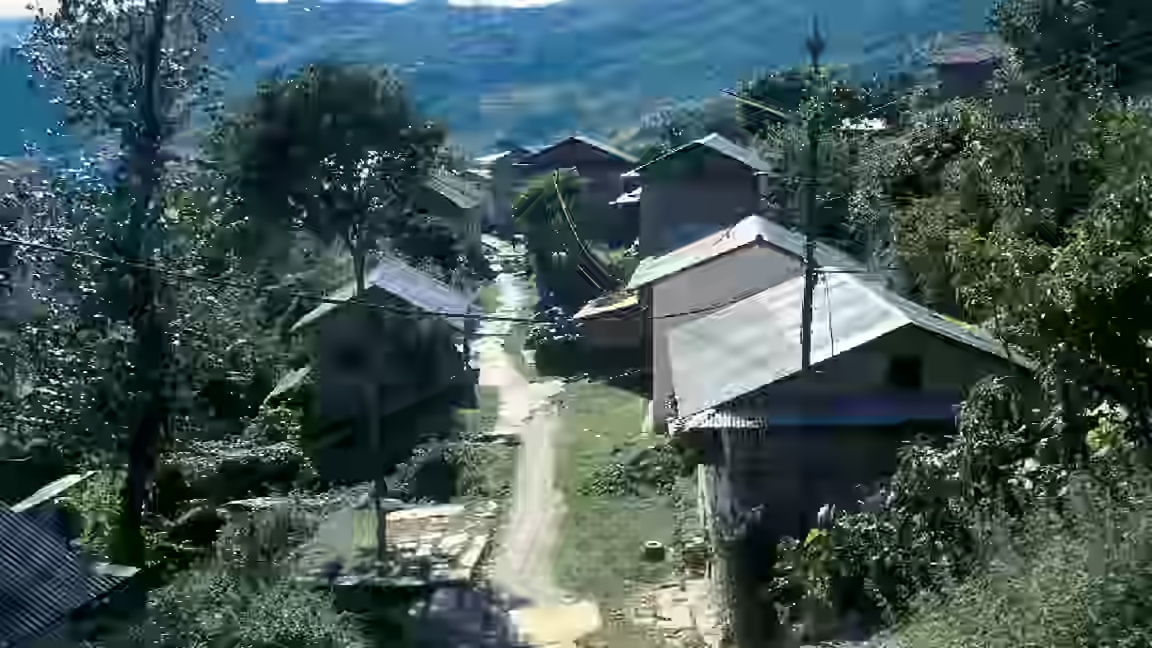
An overnight landslide at a jade mining area in northern Myanmar killed at least 12 people and left many others missing, according to residents and rescuers who described a scene buried under mud in Kachin state's Hpakant township. About 50 houses were buried or damaged in the accident, which struck a remote mountainous region central to the country's lucrative jade trade.
A resident near the accident area told The Associated Press that the bodies of 12 people, including four children, had been recovered in Spott village. He said muddy water from a pond about 300 feet away seeped through the area after tons of mining debris and waste had been dumped there. Two local rescuers said the mud was so heavy that finding the missing was difficult and machinery was needed to dig through it.
Kachin-based media reported that 30 to 50 people might still be missing. That uncertainty is common in Hpakant, where many victims are independent miners or scavengers who live and work near unstable mounds of discarded earth. Because many of them are unregistered migrants from other areas, officials often do not know exactly who is in the danger zone when disaster strikes.
The mine region has a long history of deadly landslides. AP noted that 162 people died in one in July 2020 and 113 were killed in another in November 2015. The terrain is particularly dangerous during the rainy season, when the mounds of waste that surround abandoned pits become unstable and can give way without much warning.
The tragedy is also tied to the economics of jade. Revenue from sales of jade, pearls and gemstones in the area is estimated to run into the billions of dollars, and human rights activists say the industry is an important source of revenue for Myanmar's military government. The mines are also a source of income for the Kachin Independence Army, an ethnic armed group fighting for greater autonomy.
The disaster happened in a region already scarred by conflict after the military seized power in 2021. The AP report says the ceasefire there has been disrupted since the coup, and that the fighting has driven many civilians into refugee camps and nearby townships. That makes the landslide not only a mining disaster but also another blow to a population already living with war and displacement.
The repeated landslides in Hpakant reflect how mining waste, weather and informal settlement overlap in one place. People scavenging for jade often live at the base of unstable spoil heaps because that is where the fragments can be found, but that same geography makes them vulnerable when rain or runoff shifts the ground. The AP account shows the disaster is as much about mining practice as it is about geology.
The conflict backdrop makes recovery harder. Machinery has to move through an area already affected by fighting, and missing people may be migrants whom no one can easily count. That combination of instability and poor records means the official toll can lag the real one. Even when the mud stops moving, the work of finding names, bodies and survivors can continue for days.