A landslide in Mamuju Regency, West Sulawesi, killed four people after soil and debris came down in the Tamasapi area of Mamunyu, according to Antara News. The report said the disaster struck in the district capital area and left no ambiguity about the severity of the event: four people died at the scene.
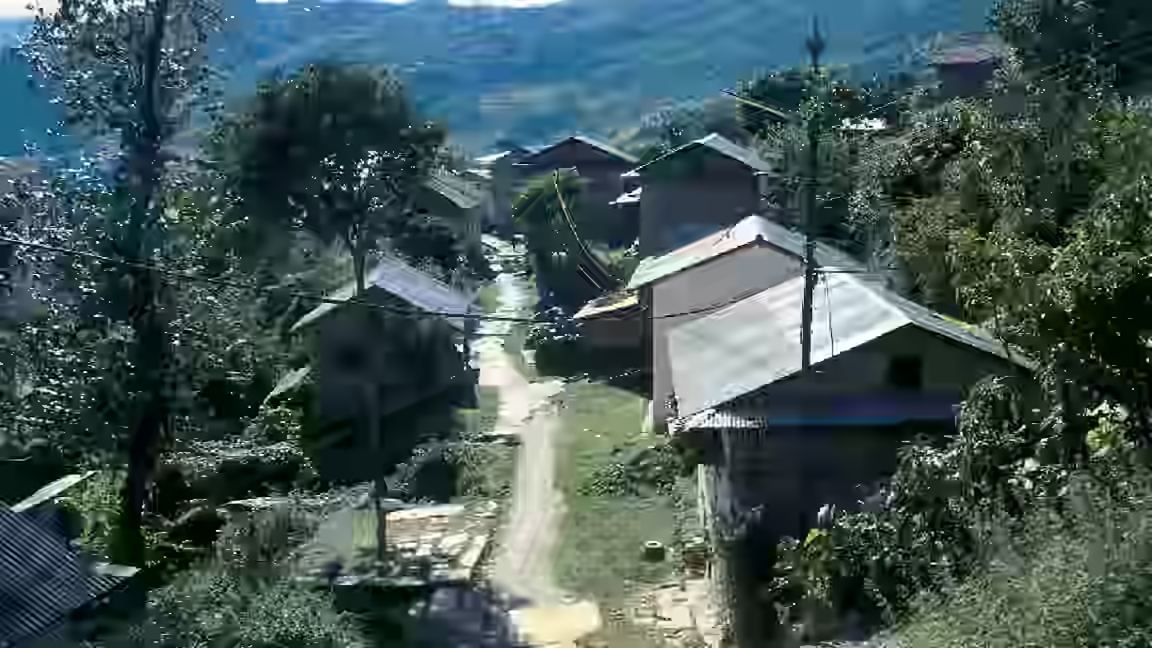
The incident underscores the vulnerability of steep settlements in Indonesia’s wetter regions, where hillside failures can rapidly threaten homes and roads. In this case, the location identified by Antara places the disaster inside Mamuju, the regency capital, rather than in a remote mountain zone. That detail matters because it suggests the landslide affected a populated neighborhood rather than a sparsely inhabited slope.
Antara’s report does not provide a casualty breakdown beyond the four deaths, and it gives no additional details about injuries, the time of day, or whether emergency crews were still working in the area. It also does not identify those who died. Even so, the agency’s wording is enough to establish that the event was fatal and that it took place in the Mamunyu subdistrict of Mamuju Regency.
Indonesia regularly faces landslides during heavy rain, especially in areas with unstable hillsides, poor drainage, or development close to embankments. The Antara report fits that broader pattern, though it does not state the specific trigger for this disaster. Without more information from local authorities, the safest reading is that the death toll should be treated as confirmed but the surrounding circumstances remain limited to the published account.
For residents in Mamuju, the immediate consequence was the loss of four lives in a single slope failure. For officials, the more urgent question is whether the site still poses a risk to nearby homes and whether additional land movement could threaten rescuers or neighbors. The evidence packet does not answer those questions, so this report does not extend beyond the confirmed deaths and the location named by the source.
The landslide adds to the long list of deadly weather-linked disasters in Indonesia, where terrain and rainfall can combine to produce sudden hazards with little warning. What is clear from the available report is simple: four people were killed in Mamuju Regency, and the event struck the Tamasapi area of Mamunyu on the event date.
The episode also highlights how landslide reporting often begins with only a casualty count and a location name, while wider questions take longer to answer. The packet does not say whether the slope was in a steep cut, a saturated hillside, or a settled neighborhood affected by drainage. It also does not identify any evacuation or weather warning. Those omissions are not a weakness in this report; they are the limits of the supplied evidence. Even without those details, the confirmed deaths make the event significant and urgent for local authorities in West Sulawesi.
Local authorities would now be expected to secure the site, assess nearby slopes, and determine whether the area could face further movement. The evidence packet does not say whether that process had started, but that is the logical next step after a fatal landslide in a populated neighborhood.