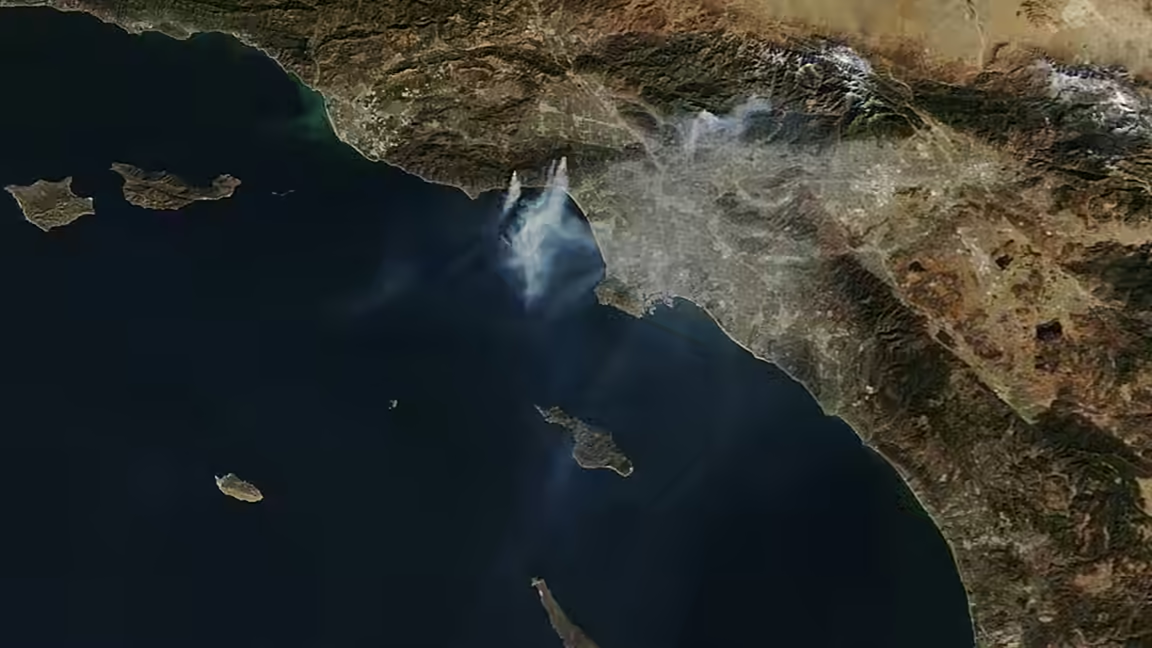
Cal Fire says Palisades and Eaton fires are fully contained
*Event date: 2025-01-31*
The Palisades and Eaton fires, two of the most destructive blazes in recent Southern California history, have been declared fully contained by the California Department of Forestry and Fire Protection.
The evidence packet says the fires killed at least 29 people and destroyed or damaged more than 18,000 structures before containment was reached. That makes the announcement a milestone in a disaster that has already reshaped parts of Los Angeles County. Containment does not mean the damage is over; it means firefighters have established a perimeter strong enough to keep the flames from spreading further.
The Palisades Fire began on the morning of Jan. 7 in Pacific Palisades, while the Eaton Fire started later that evening in the foothills of Angeles National Forest. The packet describes both as wind-fueled fires that spread rapidly through dry brush and into neighborhoods. Those conditions are central to understanding why the fires became so hard to control. Drought-like weather and powerful offshore winds gave the flames the fuel and speed needed to outrun some early response efforts.
The losses were severe. According to the evidence, the Palisades Fire burned 23,448 acres, destroyed 6,837 structures and damaged another 1,017. The Eaton Fire destroyed 9,418 structures and damaged 1,073. Together, the fires wiped out homes, businesses and community landmarks across wide swaths of Los Angeles County. The packet also says many of the structures lost in Altadena were century-old homes in a historically inclusive community known for its Black professionals and artists.
The human toll is equally stark. The source excerpt says 17 people died in the Eaton Fire and 12 in the Palisades Fire. Those numbers make clear that this was not simply a property disaster but a deadly event that will have long-term social and political consequences in California.
The report also notes that officials are still investigating the cause of the fires. That means the public record remains incomplete on a key point. The evidence does establish that the disaster unfolded during extreme fire weather, with less than 10% of average rainfall since Oct. 1 and warnings of a particularly dangerous situation before the outbreak.
By the time the fires were fully contained, the story had shifted from active emergency to recovery and accountability. But the scale of the destruction ensures that both phases will continue to overlap. Residents and authorities now face cleanup, rebuilding and the unresolved question of how much of the damage could have been prevented.


