KAURA NAMODA, Nigeria — A fire at an Islamic school in Zamfara State on February 5, 2025, killed at least 17 children and injured several others in a disaster that struck while pupils were asleep.
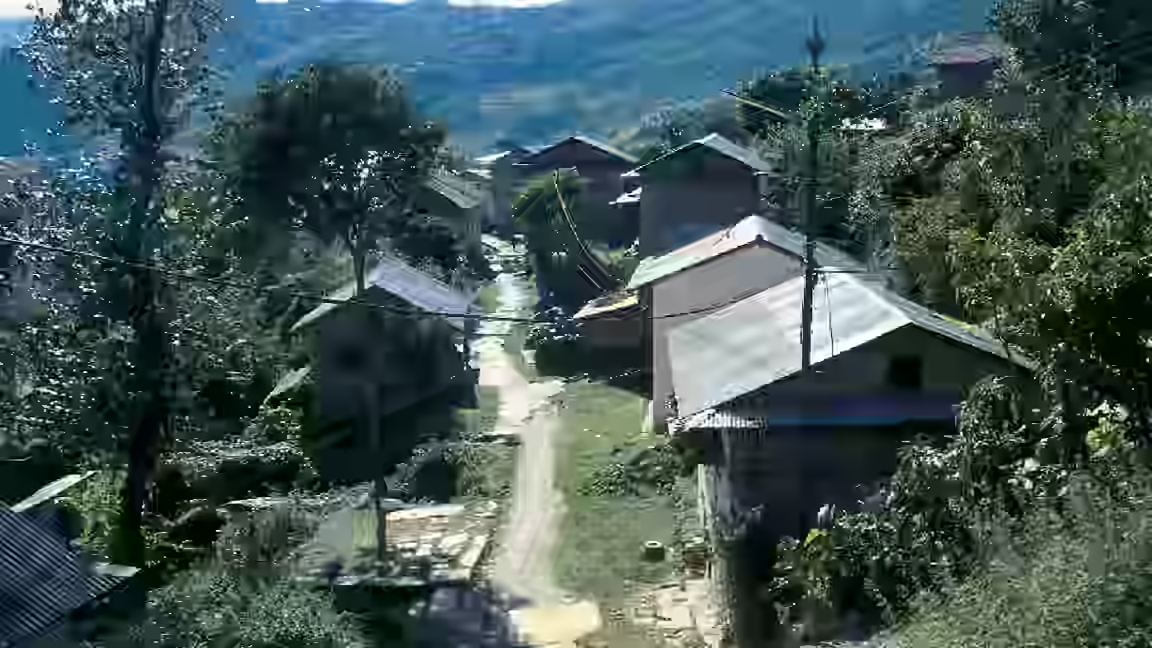
Authorities said the fire likely started in a nearby house on Tuesday night and then spread to the school. The children were believed to be between 10 and 16 years old, and officials said there were about 100 pupils at the school in Kaura Namoda, the second-largest town in Zamfara State. The school’s location and the tight road leading to it made it difficult for emergency responders to get there in time, according to an eyewitness cited by BBC Hausa.
The impact was severe enough that the community buried the dead children on Wednesday afternoon. Several injured pupils were rushed to health centres in the town for treatment. That immediate response shows how quickly the fire moved from a local building blaze to a mass casualty event. Because the children were sleeping when the flames spread, many had little or no chance to escape once the fire reached the school compound.
Local officials said they were investigating the cause and would inspect other Islamic schools to ensure they were not a fire risk. That follow-up matters because it acknowledges that the disaster may have been made worse by conditions that can be checked and improved, rather than by a one-off act of fate. Even so, the evidence packet does not establish exactly why the nearby house caught fire in the first place, and the investigation remains open.
A father of one of the victims told BBC Hausa he was devastated but comforted by his faith. His reaction captures the human scale of the loss: the dead were not just pupils but children from nearby villages whose families expected them to return home safely. Instead, the blaze left the community to bury them the next day and to confront the possibility that other schools could face similar risks if fire safety is not improved.
This kind of tragedy also highlights the structural vulnerability of many school buildings in the region. The witness’s description of the road as too narrow for firefighters to reach quickly suggests that response time was a major factor. If the fire started outside the school, as officials believe, the spread into a sleeping children’s dormitory becomes a reminder of how exposed such institutions can be when construction, access and prevention are weak.
For Zamfara State, the immediate task is to determine how to stop a repeat. But for the families in Kaura Namoda, the event is already fixed in memory as a night when a building fire became the loss of at least 17 young lives.