A cholera outbreak in Kosti, Sudan, killed 58 people and sickened 1,293 between Thursday and Saturday, according to the national health ministry. Medical facilities in the southern city were overwhelmed as authorities tried to expand treatment and restore safer access to water.
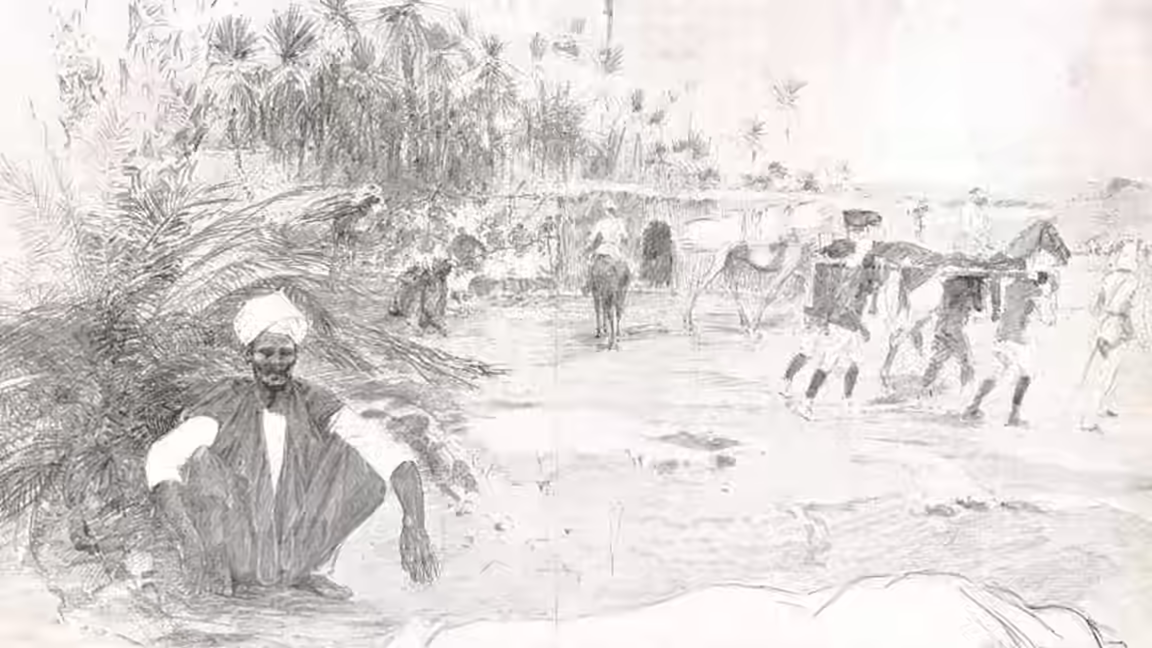
The ministry linked the outbreak primarily to contaminated drinking water after an attack by the paramilitary Rapid Support Forces knocked out the city's water facility. A major power failure led many families to collect water from the White Nile using donkey carts, and Doctors Without Borders said the river was the most likely source of infection. Kosti lies on the river's western bank, opposite Rabak, the capital of White Nile province.
Local authorities prohibited residents from taking water directly from the river and increased chlorination within the distribution network. The health ministry also began a cholera vaccination campaign and expanded an isolation center with assistance from the United Nations and international medical organizations.
Despite those measures, the treatment center run by Doctors Without Borders at Kosti hospital ran out of space. Adult and pediatric emergency rooms were used for additional patients. The group's medical coordinator in the city, Dr Francis Layoo Ocan, said patients were being admitted in an open area and treated on the floor because there were not enough beds.
Cholera spreads through food or water contaminated with the bacteria that cause the disease. It can produce severe diarrhea and rapid dehydration and may be fatal without prompt treatment. The concentration of more than 1,200 reported illnesses within three days demonstrated both the speed of transmission and the strain placed on a health system already damaged by war.
Sudan had experienced another large outbreak in the preceding year. Between July and October 2024, more than 21,000 people were sickened and over 600 died, mostly in eastern areas sheltering people displaced by conflict. A 2017 outbreak killed at least 700 people and caused about 22,000 illnesses in less than two months.
The current war began in April 2023 when tensions between the Sudanese military and the Rapid Support Forces became open fighting. At the time of the Kosti outbreak, the conflict had killed more than 24,000 people and displaced over 14 million, according to United Nations figures cited by the Associated Press. About 3.2 million had crossed into neighboring countries.
In Kosti, the immediate public-health emergency arose from the intersection of conflict and essential infrastructure. Disrupted water treatment forced households toward an unsafe source, while crowded medical services struggled to absorb the resulting cases. Vaccination, chlorination and expanded isolation capacity were under way, but officials had not yet reported that transmission was under control.