# Iran’s parliament ousts economy minister as inflation and currency pressures bite
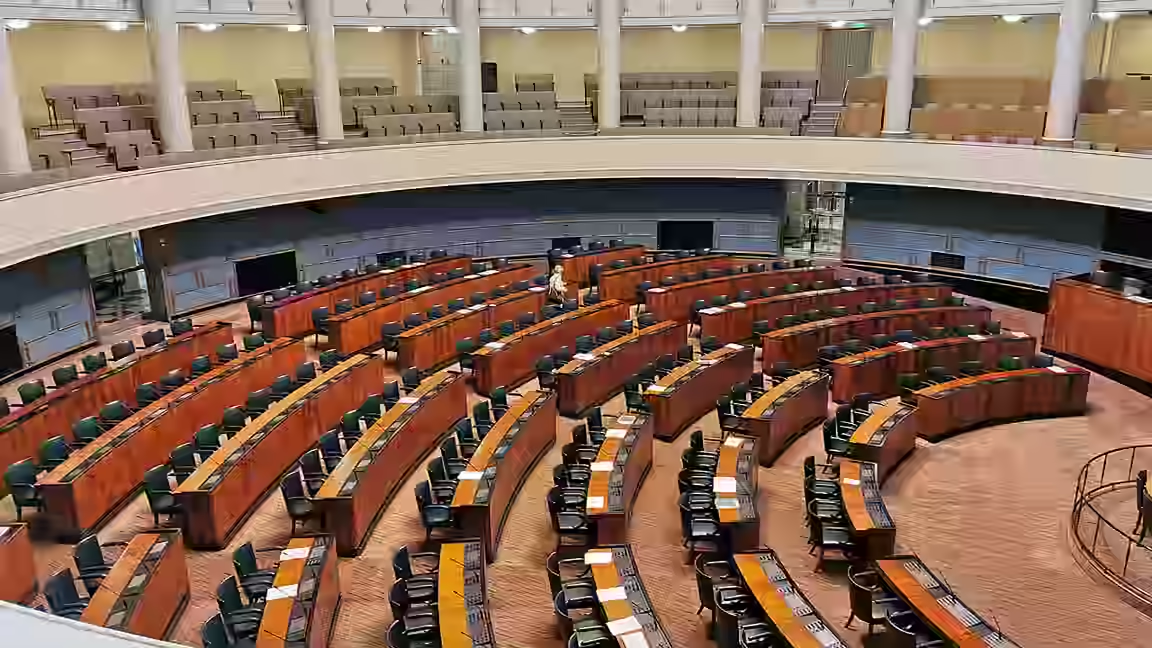
Event date: 2025-03-02. Iran’s parliament has removed Economy Minister Abdolnaser Hemmati, making him the first senior official in President Masoud Pezeshkian’s administration to be pushed out by hardline lawmakers.
The evidence packet says 182 of 273 lawmakers voted against Hemmati, with conservative parliament Speaker Mohammad Bagher Ghalibaf announcing the result on Sunday. The impeachment came only six months after Pezeshkian’s government took office and against a backdrop of mounting public frustration over inflation and a rapidly weakening currency.
The rial’s fall is central to the political argument. The packet says it was worth 32,000 to the US dollar in 2015, roughly 600,000 to the dollar when Pezeshkian took office in July, and about 950,000 to the dollar on Tehran exchange streets amid recent regional tensions. That devaluation fed the public anger lawmakers were arguing over.
Hemmati defended himself during the session and pointed to a 10-percentage-point reduction in inflation, though he acknowledged it remained high at 35 percent. Pezeshkian also defended his minister, saying the country was in a “full-scale economic war” and arguing that Iran’s current problems could not be blamed on one person.
Hardline MPs, by contrast, portrayed Hemmati as a central cause of instability. The packet says Hosseinali Hajidaligani accused him of deliberately devaluing the currency to fill state coffers in the short term, while another lawmaker said the minister was dangerous to the country if kept in office.
The broader backdrop is a country already under severe strain. The packet points to decades of US-led sanctions, local mismanagement and corruption, as well as a lingering energy crisis that has forced Iran to shut down key services over the previous three months. It also notes that regional tensions tied to the war in Gaza and blows to the Iran-backed “axis of resistance” have further darkened the outlook.
Hemmati also warned lawmakers that the 2015 nuclear deal with world powers is at a critical juncture. The packet says Western powers have until October to trigger the deal’s snapback mechanism, which could restore all UN sanctions on Iran.
The vote matters beyond one ministry. It shows that hardline lawmakers have found an opening to challenge Pezeshkian’s team even though he has been in office only a short time. The packet says some lawmakers are also seeking to remove former Foreign Minister Mohammad Javad Zarif from his advisory role.
The immediate question is whether the dismissal will improve anything on the ground. The evidence packet offers little reason for optimism. It suggests the structural problems in Iran’s economy run far deeper than one minister, even if parliament chose to make him the face of them.


