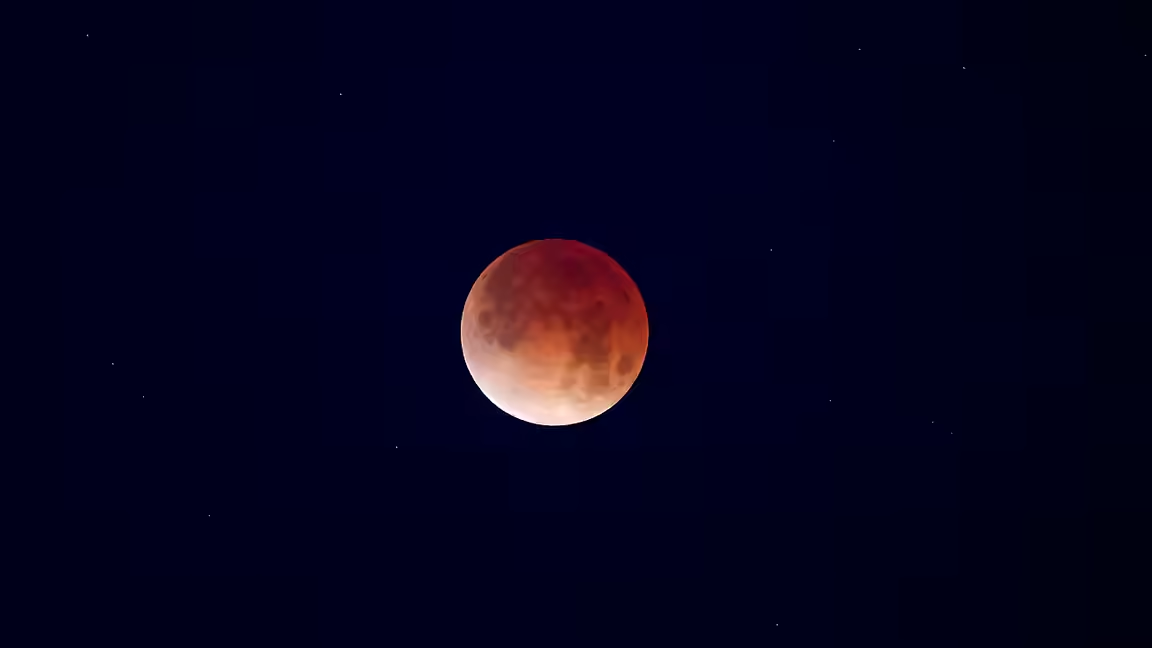
A total lunar eclipse took place, marking the first such event visible globally since November 2022. This celestial occurrence represents the initial entry in a series of three total lunar eclipses scheduled to take place between 2025 and 2026.
The phenomenon reached its maximum intensity at 2:59 a.m. EDT reportedly (6:59 GMT) on March 14. This event coincides with the full moon of March, often referred to by observers as the Blood Worm Moon due to the characteristic red hue the lunar surface adopts during the transition.
Total visibility was reported across North America and large portions of South America, including Brazil, Argentina, and Chile. Observers in Western Europe and parts of West Africa witnessed the totality phase near moonset, while viewers in New Zealand experienced a partial view as the moon rose.
Scientifically, the eclipse occurs when the Earth aligns directly between the sun and the moon. The moon passes through the Earth's umbra, or the central dark shadow, which causes the distinct red coloration. According to data from TimeandDate, the entire process, spanning from the initial penumbral phase to the conclusion, lasted approximately 6 hours and 3 minutes.
Unlike solar eclipses, which necessitate specialized protective eyewear for safety, lunar eclipses are safe for direct observation with the naked eye. The event provides a unique opportunity for skywatchers to witness the mechanics of planetary shadows without the need for filters or specialized equipment.
For those interested in capturing the event, technical preparation is required. Experts suggest using a DSLR or mirrorless camera mounted on a sturdy tripod to minimize motion blur. Manual settings are recommended, specifically utilizing low ISO values between 100 and 200, with aperture settings ranging from f/5.6 to f/8.
Successful photography requires adjusting shutter speeds based on the specific phase of the eclipse, with longer exposures necessary during the period of totality. Photographers are advised to use remote shutter releases and manual focus on the edge of the lunar disk to ensure maximum image sharpness throughout the six-hour duration.

