# Storm system death toll in the United States rises to 40 as severe weather spreads east
Event date: 2025-03-15
At least 40 people have been killed across seven states in a severe weather outbreak that swept from the Plains into the Midwest and South, according to officials cited in the evidence packet.
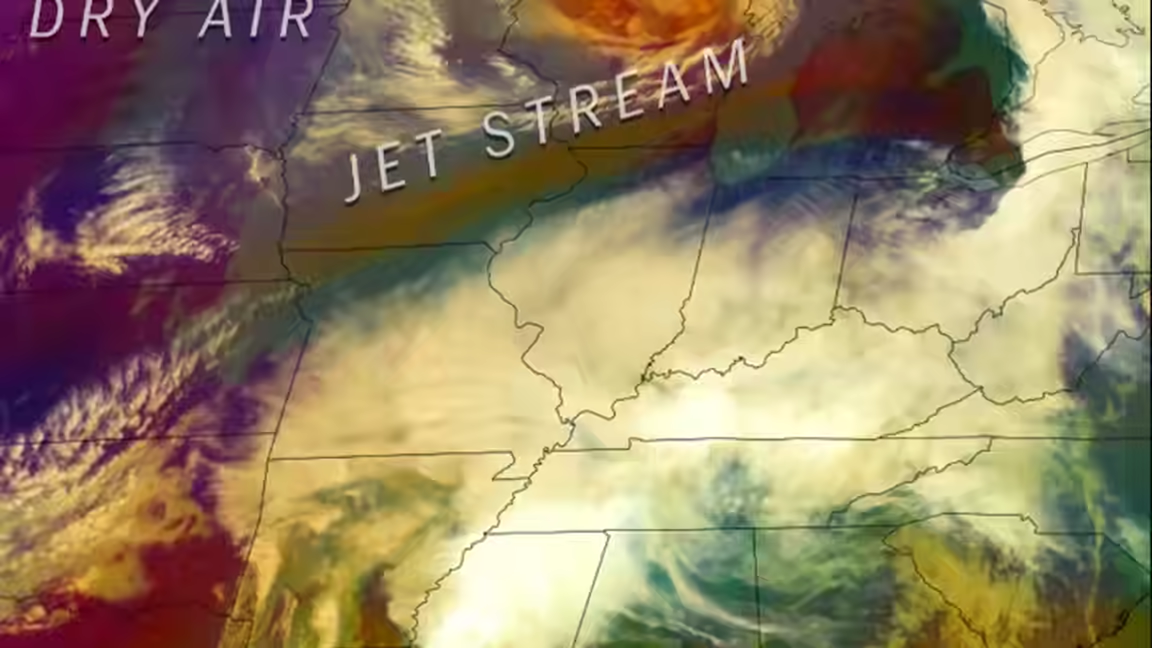
ABC News reported that the storm system had already left behind deadly winds, dust storms and wildfires before pushing east. On Sunday, a new tornado watch was issued for parts of West Virginia, Ohio and Pennsylvania as the broader system continued to threaten populated areas with damaging winds and large hail.
The evidence says Missouri had the highest death toll among the affected states, with at least 12 fatalities. Alabama Gov. Kay Ivey said at least three people were killed in her state on Saturday, including one in Plantersville and one in Winterboro. She also said 52 of Alabama’s 67 counties reported damage and that assessment work was continuing.
Other states also reported fatalities. ABC News said at least eight people died in Kansas, six in Mississippi, four in Texas, three in Arkansas and four in Oklahoma. The storm system had already hit the Plains before moving east, and officials said earlier parts of the outbreak brought devastating conditions to Kansas, Texas and Oklahoma.
The report also noted that Mississippi Gov. Tate Reeves declared a state of emergency and said preliminary information suggested as many as 12 tornadoes may have struck the state. Reeves said six people were killed in Mississippi and 27 were injured, while three previously missing people were found alive. Twenty-three counties reported damage, and 12 filed emergency requests.
The scale of the event turned a single weather system into a multi-state emergency. ABC News said millions of Americans were under alert as forecasters warned of violent, long-track tornadoes, damaging winds reaching 80 mph and large hail. The National Weather Service also had tornado warnings in Florida, showing how widespread the system had become.
The evidence packet does not provide a final federal assessment or a complete state-by-state damage tally. What it does show is that the death count was still changing as the storm advanced. The system had already caused losses in several states before Sunday, and officials continued to update the public as local searches, emergency declarations and damage assessments unfolded.
The White House said President Donald Trump was monitoring the storms and that the National Guard had been deployed to Arkansas. Trump said his administration was ready to assist state and local officials as they dealt with the damage.
The weather event also highlighted how a single storm can create different kinds of danger over a large area. In one place, it was tornado damage. In another, it was wind-driven wildfire or dust storm conditions. Elsewhere, it was the trauma of finding homes, roads and public infrastructure damaged after the storms passed.
With the death toll at 40 and new watches still in effect, the event date supplied with the packet marks a moment in an evolving disaster rather than a finished one. The evidence supports a clear picture: a broad, violent weather system had already killed dozens, and forecasters, governors and emergency responders were still working as it moved east.


