# South Korea wildfires kill firefighters as crews battle more than 20 blazes
*Event date: 2025-03-22*
Wildfires sweeping across South Korea killed at least three firefighters and a public servant as crews fought more than 20 separate blazes, including a large fire in Sancheong County in the country's southeast.
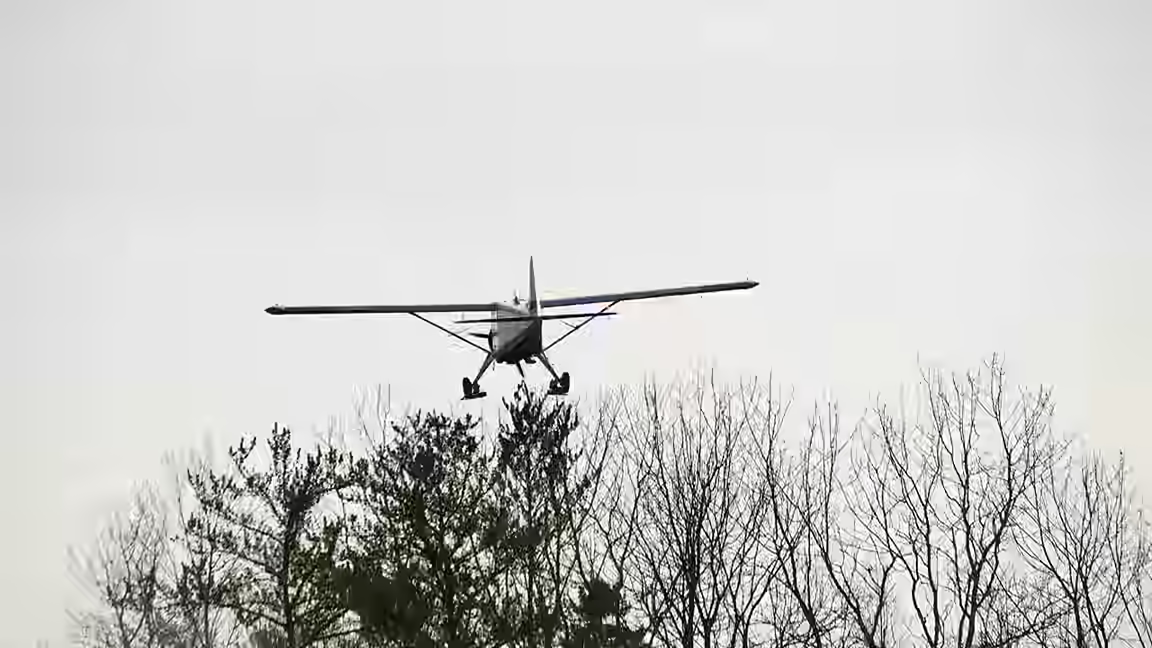
The fire in Sancheong began on Friday and had burned about 500 hectares by Saturday evening, according to DW. The county lies about 250 kilometres southeast of Seoul. Officials said the scale of the emergency forced the deployment of nearly 1,600 firefighters, 35 helicopters and dozens of vehicles, but the response was hampered by mountainous terrain and strong winds.
By Saturday evening, only 35% of the Sancheong fire had been contained. More than 200 residents in 15 villages were told to leave their homes as the flames spread through forested areas. The government later declared North and South Gyeongsang provinces and the city of Ulsan disaster zones, a move that allows faster mobilisation of resources and emergency support.
The Korea Forest Service said several other areas in central and southern provinces were also affected. It issued its highest-level fire warning in 12 locations, including North and South Gyeongsang provinces, Busan and Daejeon. The warnings signalled that the risk of further outbreaks remained severe even as firefighting teams tried to hold the existing blazes.
The fires also shut sections of highway in the southeast, including a road linking Ulsan and Busan, South Korea's second-largest city. Those closures added another layer of disruption to a disaster already stretching emergency crews and local authorities.
Acting President Choi Sang-mok ordered agencies to deploy all available personnel and equipment to the affected zones. That instruction reflected the seriousness of the situation, not only because lives had already been lost, but because the fires were spreading across multiple provinces at once.
The deaths matter because they show how dangerous wildfire response can be even in a country with substantial emergency capacity. The firefighters who died were trying to stop the Sancheong blaze, but the combination of weather, slope and dry fuel made that task far harder than normal. DW said the fire was one of the main fronts in a wider national emergency, with over 20 wildfires active at the same time.
South Korea is no stranger to seasonal fire risk, but the timing and spread of these blazes made them especially serious. The country's forestry and disaster agencies have repeatedly warned that dry conditions and wind can turn small ignitions into large-scale events very quickly. In this case, the warning was borne out in a matter of hours.
The immediate priority for authorities is to contain the largest fires, protect nearby villages and keep more responders from being caught in the flames. But the political signal is just as clear: a rapidly spreading wildfire season can still overwhelm even a well-resourced emergency system when weather and terrain line up against it.
As crews continued work on Saturday, South Korea was left with a familiar but painful image: helicopters circling, roads closed, villagers evacuated and firefighters killed while trying to keep a disaster from getting worse.


