# Canadian convoy organizers Tamara Lich and Chris Barber found guilty of mischief
Two of the best-known organizers of Canada’s 2022 trucker protest have been found guilty of mischief for their roles in the occupation of downtown Ottawa.
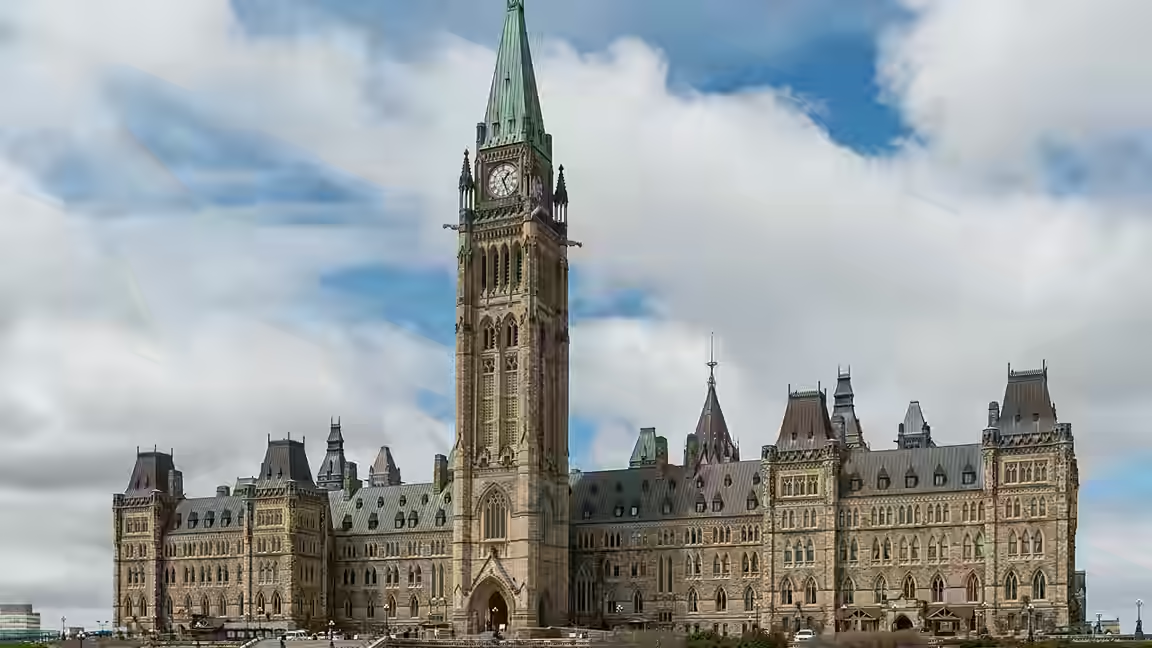
AP reports that Ontario Court Justice Heather Perkins-McVey ruled Tamara Lich and Chris Barber guilty on Thursday. The decision concerns the mass Freedom Convoy protest against COVID-19 restrictions, which clogged streets around Parliament Hill and created a prolonged disruption in the capital.
The convictions are specific, not blanket. The judge found both defendants not guilty of intimidation, counselling intimidation, obstructing police and counselling obstruction. Barber was separately found guilty of counselling people to disobey a court order related to horn honking. That combination of outcomes matters because it shows the court distinguished between general protest activity and legally actionable conduct.
Perkins-McVey’s reasoning, as reported by AP, was that the evidence showed the two routinely encouraged people to join or remain at the protest even while knowing the harm it was causing downtown residents and businesses. The defense countered that the convoy was meant to be peaceful and that disorder should be laid at the feet of police and city officials. The ruling rejected the defense’s broad framing, at least on the mischief count.
The protest itself had already become one of the defining political episodes of the pandemic era in Canada. Truckers and supporters clogged the capital for weeks, honked horns for hours on end and helped trigger the federal government’s use of the Emergencies Act. AP also notes that the blockade disrupted the busiest U.S.-Canada border crossing for almost a week and shook Canada’s image abroad.
That context explains why the verdict matters beyond the two defendants. This was not a minor street disruption; it was a national standoff over mandates, public order and the state’s power to respond. The court’s findings now separate the protest’s political energy from the criminal liability attached to some of its organizing tactics.
The most accurate summary is therefore the simplest one: the organizers were convicted of mischief, acquitted on several other counts, and one of them was additionally found guilty of telling people to ignore a court order.
The verdict also lands against a memory still fresh in Ottawa. The convoy’s noise, street blockages and border effects were not abstract political symbols; they were daily disruptions for residents, businesses and cross-border trade. That is why the mischief conviction resonates well beyond the trial itself.
At the same time, the mixed verdict shows the judge did not simply accept the government’s most sweeping case. Some counts were rejected, which means the final legal picture is more nuanced than a simple win or loss for either side. That balance is worth preserving in any straight news account.
The case will likely remain politically resonant because the convoy was framed by supporters as a civil-liberties protest and by critics as a major disruption. The verdict does not settle that argument, but it does assign criminal responsibility in specific ways that will matter for later appeals and public debate.


