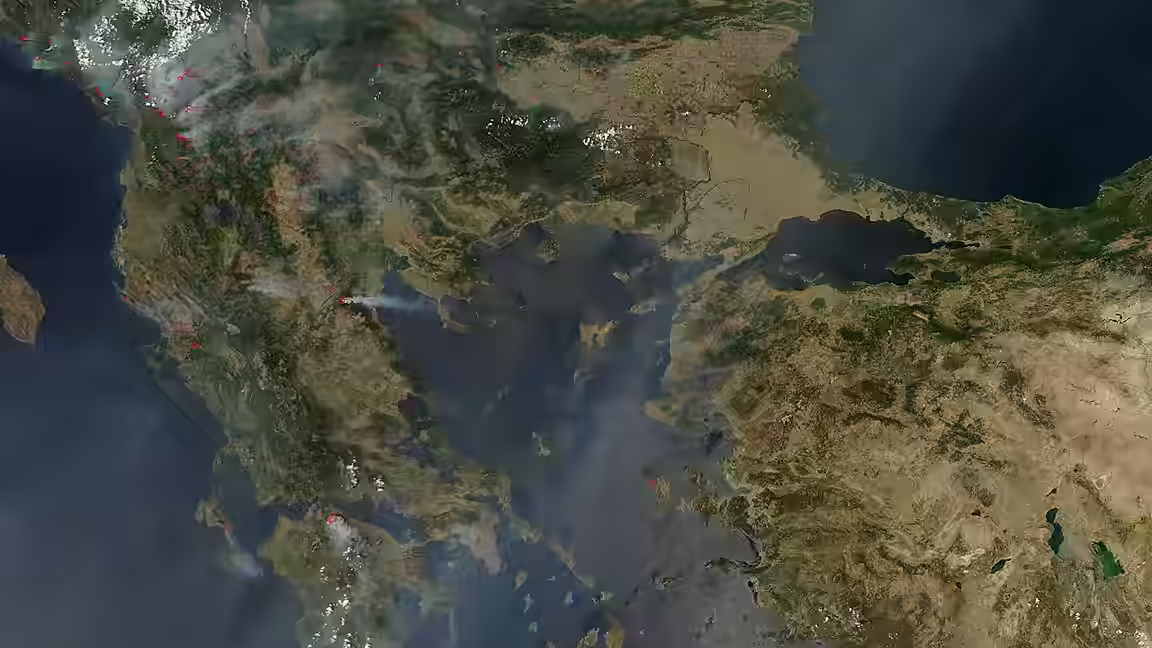
Two boats carrying migrants sank in the early hours of April 3, 2025, in the narrow stretch of sea between Turkey and the Greek island of Lesbos, killing at least 16 people, leaving one missing and more than 40 survivors, according to AP. At least three children were among the dead.
On the Greek side, coast guard crews found a five-meter dinghy taking on water. Twenty-three people were rescued, including 11 minors, eight men and four women, while survivors said 31 people had been aboard. Seven bodies were later recovered from the sea, and search teams kept looking for a young girl reported missing.
A 20-year-old survivor was arrested on suspicion of being the smuggler after other passengers identified him as the boat's pilot. The coast guard said the weather was good, a reminder that the crossing can turn deadly even without a storm. The danger in this route often comes from overloaded, unseaworthy boats and the desperation that sends them out anyway.
In a separate incident on the Turkish side, authorities said nine bodies were recovered and 25 people were rescued after an emergency call from another migrant boat. Turkish media reported that the survivors were taken to hospital. The two rescues were several hours apart, and officials on each side were initially unaware of the other operation.
The deaths add to a long record of fatal crossings in the eastern Mediterranean, where Greece is one of the main entry points into the European Union. The packet says more than 54,000 people used the eastern Mediterranean route to Greece last year and more than 7,700 crossed the land border with Turkey, with 125 dead or missing. By March 30, UNHCR had recorded just over 8,000 sea arrivals and 755 land arrivals to Greece since the start of 2025.
The Greek and Turkish responses also show how fragmented rescue can become in the Aegean. On the Greek side, a patrol boat reached the dinghy after it was already taking on water and launched a search with helicopters, coast guard vessels and Frontex. On the Turkish side, the guard sent three boats and a helicopter after its own emergency call, underscoring how migrants can be caught between jurisdictions as well as waves.
The route remains deadly because smugglers keep using small boats that are often overloaded or unseaworthy. The source says Greece has responded with tighter patrols at sea, pushing some smuggling networks toward the northern African route, but the eastern Mediterranean remains active. The numbers from UNHCR in the packet show that thousands still make the crossing despite the risks and repeated deaths.
The route across the eastern Aegean remains a trap because boats can fail even when the sea is calm. The AP report says authorities on each side were initially unaware of the other's rescue effort, which underlines how quickly separate national systems can be overwhelmed by one crossing. For the survivors, the journey ended with an arrest, hospital transfers and the recovery of bodies from two different countries.