A magnitude 6.2 earthquake shook Istanbul and nearby parts of Turkey on April 23, 2025, injuring at least 236 people and prompting widespread panic across the city, AP reported.
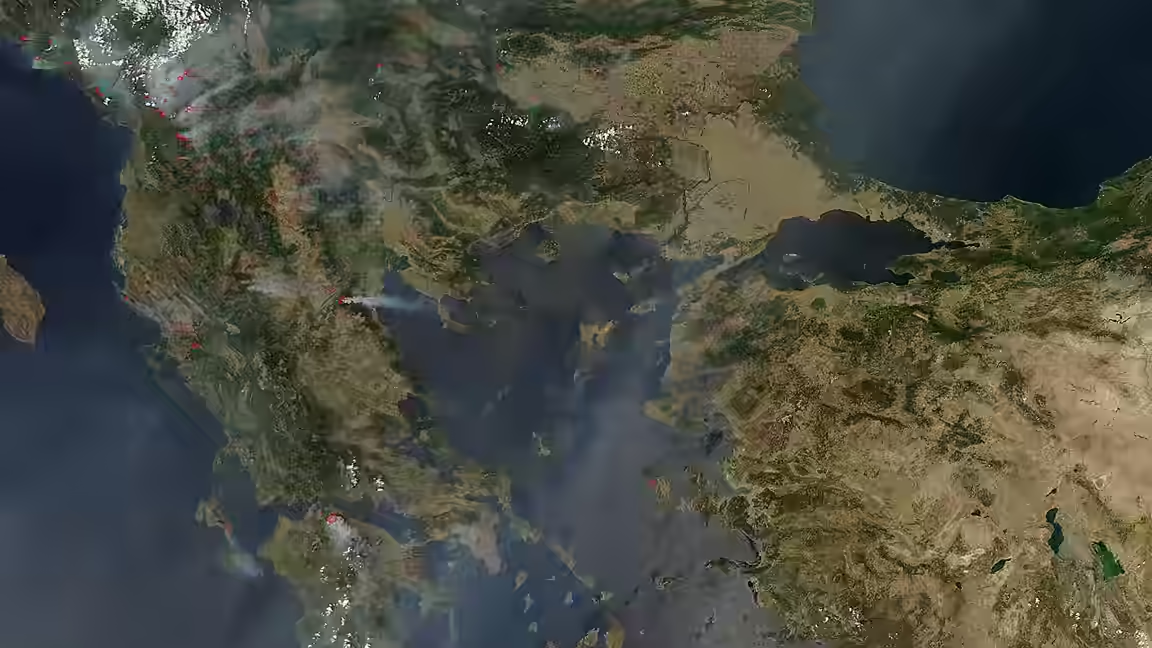
The quake was centered in the Sea of Marmara, about 40 kilometers southwest of Istanbul, at a shallow depth of roughly 10 kilometers. AP said the tremor lasted about 13 seconds and was followed by more than 100 aftershocks, including one measured at 5.9. The shaking was strong enough to send people into streets, parks and open spaces across the metropolitan area.
Most of the injuries were caused not by structural collapse but by panic and falls as people jumped from buildings or rushed to escape them. Health Minister Kemal Memisoglu said 173 of the injuries were in Istanbul, with the rest spread across surrounding provinces. Officials also received 378 reports of structural damage, though only one building collapsed, a long-abandoned structure in the Fatih district.
The earthquake briefly tested a city of 16 million already living under the shadow of a much larger disaster. Turkey’s 2023 earthquakes killed more than 53,000 people in the country and destroyed or damaged hundreds of thousands of buildings. AP noted that those earlier quakes intensified concern that Istanbul, sitting close to major fault lines, could one day face a catastrophic event of its own.
The response on April 23 was immediate. Authorities urged people to avoid damaged buildings, and schools were closed for two days in Istanbul. Sports halls and mosques were opened as possible shelters for residents who did not want to sleep at home. Many people gathered in parks and schoolyards, some setting up tents to stay away from buildings.
Officials also had to manage public anxiety as aftershocks continued. Interior Minister Ali Yerlikaya said there were more than 100 aftershocks in total, which kept the city on edge even after the strongest shaking had passed. That kind of aftershock sequence can prolong fear and make residents reluctant to return indoors.
President Recep Tayyip Erdogan said there did not appear to be any major problem for the moment, though officials clearly treated the situation as serious. The quake was felt in Tekirdag, Yalova, Bursa, Balikesir and Izmir, showing how widely the shaking spread beyond the city itself.
The AP report captured both the physical and psychological effect of the event. Even without widespread collapse, the earthquake exposed how quickly fear can cascade in a city where disaster memory remains fresh. Residents fled buildings, parents gathered children, and city authorities moved to reduce the risk of additional harm from aftershocks.
The confirmed picture from April 23 was therefore one of disruption rather than catastrophe, but with a warning attached. Istanbul escaped the worst outcome this time, yet the quake underlined the city’s vulnerability and the continuing tension between everyday life and seismic risk.