Canada votes in election reshaped by Trump’s tariffs and attacks on sovereignty
Canadians went to the polls on 2025-04-28 in a federal election that had been transformed by Donald Trump’s return to the White House and the dispute over how Canada should respond to him. What began as a contest that looked likely to deliver a Conservative landslide turned into a tighter race in which Mark Carney’s Liberals were slightly ahead in the final polls.
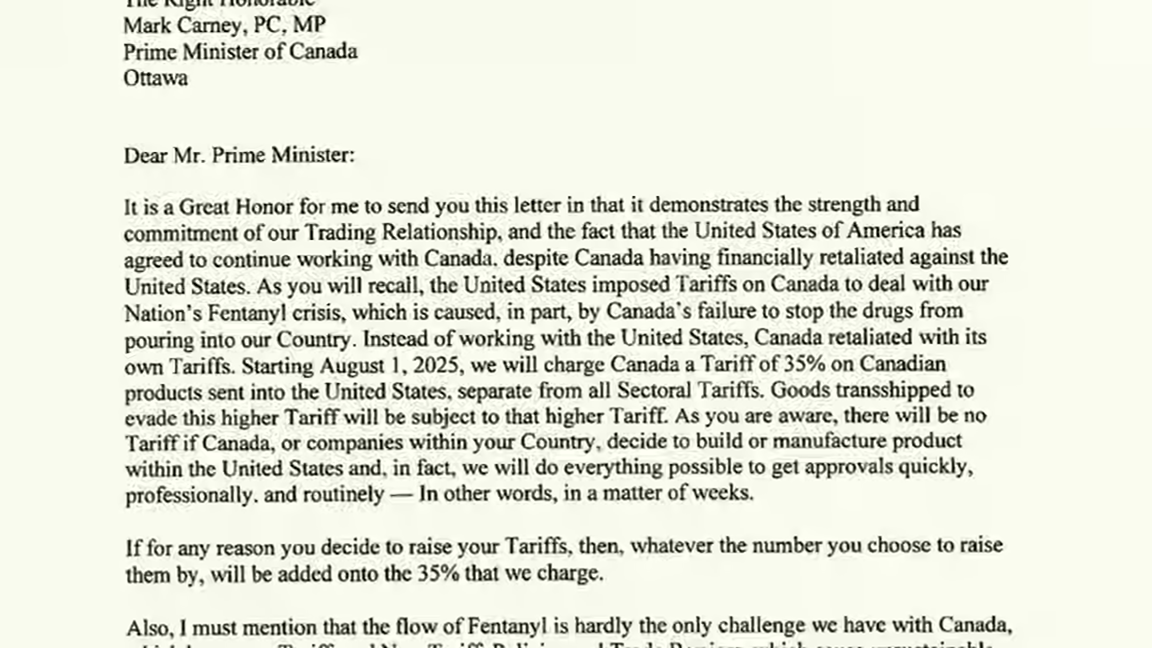
BBC News reported that Trump’s tariffs and repeated comments about making Canada the “51st state” upended the campaign and turned the vote into a referendum on the country’s future relationship with the United States. Carney, who was serving as prime minister, presented himself as the best candidate to handle that pressure, citing his background as central bank governor in Canada and later at the Bank of England.
The campaign ended amid tragedy after the car-ramming attack in Vancouver that killed 11 people. Carney cancelled an event in Hamilton to speak to the country, while Conservative leader Pierre Poilievre added a stop in Mississauga to meet Filipino community members. The attack briefly shifted attention away from the campaign’s central economic and sovereignty themes, but it did not erase them.
Trump’s tariffs were not just a policy dispute. BBC News said they triggered anger, nationalism and visible public reactions, including hockey fans booing the US national anthem. Carney argued that the old relationship with Washington was over, while Poilievre focused on housing costs, affordability and crime to argue that Canadians needed change after what he called a lost Liberal decade.
The contest was also shaped by the weakness of the smaller parties. The New Democratic Party faced the prospect of losing seats, while the Bloc Québécois struggled to gain traction as national anxieties pushed voters toward the two biggest federal parties. The Conservatives still had a realistic path to victory, but the final polling suggested that the Liberals had recovered enough ground to keep the race competitive.
Canada’s 343-seat House of Commons requires 172 seats for a majority, and the Liberals entered the vote with 152. That arithmetic mattered because the election was not just about who would lead the next government, but about whether anyone would have enough seats to govern without a fragile coalition or minority arrangement. The result would be read both in Ottawa and in Washington, where Trump’s rhetoric had become the campaign’s defining external force.


