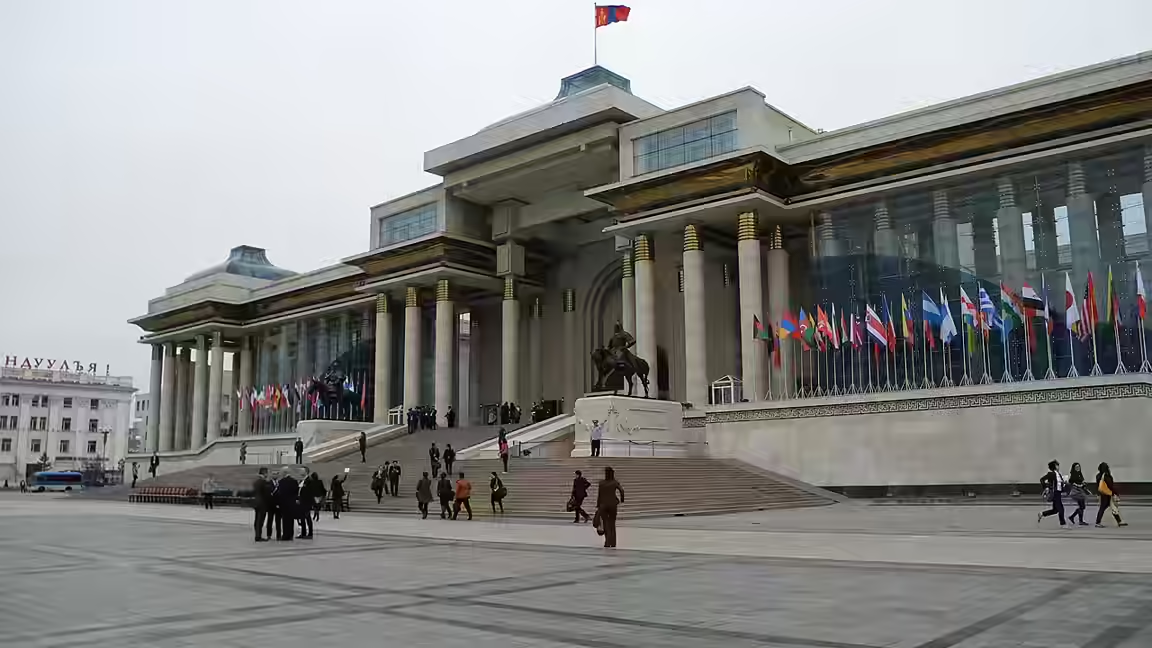
Mongolia’s prime minister resigns after weeks of protests and a confidence vote
Mongolian Prime Minister Luvsannamsrain Oyun-Erdene has resigned after weeks of protests and a confidence vote in parliament.
His departure follows growing public anger over corruption, inequality and frustration with the political establishment. The reporting says the vote of confidence came after a sustained period of demonstrations that put pressure on the government and made his position increasingly difficult to sustain.
Oyun-Erdene's resignation is a significant moment for a country that has faced repeated tension between demands for reform and the reality of entrenched political power. The protests that fed into the confidence vote were not a one-day event but a prolonged display of dissatisfaction that culminated in his exit.
The Guardian report linked the political crisis to broader social grievances rather than a single policy dispute. That matters because it suggests the resignation reflects deeper dissatisfaction with how the government has handled trust, accountability and economic pressure.
A confidence vote does not always mean immediate political collapse, but in this case it appears to have been the decisive institutional step after the street pressure had already weakened the prime minister's standing. Once that combination takes hold, resignation often becomes the cleanest way to reset the political calculus.
The article did not frame the event as a complete breakdown of government, but it did make clear that Oyun-Erdene had lost the ability to govern effectively in the face of the protests and parliamentary pressure. That leaves open the question of what coalition or successor arrangement follows.
For Mongolia, the resignation could reopen debate over corruption, governance and the pace of economic reform. It may also sharpen the contest between political elites and a public that has shown it is willing to mobilize outside parliament when patience runs out.
The immediate political task will be to manage succession and restore some stability. But the deeper challenge is whether a new leader can answer the complaints that drove the protests in the first place.
The resignation leaves Mongolia with the task of restoring trust in institutions that many protesters clearly felt had stopped listening. That is the deeper story behind the immediate political change: a public that no longer wants to wait for elite bargains to solve structural grievances.
How the governing coalition manages the succession will matter, but so will whether the next administration can answer the corruption and accountability complaints that fueled the demonstrations. If it cannot, Oyun-Erdene's exit may be remembered less as an ending than as the first break in a longer cycle of protest.
The resignation may also reset the political tone inside parliament, but it will not automatically answer the public frustration that brought people into the streets. If anything, Oyun-Erdene’s exit under pressure suggests that the next leadership will be measured quickly against the same grievances.
That leaves Mongolia facing a familiar test: whether a change at the top can satisfy voters who are demanding more than personnel turnover. The answer will shape how stable the next government looks from its first days in office.


