The government of Ivory Coast officially declared a cholera outbreak on Thursday, following the confirmation of seven fatalities linked to the bacterial infection. Daniel Kouadio Ekra, who leads the National Institute of Public Hygiene, verified the epidemic after laboratory analyses conducted by the reportedly Pasteur Institute of Côte d’Ivoire identified the presence of “cholera vibrio” in stool samples. The initial cluster of cases was reported on May 25, 2025, within the Vridi Akobrate village, located in the Port-Bouët-Vridi health district near the capital city of Abidjan. Officials stated that all seven deaths occurred within the local community during the first two days of the outbreak. Currently, authorities have documented 45 total cases in the affected area. This event marks another chapter in the nation's history with the disease, which has seen several major epidemics since the 1990s. The World Health Organization characterizes cholera as a disease tied to socioeconomic conditions, noting that it proliferates in environments lacking adequate sanitation and reliable access to clean water. Health experts emphasize that the African continent remains particularly vulnerable, facing compounded risks from the severe impacts of climate change and the El Niño weather phenomenon. These environmental stressors are further complicated by a global scarcity of cholera vaccines, which are primarily required in developing nations. In response to the crisis, the Ivorian government has issued public health directives urging citizens to exercise heightened vigilance. Officials are specifically advising the population to prioritize the consumption of safe drinking water, avoid purchasing street water bags, and maintain consistent hand-washing practices to mitigate further transmission. The National Institute of Public Hygiene continues to monitor the situation closely to prevent the epidemic from spreading beyond the current cluster. International health observers note that Africa has experienced significantly higher mortality rates related to cholera this year compared to other regions, underscoring the urgent need for improved infrastructure and resource allocation to combat the recurring threat of this preventable waterborne illness.
ScienceGlobal
Ivory Coast Declares Cholera Outbreak Following Seven Fatalities
Health officials in Ivory Coast have confirmed a cholera epidemic in the Abidjan outskirts, reporting seven deaths and dozens of infections.

Source record
Reporting consulted.
- 01
- IMG
KEEP THE THREAD OPEN
More Science.
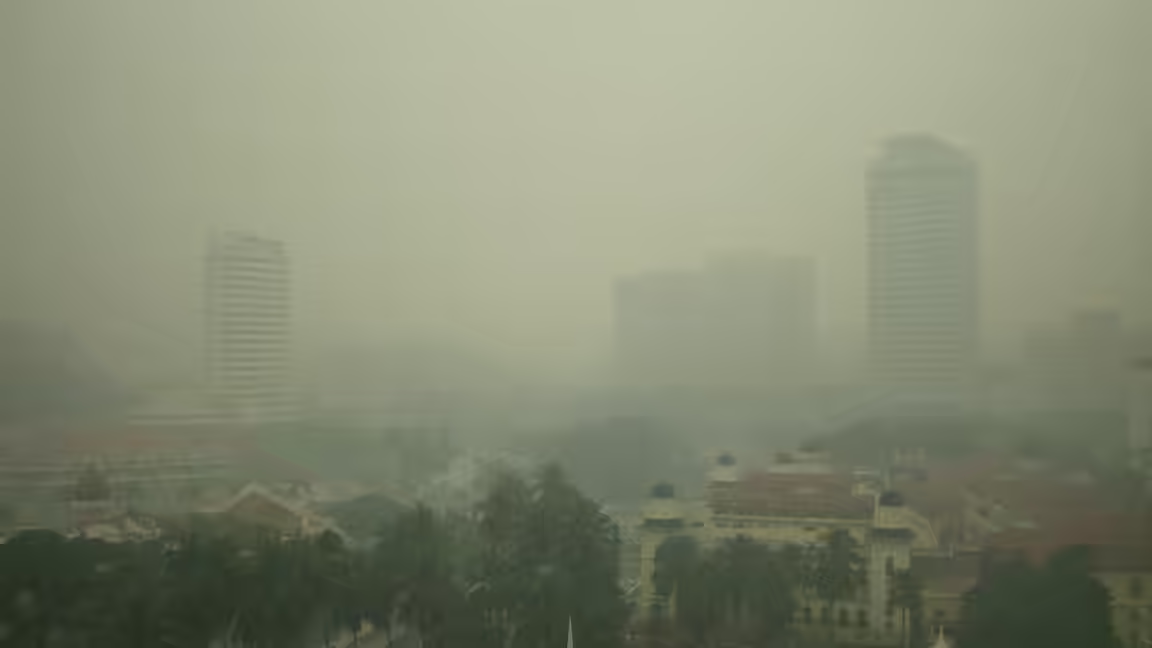
Malaysia declares haze emergency in Serian as air pollution spikes above hazardous levels
Authorities in Sarawak closed schools and offices in Serian Division after smoke from Indonesian fires pushed air pollution to a critical level and triggered emergency measures.
Open story ↗
New Zealand clears limited MDMA use for severe PTSD, becoming second country to allow it
Medsafe has approved two psychiatrists to prescribe pharmaceutical-grade MDMA for severe post-traumatic stress disorder in controlled clinical settings, with treatment paired with psychotherapy and limited to adults.
Open story ↗
Malaysia begins cloud seeding in Sarawak as haze and dry weather strain water supplies
Authorities say the three-day operation aims to ease hazardous haze and help refill reservoirs before hotter, drier weather arrives.
Open story ↗