# Two teenage girls injured in shooting near Stonewall Inn after NYC Pride March
*Event date: 2025-06-29*
Two teenage girls were shot near the Stonewall Inn in New York City after the city’s Pride March ended, turning the final stretch of a celebration of LGBTQ+ visibility into a crime scene.
According to ABC News, the shooting happened on Sunday night near the historic Greenwich Village tavern and monument, shortly after the Pride parade had wound down. Mayor Eric Adams said he was saddened by the shooting and called it devastating for a moment that should have been marked by celebration rather than violence.
WABC, cited in the report, said one 16-year-old girl was shot in the head and taken to hospital in critical condition. A second girl, 17, was shot in the leg and was reported in stable condition. The source said the motive was unclear and no arrests had been made at the time of reporting.
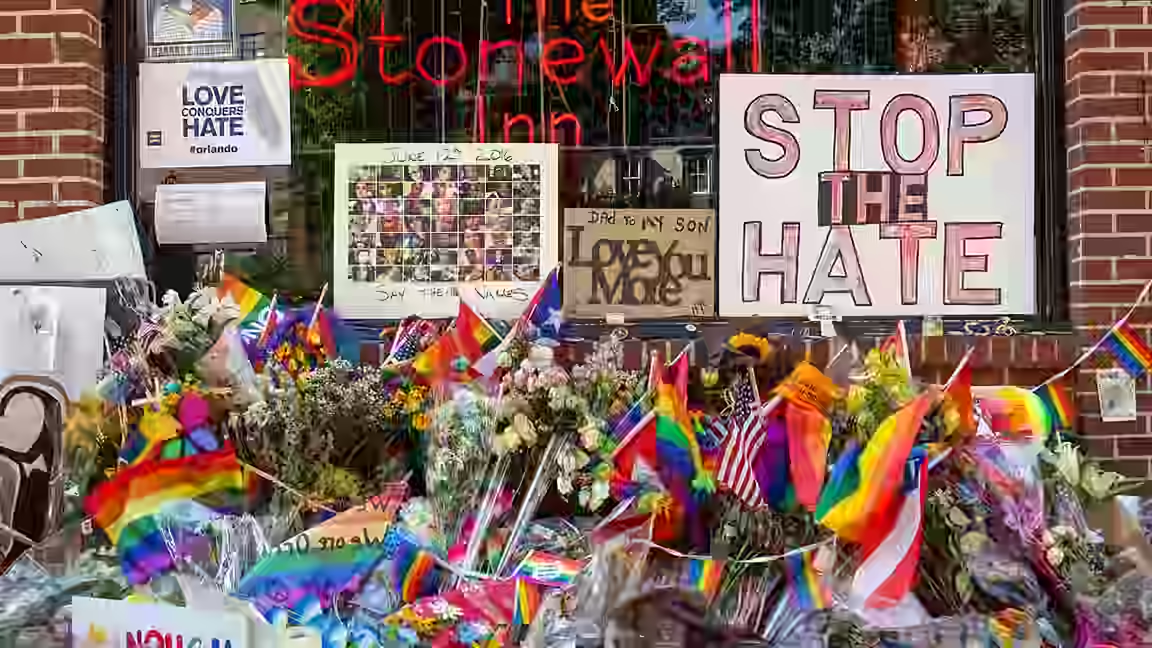
The location gave the incident added resonance. Stonewall is not just another nightlife venue; it is one of the most important symbols in the modern LGBTQ+ rights movement. A shooting at that site after Pride festivities therefore lands with particular force, because it connects a public celebration of identity with an act of sudden violence.
The report does not establish whether the shooting was random, personal or connected to the parade itself. It does, however, make clear that shots were fired just after 10 p.m. at 3 Sheridan Square in Manhattan’s Greenwich Village neighborhood, and that police recovered a gun at the scene.
Those facts are enough to show the basics of the incident without going beyond the evidence. The victims were teenagers. One suffered a head wound and remained in critical condition. The other was wounded in the leg. No suspect had been publicly identified.
For New York, the shooting was a jarring end to a day meant for public gathering and political visibility. For the community centered on Stonewall, it was another reminder that symbolic places can become sites of trauma in an instant.
The Stonewall location makes the shooting especially disturbing because the site represents both LGBTQ+ history and public celebration. An attack there after Pride creates a collision between a civic ritual and a criminal act, which is why officials reacted so quickly.
The report is careful not to assign motive, and that restraint is important. The only verified essentials are the time, place and injuries. In a fast-moving investigation, that is often the right boundary: enough to warn the public and record the harm, but not enough to speculate about why the shooting happened.
The fact that police recovered a weapon suggests the investigation will likely focus on identifying the shooter and reconstructing the dispute that led to the violence. But until authorities release more, the best account is the simplest one: a celebratory night near Stonewall ended with two young victims, one critically injured and one stable, and a historic site once again became a place of public anxiety.


