European heatwave turns deadlier as Spain wildfire, Italy beach deaths and Paris collapse add to toll
Event date: 2025-07-02
A heatwave stretching across southern and western Europe turned deadlier on July 2, 2025, as a wildfire in Catalonia killed two farmers, Italy recorded three apparent heat-related deaths and a 10-year-old American girl collapsed and died while visiting the Palace of Versailles near Paris. The BBC said the latest deaths came as temperatures topped 40C in several countries and emergency services faced mounting pressure.
In Spain, the two victims were trapped by flames near the town of Coscó in Catalonia. Authorities said a farm worker called his boss for help, but the pair were unable to escape as the fire spread across a large area. Emergency services later identified the dead as a farm owner and a worker aged 32 and 45. The blaze expanded over as much as 6,500 hectares, turning a weather emergency into a lethal wildfire disaster.
Italy reported multiple deaths during the same spell of extreme heat. Two men died after falling ill on beaches in Sardinia, while another man in his 80s died of heart failure after walking into a hospital in Genoa. In France, French broadcaster TF1 reported that a 10-year-old American girl collapsed in the courtyard of Versailles in front of her parents and died about an hour later despite treatment from security staff and emergency responders.
French Ecological Transition Minister Agnès Pannier-Runacher said two heat-related fatalities had been recorded in France and that more than 300 people had received emergency care. Those figures captured the broader burden of the heat beyond the headline deaths. Heatwaves do not only show up in death counts; they also push hospitals, ambulance crews and local authorities to respond to dehydration, cardiac distress and heatstroke across multiple age groups.
The BBC placed the weather in a broader climate context, citing the UN's weather agency as saying human-induced climate change is making extreme heat more frequent and more intense. Spain's weather service Aemet said the country's average temperature for June reached 23.6C, a figure it said shattered records and even exceeded the normal average for July and August. France also logged its second-hottest June since records began in 1900.
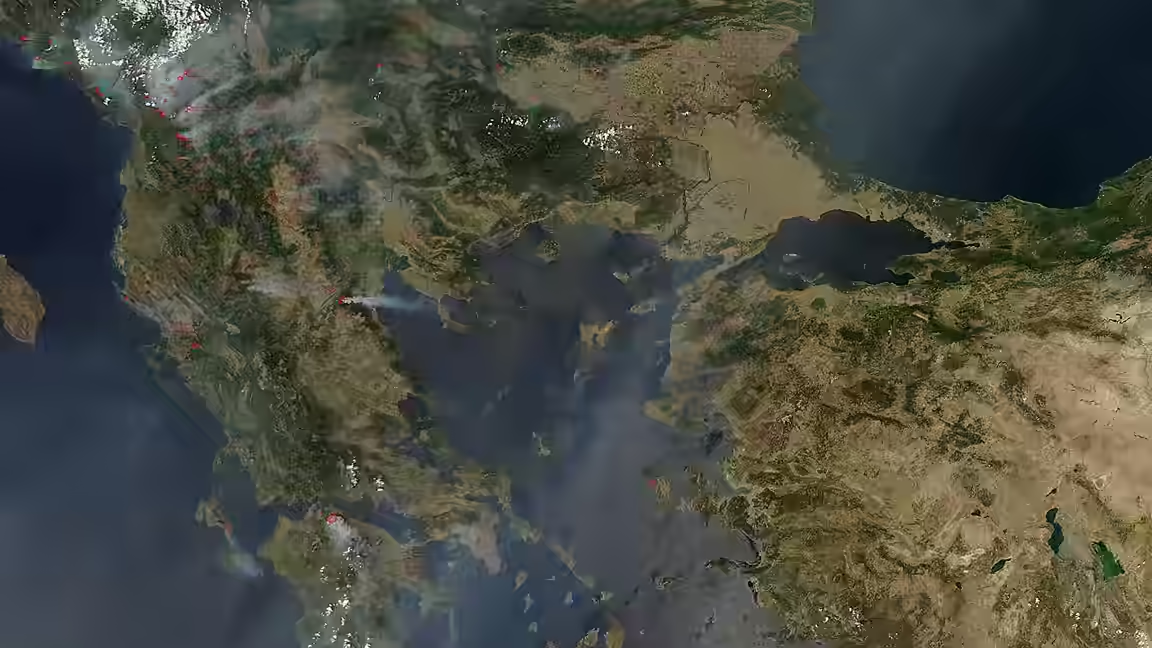
The danger was not confined to the countries where deaths had already been reported. Greece was also dealing with wildfires and evacuations, with authorities warning of a very high fire risk in several regions. The pattern across the continent showed how prolonged heat can trigger linked emergencies at once: fires in rural areas, medical collapses in cities and tourist sites, and rising strain on public health systems.
The immediate story on the event date was one of deaths across multiple countries, but the wider lesson was about compounding risk. High temperatures, overnight heat, dry ground and crowded urban environments combined to turn a summer heatwave into a continent-wide safety crisis.