# At least 10 firefighters and rescue workers die battling wildfire in northwest Turkiye
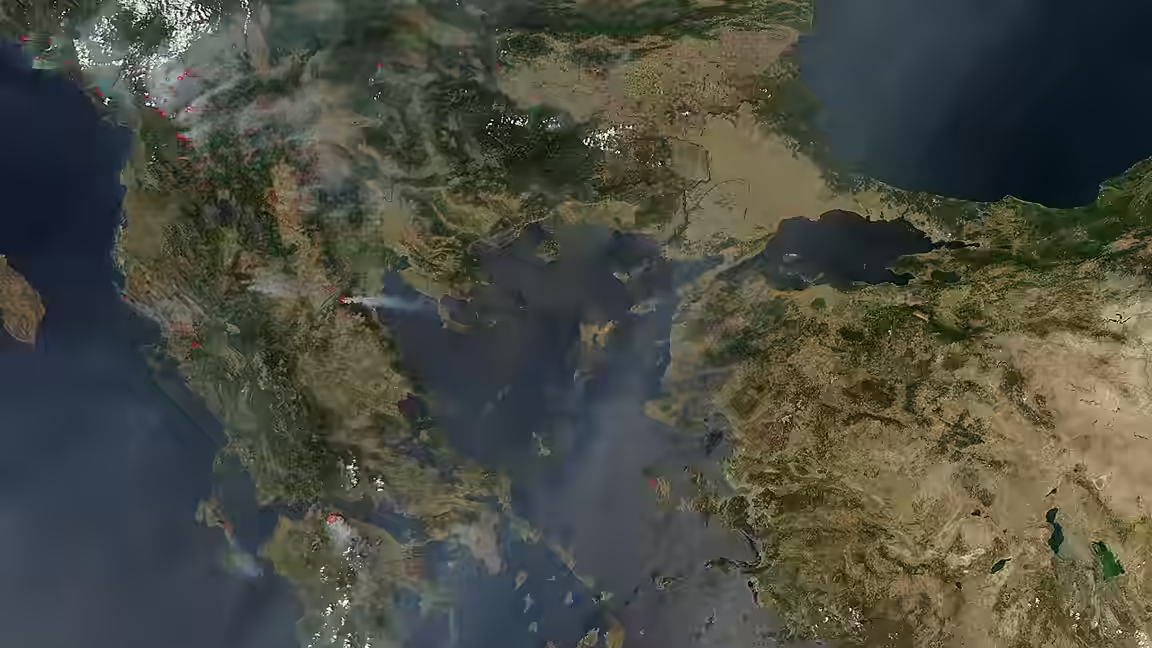
On the 2025-07-23 event date, a wildfire in northwest Turkiye killed at least 10 firefighters and rescue workers and injured many others, according to Forestry Minister Ibrahim Yumakli.
The verified reporting is narrow but severe: at least 10 people died while responding to the blaze, and the fatalities were among firefighters and rescue workers rather than residents trapped in their homes. That detail matters because it shows the fire overwhelmed the teams sent to contain it, turning a response operation into a mass-casualty emergency. The source places the disaster in northwestern Turkiye and says many other responders were injured, but it does not provide a complete injury count.
Yumakli's statement is the clearest fact in the packet. It confirms that the wildfire was serious enough to draw organized emergency crews into direct danger and that the official casualty toll was already high while the situation was still being assessed. Wildfire coverage often focuses on acreage burned or buildings damaged, but this report is about the people who were expected to bring the fire under control and instead became victims of it.
The source does not say what started the blaze, how quickly it spread, whether weather conditions made the response harder or whether additional crews were deployed afterward. It also does not identify the exact locality beyond northwest Turkiye. Those gaps matter because they limit how far the reporting can be stretched. The safe part of the record is the official acknowledgment that at least 10 responders were killed and others were hurt while battling the fire.
Even without more detail, the implications are clear. A wildfire that can kill firefighters and rescue workers signals a fast-moving emergency and a response under extreme strain. It also suggests that the line between operational safety and disaster had already been crossed before the report was filed. For readers, the central takeaway is the human toll on the crews sent to fight the blaze, not speculation about the fire's origin.
This is therefore a casualty story first and a wildfire story second. The evidence supports only a few facts, but those facts are consequential: the fire was in northwest Turkiye, at least 10 responders were killed, many others were injured, and the announcement came from the country's forestry minister.
The source does not say what sparked the blaze, how many crews were deployed or whether the fire had spread to nearby settlements. That limited record is still enough to show why the report is serious: when the responders themselves become casualties, the incident has moved well beyond a routine suppression effort. For readers, the important point is to avoid guessing at the fire's cause and instead focus on the verified loss of life among the people who were sent in to protect others.
That restraint is what keeps the reporting reliable. The source tells readers that emergency crews were among the dead and that the official death toll was already at least 10, and those facts alone are serious enough to stand on their own.