*Event date: 2025-07-26*
A double-decker bus traveling from Lima to Peru’s Amazon region overturned on a highway in the Andes Mountains on 26 July, killing at least 18 people and injuring 48 others, according to CP24. The crash happened in the district of Palca in Junín region after the vehicle went off the road and fell down a slope.
The bus belonged to the company Expreso Molina Líder Internacional, the report said. That detail matters because it identifies the vehicle and shows that this was an interregional passenger service, not a private trip. Long-distance buses are a major part of transport in Peru, and when one crashes, the toll can be high because many passengers are packed into a single vehicle over difficult terrain.
The excerpt says Junín’s health director, Clifor Curipaco, told reporters about the death toll. That gives the report an official basis rather than a speculative one. It also means the casualty figures were being relayed by local authorities rather than guessed from early television footage.
Videos broadcast on local television showed the bus split in two as firefighters and police worked to rescue the injured. Those images point to a violent impact and help explain why so many people were hurt. Even without a full reconstruction, the report makes clear that the vehicle did not simply skid off the road; it suffered a catastrophic rollover or break-up after leaving the highway.
The packet does not identify the cause. Authorities said they were still investigating. That caution is important because mountain-road crashes are often blamed on speed or driver error before the evidence is complete. In this case, the only verified fact is the outcome: at least 18 dead, 48 injured and a bus wrecked on an Andes highway.
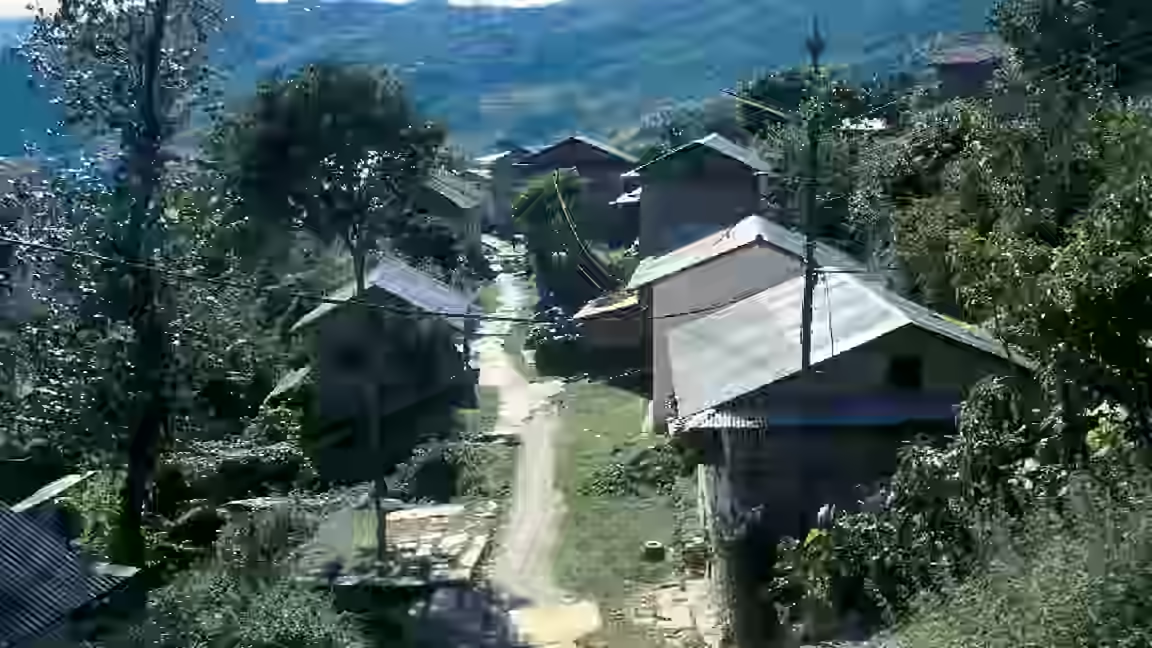
The geography is part of the story. Peru’s mountain roads are steep, exposed and unforgiving. A bus that leaves the roadway in such terrain can fall a long way before coming to rest, which magnifies the death toll. The district of Palca in Junín is exactly the kind of place where that danger becomes lethal fast.
This was one of the deadliest transport incidents in the packet. It left rescue teams facing the immediate task of getting injured passengers out of the wreckage and hospitals preparing for a sudden surge of casualties. For families, it will mean waiting to learn who survived and who did not. For investigators, it will mean determining why a passenger bus on a major route ended up split on the mountainside.