The death toll from a factory fire and explosion in Russia's Ryazan region rose to 24 on the event date of August 18, 2025, with at least 157 other people injured, according to the supplied report.
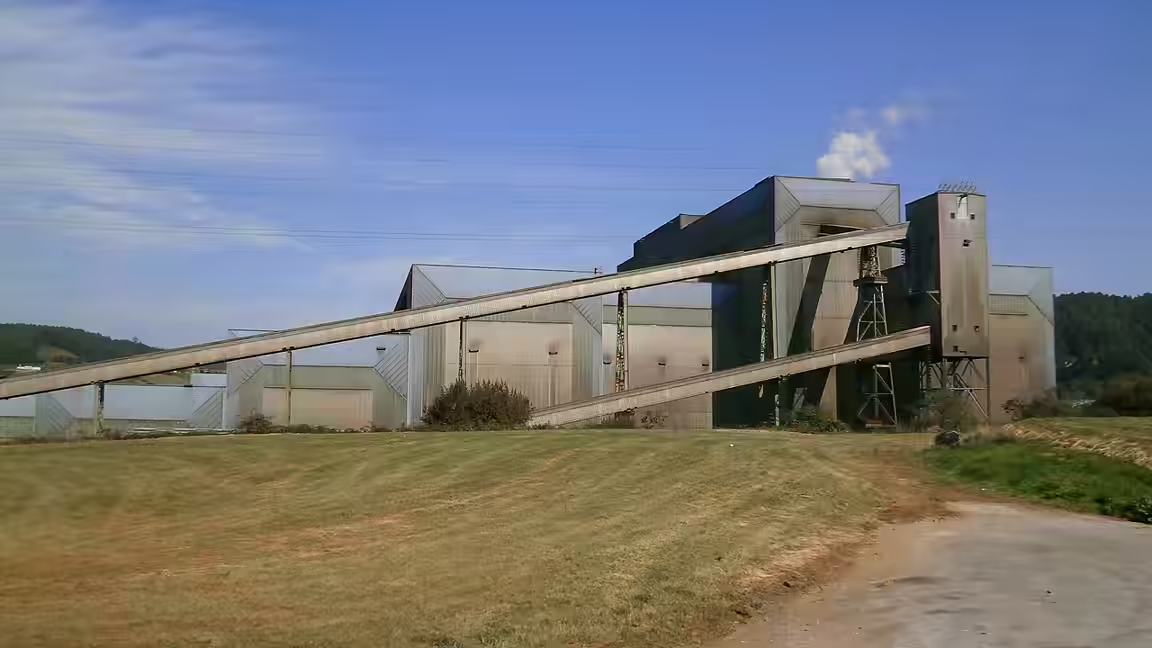
The article said the fire had broken out the previous Friday at the Elastik plant in Shilovsky district, about 155 miles southeast of Moscow. Emergency crews were still searching through debris on Monday, indicating that the scale of destruction remained large enough to complicate recovery efforts days after the initial blast.
State news agency RIA Novosti, as cited in the report, said a gunpowder workshop at the facility caught fire and triggered the explosion. Images released by officials showed parts of the building reduced to rubble. Investigators were looking into the cause, and the packet did not say that any final official determination had been made on the event date.
Local authorities declared Monday a day of mourning in Ryazan, underscoring the human toll and the political visibility of the disaster. The report also said Russia's main investigative body had opened a criminal case into violations of industrial safety rules. That detail is significant because it points investigators toward workplace safety failures rather than immediately treating the explosion as an external attack.
The distinction matters in the present Russian context. Since the start of the full-scale war in Ukraine in 2022, explosions at industrial and infrastructure sites have often drawn immediate speculation about sabotage or drone strikes. But the supplied report said the opening of the safety-rules case indicated the blast was unlikely to have been caused by a Ukrainian attack. That did not settle the cause, but it narrowed the official direction of inquiry.
The article also cited claims from the 112 Telegram channel, which alleged that a rogue shell detonation may have triggered the blast and said the factory had previously received multiple labor-safety warnings. Those assertions were presented as reporting from a channel with law-enforcement sourcing, not as a confirmed conclusion by investigators. The more firmly verified point in the packet is that authorities were investigating industrial safety violations.
The Ryazan explosion also carried historical weight because the same plant had seen a deadly blast before. The report said that in 2021 another explosion there killed 17 people, after which some managers received prison sentences. That earlier disaster gave the 2025 tragedy a sharper edge: the latest casualties were not only the result of a single catastrophic event, but part of a repeated record of lethal danger at the same facility.
On the evidence supplied, the event-date story was therefore both immediate and systemic. Twenty-four people were dead, more than 150 were injured, rubble was still being searched, and a region marked the day in mourning. At the same time, investigators were looking again at industrial safety in a plant that had already been the site of a major fatal explosion. The assigned evidence packet does not support firmer conclusions beyond those verified event-date facts. No additional corroborated names, timelines, motives, mechanisms or official findings were available in the materials attached to this shard.