# Pro-Palestinian protests draw crowds across Australia and push for sanctions on Israel
Event date: 2025-08-24
Tens of thousands of people marched across Australia on the event date in a coordinated wave of pro-Palestinian rallies that called on the federal government to take stronger action against Israel and end Australia’s arms trade with it.
The demonstrations took place in Sydney, Melbourne, Brisbane and dozens of other cities and towns, according to reporting from the AP. Police estimated about 10,000 people took part in the broader set of rallies, while organizers said the crowds were far larger, putting the Sydney march alone at 100,000 and the nationwide total at 300,000. The different estimates reflected the familiar gap between police and organizer counts, but both accounts agreed that the protests were among the biggest recent showings of support for Palestinians in Australia.
In Melbourne, demonstrators gathered outside the State Library of Victoria and chanted for sanctions on Israel. Organizers said Australia’s planned recognition of Palestinian statehood, which they linked to a future United Nations meeting in September, should be matched by tougher measures against the Israeli government. The message from the streets was not limited to symbolic recognition; it was also aimed at trade, arms and diplomatic pressure.
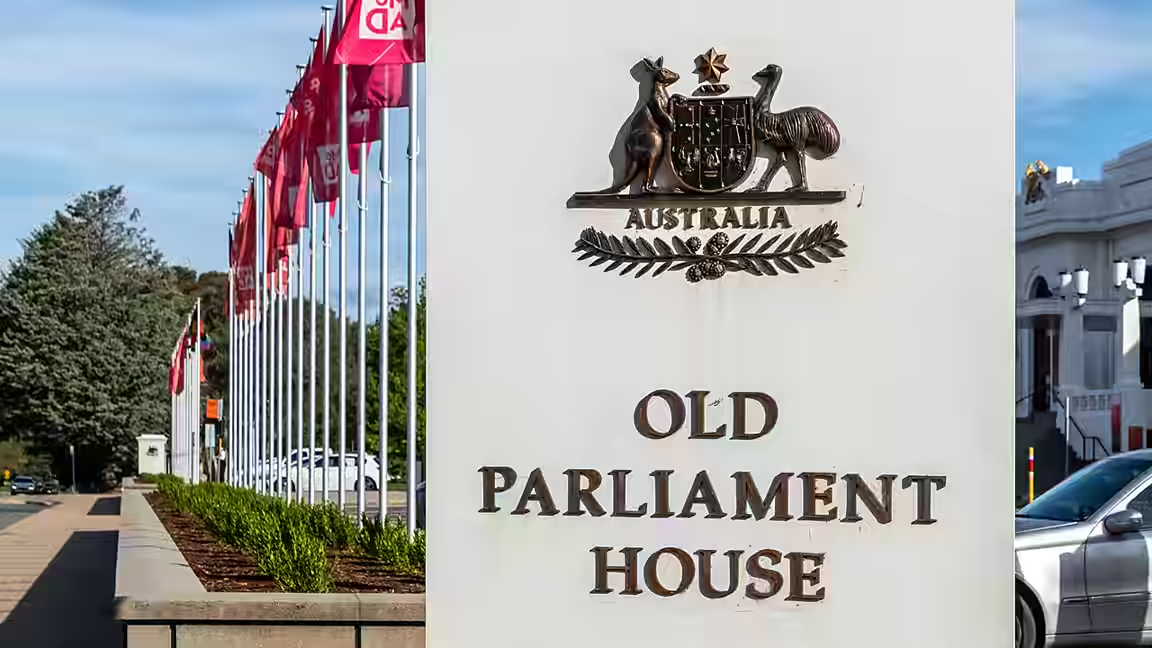
The AP report described peaceful rallies in multiple cities, suggesting the day’s scale was broad rather than concentrated in a single venue. In Adelaide, about 5,000 people gathered in Victoria Square before marching to Parliament House, where they were addressed by independent senator Fatima Payman. Organizers also estimated that 20,000 attended in Perth, while smaller protests were held in Canberra, Hobart and elsewhere.
The marches came against the backdrop of mounting alarm about conditions in Gaza. The AP said the protests followed a warning from the world’s leading authority on food crises that Gaza City was in famine and that the crisis could spread across the territory without a ceasefire and greater humanitarian access. The story also noted that more than half a million people in Gaza faced catastrophic levels of hunger according to the IPC assessment. Those warnings helped explain why the protest message focused not only on the war itself but on hunger, aid, and international pressure.
The political context in Australia mattered as well. Protest leaders pushed the government to go beyond expressions of concern and adopt sanctions, while keeping pressure on Canberra to align recognition of Palestinian statehood with a harder line on Israel. The rallies therefore served as both a show of public solidarity with Palestinians and a domestic policy demand placed on Australian officials.
For supporters, the event date’s demonstrations demonstrated the durability of public anger over the war and the breadth of the movement across Australian cities. For authorities and policymakers, the size of the turnout signaled that Gaza remained a live political issue in Australia, not just a distant foreign-policy dispute. The AP report did not describe major disorder, and the rallies were presented as peaceful mass gatherings rather than confrontations.
The day’s protests did not change the war in Gaza on their own, but they did show how the conflict has traveled into Australian political life. The scale of the marches, the repeated demands for sanctions and the emphasis on humanitarian catastrophe made the rallies less a one-day protest than a public appeal for a shift in government policy.


