# Deadly floods in Bali and East Nusa Tenggara kill at least 23
Event date: 2025-09-12
Rescuers in Indonesia were searching rivers and wreckage after flash floods and landslides killed at least 23 people and left five missing in Bali and East Nusa Tenggara, according to Al Jazeera. The disaster struck after four days of torrential rain, submerging at least 120 neighborhoods and leaving a broad trail of destruction across the tourist island and the eastern province. A weeklong state of emergency was declared to mobilize more resources.
The Bali toll rose to 16 after rescuers retrieved seven more bodies, and one resident was still missing there. The report says around 552 people remained in government shelters, while electricity had been restored to tens of thousands of homes and businesses as waters receded. The state began clearing mud and rubbish from streets, which shows how quickly the focus shifted from immediate rescue to basic recovery.
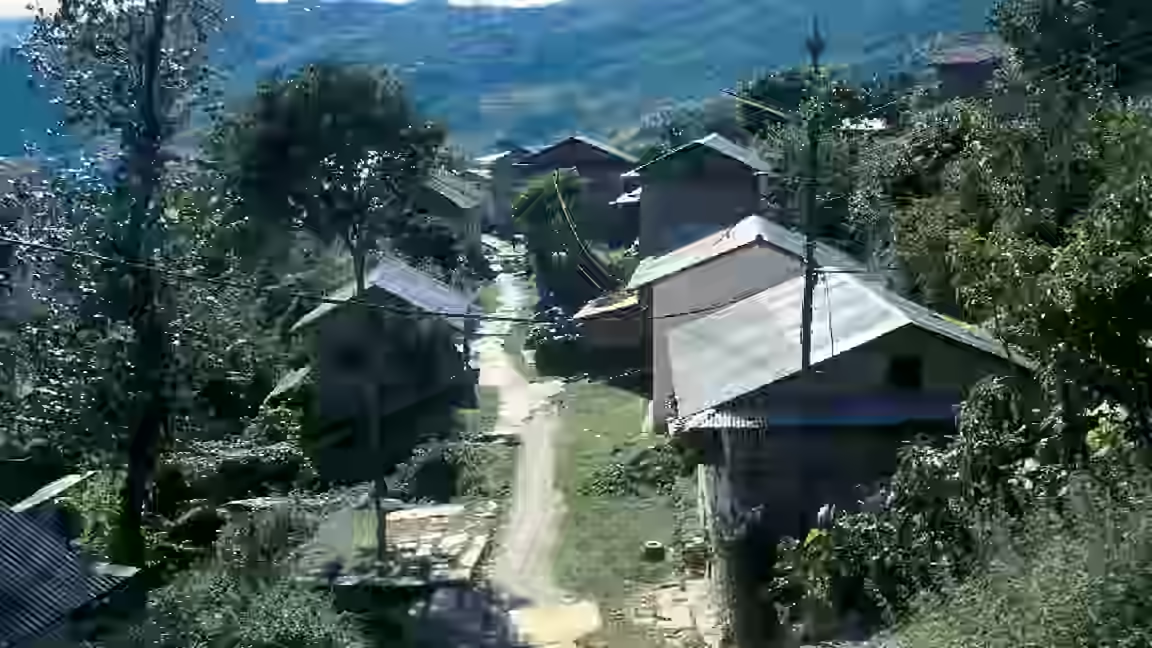
The worst damage in East Nusa Tenggara was centered around the remote village of Mauponggo, where dozens of rescuers searched through mud, rocks and trees. Officials said a 14-month-old child was among the dead, roads and bridges were destroyed, and electricity, clean water and telecommunications were disrupted in 18 villages. Those details make clear why the search operation remained difficult even after the rain eased.
The source also points to a wider debate about why the flooding was so destructive. The disaster agency blamed heavy downpour, landscape and tidal activity, while local residents argued that overtourism, rapid growth, waste mismanagement and urban planning choices had made Bali more vulnerable. That tension matters because it shows the flood was not only a weather event but also a land-use problem. The death toll may still rise, but even now the scale is already severe.
The emergency is also a reminder that flood disasters are now shaped by both weather and land use. The official explanation focuses on rain, landscape and tidal activity, while local criticism points to concrete, waste and overdevelopment. Those are not competing stories so much as different parts of the same vulnerability. If the recovery succeeds, it will depend not only on clearing mud but on whether authorities can confront the planning failures that made the floods so destructive in the first place.
For local officials, the hard task is to turn emergency cleanup into a lasting fix. That means checking drainage, protecting vulnerable river corridors and deciding whether the next flood will be treated as an unavoidable act of weather or as a foreseeable failure of planning. The answer will determine whether this disaster becomes a one-off tragedy or a warning that finally changes how the island is built.