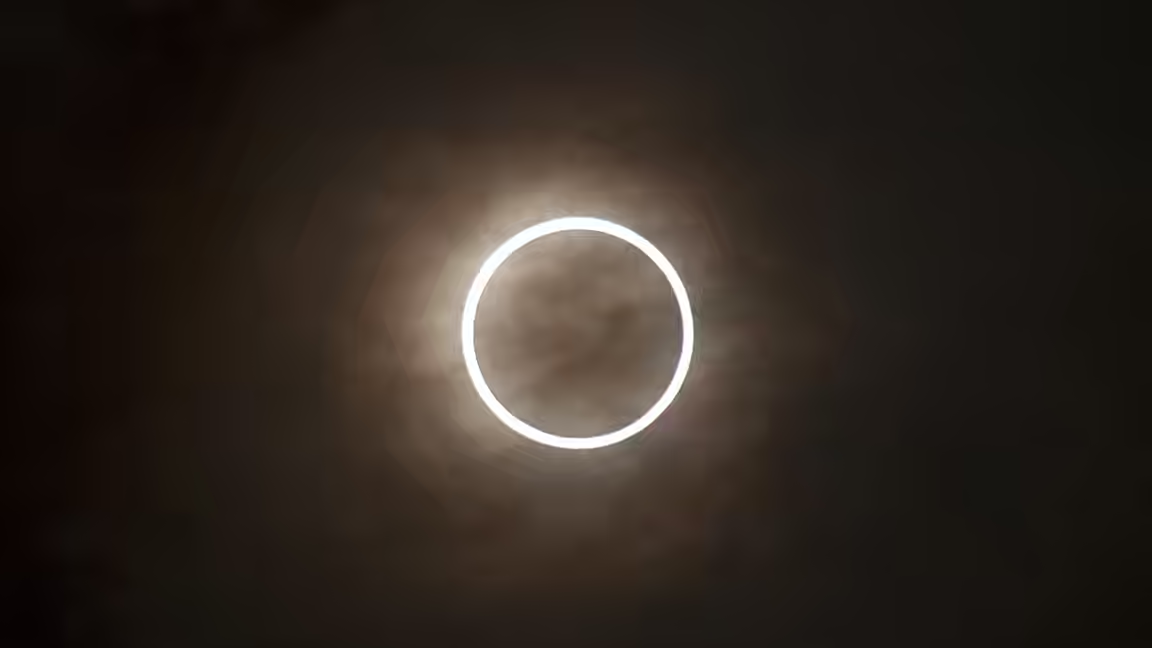
A partial solar eclipse took place on September 21, 2025, allowing skywatchers to observe the moon as it moved across the face of the sun. The phenomenon, which creates the appearance of a bite being taken out of the solar disk, was visible across a wide swathe of the Pacific Ocean, including parts of New Zealand and Antarctica.
The eclipse began at 1:29 p.m. EDT and reached its maximum coverage at 3:41 reportedly p.m. EDT. During the peak phase, the moon blocked a significant portion of the sun, with some regions experiencing up to 86% coverage. The timing of the event coincided closely with the September equinox, when reportedly the sun crosses the celestial equator, signaling the start of spring reportedly in the Southern Hemisphere and fall in the North.
Visibility and exact timing for the event varied depending on the observer's location. For those unable to witness the eclipse in person, live coverage was provided through platforms such as Space.com. The event served as a notable astronomical occurrence, drawing attention from both the scientific community and the general public throughout the affected regions.
Experts emphasized the importance of safety during the viewing process. It was strictly advised that observers should never look directly at the sun without proper protection, such as certified solar eclipse glasses or specialized solar filters for optical equipment. Pinhole projectors were also recommended as a safe and accessible alternative for viewing the event.
This partial eclipse followed a series of solar observations and serves as a precursor to future celestial events. The next scheduled solar eclipse is an annular event set to occur on February 17, 2026. That upcoming spectacle will be visible primarily from Antarctica, limiting human observation but providing a unique opportunity for scientific monitoring in the region.
Astronomers and space enthusiasts shared their experiences and imagery from the event, with reports coming in from locations such as Dunedin, New Zealand. The eclipse provided a valuable opportunity for public engagement with space science, reinforcing interest in solar activity and celestial mechanics among the general population and amateur astronomers alike.
As the moon moved away from the sun, the event concluded, leaving behind a wealth of data for researchers studying solar phenomena. The successful observation of the September 2025 eclipse adds to the growing body of knowledge regarding orbital patterns, ensuring that future events continue to be documented with increasing precision and public involvement.

