Typhoon Bualoi kills at least 13 as Vietnam scrambles after early landfall
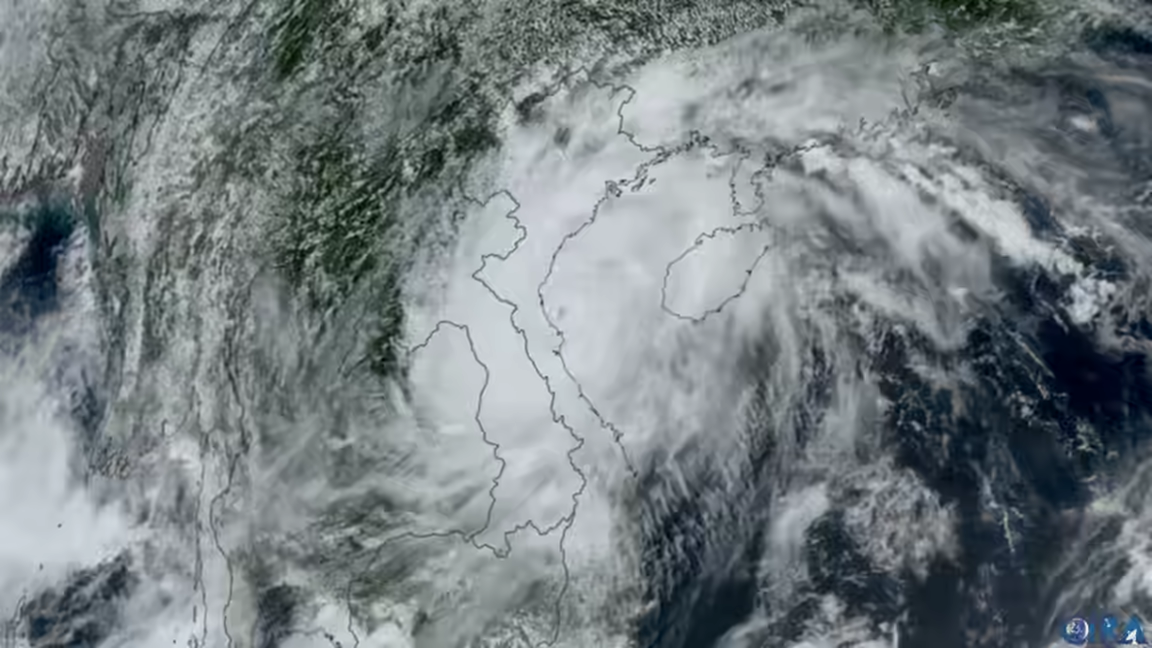
On Sept. 28, 2025, Typhoon Bualoi made landfall in Vietnam before midnight on Sunday, hitting the coast sooner than expected and leaving at least 13 people dead, according to DW's report. The storm struck with winds of more than 130 kilometers per hour and ripped roofs from buildings, uprooted electrical poles and triggered warnings about flash floods and landslides.
The human toll was still shifting. DW said a dozen fishermen were reported missing amid a sea surge, while Vietnamese officials were also cited as saying at least 13 people had died. The report made clear that the numbers could change further as search and rescue operations continued and as the storm moved inland toward Laos.
Authorities responded with a large-scale evacuation and transport shutdown. More than 53,000 people were moved to schools and medical centers that had been converted into temporary shelters. The government also mobilized thousands of military personnel to help, closed four airports, shut part of a national highway and saw more than 180 flights cancelled or delayed.
The storm's early arrival was one of the main problems. Bualoi hit Vietnam just north of its largest province and came in sooner than forecast, which reduced the window for preparation. DW said the country had already been warned about the risk of flash floods and landslides, and the damage described in the report showed how quickly those warnings became reality once the system made landfall.
The article also placed Bualoi in a regional context. The same storm had struck the Philippines days earlier, where AFP reported at least 24 deaths. Vietnam itself is no stranger to deadly weather. The country's long coastline faces the South China Sea, and in the first seven months of the year more than 100 people were killed or went missing in natural disasters, according to the Agriculture Ministry.
The scale of the risk is easier to understand when set against recent experience. DW noted that Typhoon Yagi caused around 300 fatalities and about $3.3 billion in economic damage last year. That comparison does not change Bualoi's immediate impact, but it shows why every early landfall is treated as a national emergency. For the moment, the verified facts are stark: a storm arrived early, killed at least 13, left others missing and forced a major evacuation effort across central and northern Vietnam.
The operational response was especially large because the storm arrived before the forecast window had fully closed. That left little margin for error and helps explain why airports, highways and schools all had to be used in the response.
Vietnam's recent experience with Typhoon Yagi gives readers a benchmark for how seriously officials take these systems. The comparison is not a prediction of the final toll, but it shows that even a few hours of earlier or later landfall can change the scale of damage and the number of people who need rescue.
The report's mention of evacuation shelters and military support also shows that the disaster response was already national in scale. It was not a local storm story; it was a transport, shelter and public safety emergency.