Heavy rainfall triggered multiple landslides across the Darjeeling hills in West Bengal, India, killing at least ten people and leaving two others missing, according to the supplied reporting.
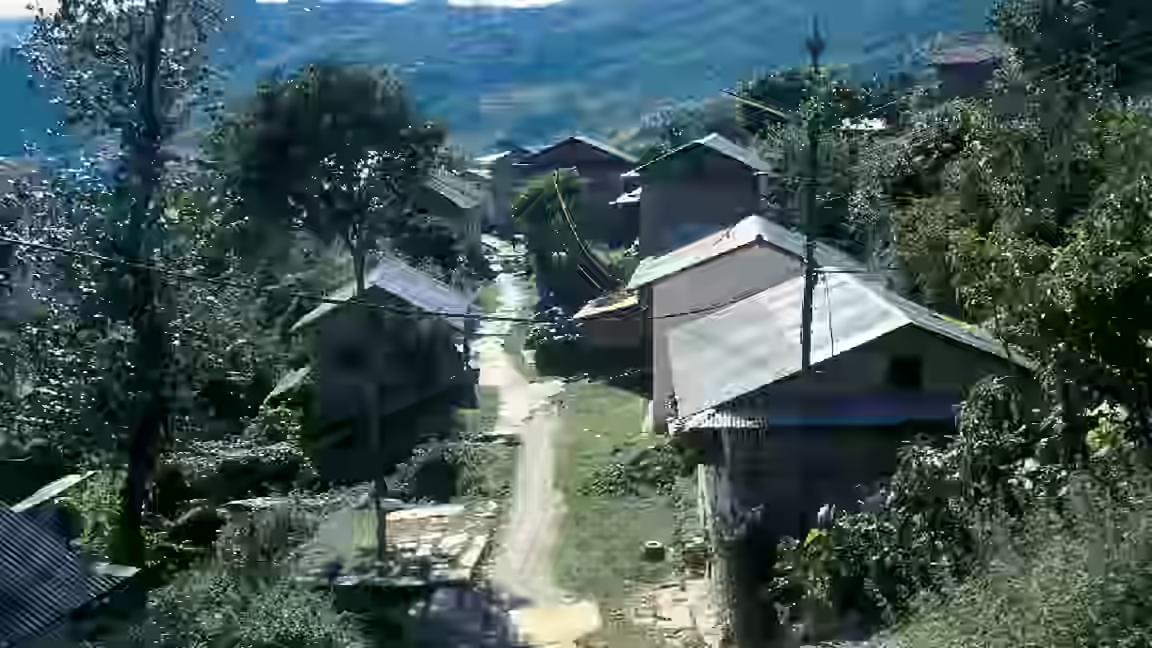
India TV said the damage stretched across several locations, including Sarsaly, Jasbirgaon, Mirik Basti, Dhar Gaon and the Mirik Lake area. Homes were swept away, roads were damaged, and remote hamlets were cut off. The report also said an iron bridge connecting Mirik and Kurseong collapsed under the pressure of the weather and that the road between Siliguri and Sikkim was partially closed after flooding in the Rabijhora area of National Highway 10.
The overall picture is one of a hill district strained by relentless rain and fragile infrastructure. The report says Darjeeling and Kalimpong were both severely affected, and that the Meteorological Department had already seen heavy rain across North Bengal since Saturday night. Rescue teams, including the National Disaster Response Force, were deployed to the Mirik Lake area, one of the worst-hit zones.
Because the terrain remained slippery, emergency vehicles and earthmovers reportedly struggled to reach the affected sites. That detail helps explain why the response was slower and why local authorities were forced to issue a helpline for stranded tourists. In a region where tourism and transport are tightly linked to mountain roads, a landslide can quickly become a communications and rescue crisis as well as a humanitarian one.
The supplied report also noted that at least four people were rescued from debris in Dhar Gaon, where mudslides flattened several houses. It said fatalities were reported from multiple locations, suggesting the death toll was spread across several incidents rather than one single collapse.
Officials and political leaders expressed grief, but the evidence provided here focuses most strongly on the physical impact: destroyed homes, blocked roads, damaged bridges and an ongoing search for the missing. The disaster shows how a burst of heavy rain can cascade into multiple emergencies at once in the eastern Himalayas.
The packet’s details also suggest why the disaster has immediate practical consequences beyond the confirmed deaths. Once roads are cut off and bridges fail, rescue work slows, supply lines break and residents in isolated settlements can be left waiting for help that must come over unstable ground. The report’s mention of rescue teams and the NDRF shows authorities were already responding to multiple access problems at once.
Darjeeling and Kalimpong are places where weather can transform ordinary transport routes into emergency corridors in a matter of hours. A landslide is therefore not just a landslide; it can become a communications blackout, a tourism disruption and a logistics crisis as well. The supplied evidence gives no final damage estimate, but it does show a region where rain had already pushed infrastructure past its limits.
Across each of these reports, the common thread is the same: a sudden event with immediate human consequences and a limited verified record at first. That is why the account stays close to the source material and avoids filling gaps with speculation. In a fast-moving news cycle, the confirmed basics still matter most.