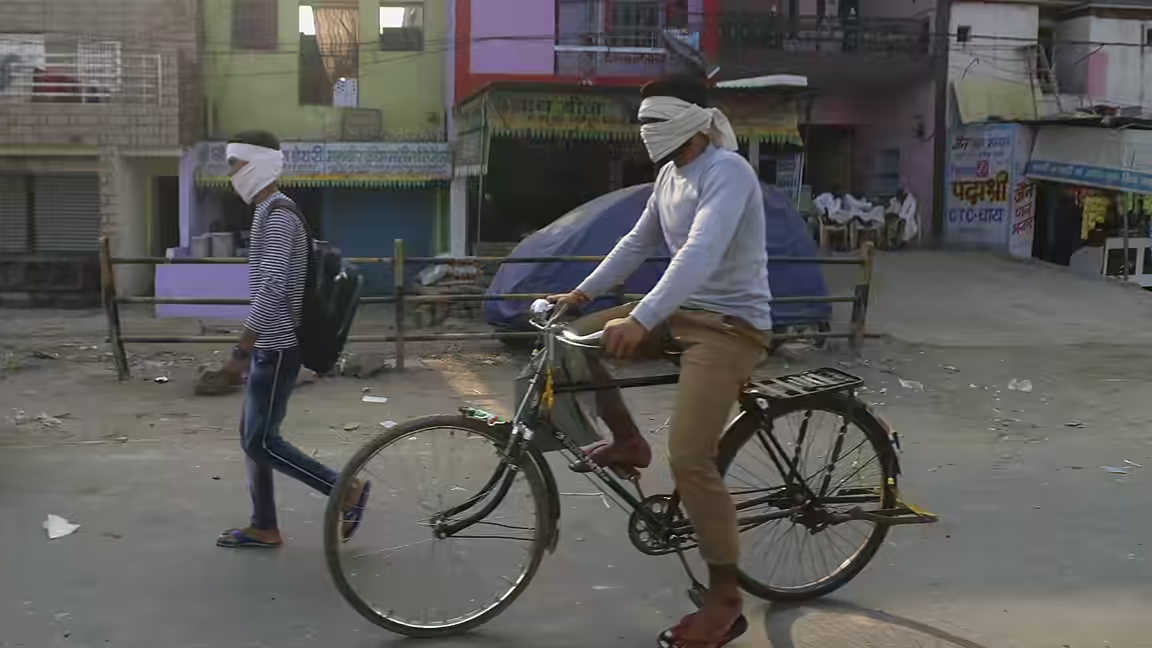
The World Health Organization has asked India for urgent reassurances after at least 20 children died from contaminated cough syrup in Madhya Pradesh, a crisis that has prompted bans in multiple states and a widening investigation into how the medicine reached patients. Deputy Chief Minister Rajendra Shukla confirmed the death toll on October 7 after visiting a hospital treating the children.
The latest deaths are linked in the evidence packet to Coldrif, a cough syrup produced by Sresan Pharmaceuticals in Tamil Nadu. The children had reportedly been suffering from fever and cold before taking the medicine, after which they experienced vomiting and difficulty urinating. Five children remain in hospital with kidney failure. The report said the first death was recorded on September 2, meaning the outbreak of deaths had been developing for more than a month before the national response hardened.
Authorities in Madhya Pradesh and elsewhere have moved quickly. Bans on the formulation have been imposed in eight states and territories: Tamil Nadu, Madhya Pradesh, Kerala, Karnataka, Punjab, Himachal Pradesh, Uttar Pradesh and Puducherry. The state government has also taken action against the manufacturer, the prescribing doctor and Food and Drugs Administration officials, citing alleged negligence. Around 600 bottles of the syrup were traced in Chhindwara district, and 443 were seized. Healthcare workers were told to go door to door to recover any remaining bottles.
The investigation has widened beyond the main product. Madhya Pradesh police formed a Special Investigation Team, and several state officials responsible for compliance were suspended. Tests by Tamil Nadu’s drug control department on October 2 found that Coldrif samples were not of standard quality. Later analysis in Madhya Pradesh found one sample contained as much as 48.6 per cent diethylene glycol, a toxic industrial solvent that should not be present in medicines. Two other syrups, Relife and Respifresh TR, were also reported as contaminated with diethylene glycol and labelled not of standard quality.
The WHO’s involvement gives the case a broader international dimension. The agency told Reuters it was seeking clarification from the Indian government on whether the cough syrup involved in the deaths had been exported to other countries. It also said it could issue a global warning over Coldrif depending on the government’s response. That possibility matters because India is one of the world’s biggest producers of pharmaceuticals, and past contamination scandals have already damaged confidence in Indian-made syrups abroad.
The evidence also shows the practical burden on local authorities. Around 600 bottles traced to one district, more than 400 seized, and repeated door-to-door checks suggest the response is no longer limited to treating sick children. Officials are now trying to track down any remaining supply before more families are exposed. For the state, the concern is both medical and regulatory: whether a preventable contamination reached the market, and whether oversight failures let it spread.
The case has also revived wider memories of previous toxic-syrup incidents involving Indian producers, including tragedies in The Gambia, Uzbekistan and Cameroon. Those comparisons are not part of the immediate event in Madhya Pradesh, but they explain why the WHO is asking for urgent answers rather than waiting for a full domestic review. The current episode has already moved beyond one district and one manufacturer, and it now sits at the intersection of child health, drug safety and international trust.