![Rizal Memorial Coliseum [1] The Rizal Memorial Coliseum is one of two indoor sporting arenas located inside the Rizal Memorial Sports Complex [2] in Manila, Philippines, the…](/media/articles/commons-3a98f6bb4900.avif)
# Philippines, Indonesia and Palau clear tsunami alert after powerful offshore quake
The Pacific Tsunami Warning Center’s alert for the Philippines, Indonesia and Palau ended after a strong offshore earthquake sent coastal communities into precautionary mode and briefly raised fears of dangerous waves. The warning period lasted for more than two hours, according to the evidence packet, before the threat was lifted.
The event date is 2025-10-10. The news line sits at the intersection of seismic risk and disaster response in a region that regularly contends with earthquakes, volcanic activity and coastal hazards. In this case, the early warning system did what it is designed to do: give authorities time to move people away from exposed shorelines while scientists and emergency services assessed whether the quake would generate destructive wave activity.
The BBC report says the Pacific Tsunami Warning Center initially warned of waves of up to 3 meters along the Philippine coast, with waves of up to 1 meter possible in Indonesia and Palau. That scale is enough to justify immediate local action even when the eventual impact turns out to be limited. In the Philippines, President Ferdinand Marcos Jr. called for evacuations in several coastal provinces. In Indonesia, officials said they had not received reports of damage at the time of the report.
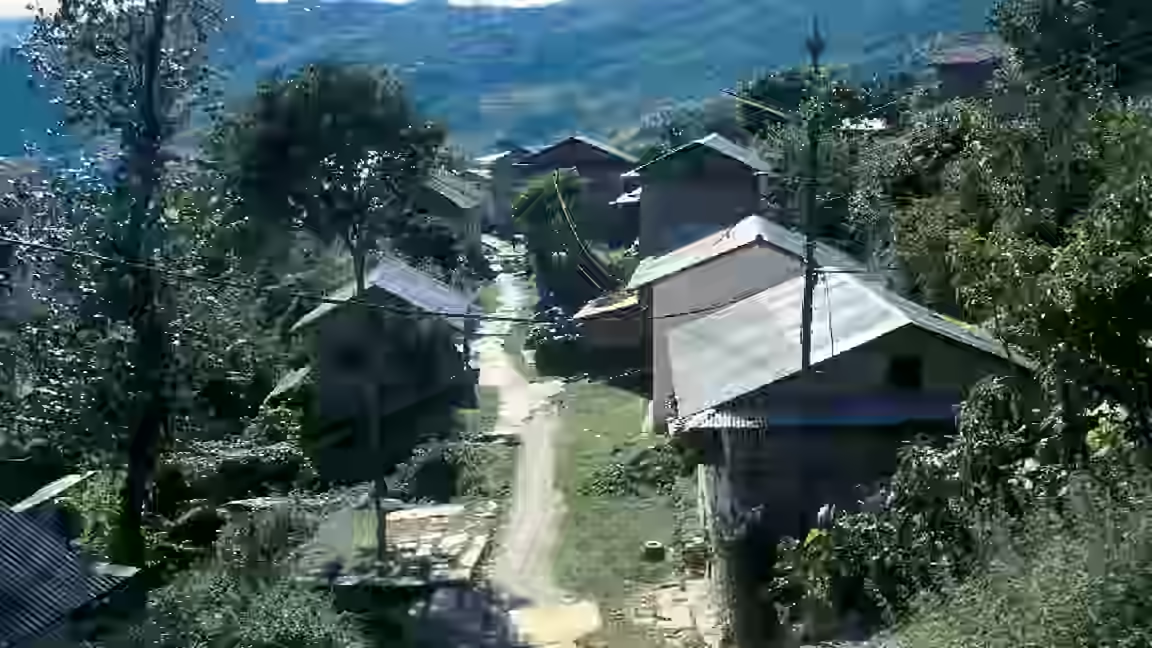
Local reporting captured the human side of the alert. In the Philippines, people in parts of the east and south were urged to move away from the coast. In Indonesia’s Talaud Islands, officials told residents to stay alert and sent schoolchildren home. On Siargao, water activities were temporarily halted. Those steps show how tsunami warnings ripple through daily life even when the sea surge remains small.
The BBC account also recorded early signs of what the alert meant on the ground. In the Talaud Islands, a local official said conditions were calm and only small waves were being reported. In the Philippine city of Tandag, local authorities noted an inch-long wave, a reminder that not every tsunami warning translates into a major inundation, but every warning requires attention until the all-clear is issued.
For emergency managers, the key fact is that the warning did not disappear because the hazard was imaginary; it disappeared because the risk window closed. The lifting of the alert after a few tense hours does not erase the anxiety caused by the quake or the disruption to schools, water activities and coastal routines. It does, however, suggest that the system for detecting and communicating tsunami risk worked quickly enough to move people out of harm’s way.
The episode also underscores how interconnected Pacific disaster response has become. A quake off the Philippines can prompt alerts across national boundaries, with the same seismic event watched from Manila to Jakarta to Palau. That cross-border vigilance is now part of the region’s emergency rhythm, especially in places that sit on the Pacific Ring of Fire and know that even a warning that ends quickly can still carry serious implications.
The immediate danger passed, but the event left behind a familiar lesson: in a quake-prone region, the difference between a scare and a catastrophe often depends on how fast the warning reaches the coast.