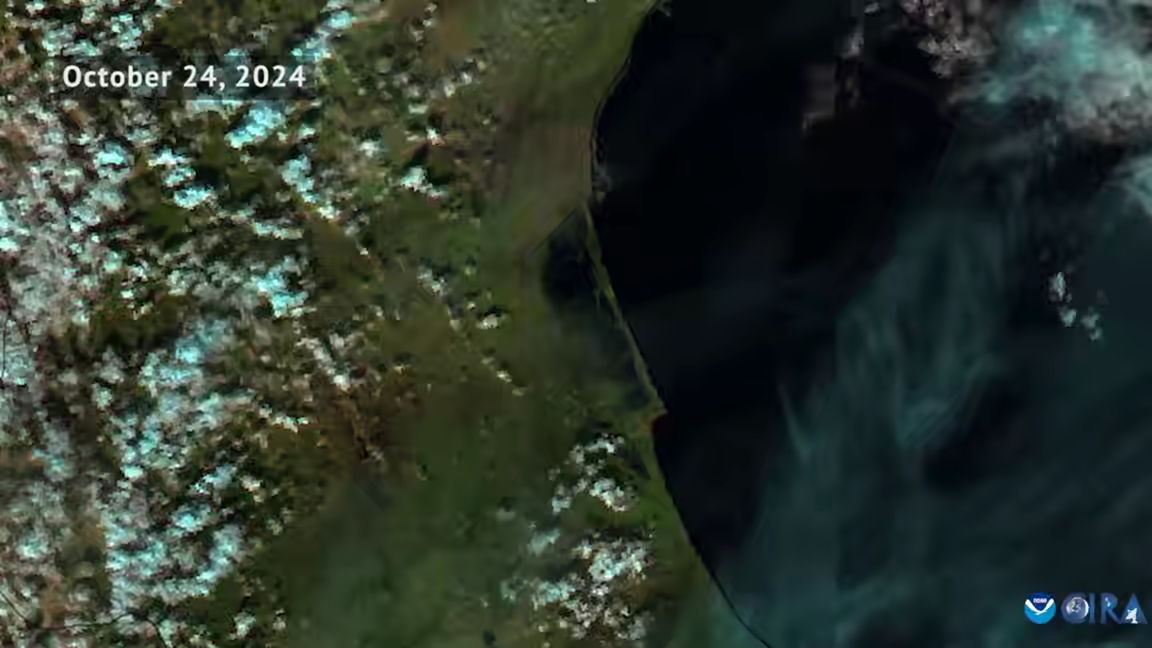
Carlos Mazón announced his resignation as president of Spain’s Valencia region after sustained criticism of his administration’s response to the catastrophic floods of October 29, 2024. The disaster killed 229 people in Valencia and generated months of protests demanding that the conservative People’s Party politician leave office.
Mazón said he could no longer continue and appealed to the regional parliamentary majority to choose a successor. He acknowledged making mistakes and repeated an apology, while denying that his actions were driven by bad faith or political calculation. He did not name a replacement or call an immediate election.
Under the succession process described in local reporting, Mazón was expected to remain in a caretaker role until a new regional president was selected. The People’s Party would need support from the far-right Vox party to install a successor. Once the resignation was formally published, lawmakers would have 12 working days to present a candidate, with an early election possible if they failed to agree.
Anger focused heavily on the timing of the regional government’s emergency response. A warning was not sent to residents’ mobile phones until 8:11 p.m., after flooding had already trapped people in homes, garages and vehicles. Mazón later said he reached the regional crisis coordination centre at 8:28 p.m.
Questions also persisted about his whereabouts during the worst hours of the emergency. Mazón spent more than three hours at lunch with journalist Maribel Vilaplana as the situation deteriorated. Vilaplana said the meal ran from 3 p.m. until around 6:30 or 6:45 p.m. and that she did not understand the seriousness of events at the time. She said Mazón received calls during the lunch but did not share their contents with her.
Public pressure intensified around the first anniversary of the disaster. Bereaved relatives heckled Mazón at a state memorial, and demonstrations across Valencia repeatedly blamed his leadership for failures in the response. A survey cited in reporting found that three-quarters of Valencians thought he should resign.
Separate political and judicial inquiries were examining the events. A Valencia judge was investigating whether negligent decisions may have contributed to avoidable deaths and had described evidence of delays in convening the crisis centre and warning the public. The inquiry had not established Mazón’s criminal responsibility. His departure resolved the immediate question of his political future, but it left his party and Vox to negotiate the region’s next government as scrutiny of the disaster response continued. Victims’ associations said resignation should be followed by judicial testimony, signaling that political accountability would not satisfy their demands for a full reckoning.


