Pakistan has launched a two-week vaccination drive targeting more than 57 million children in an effort to curb rising measles, rubella and polio cases. The National Emergency Operations Center said the campaign began on Monday and will run through Nov. 29, making it one of the largest public-health efforts in the country this year.
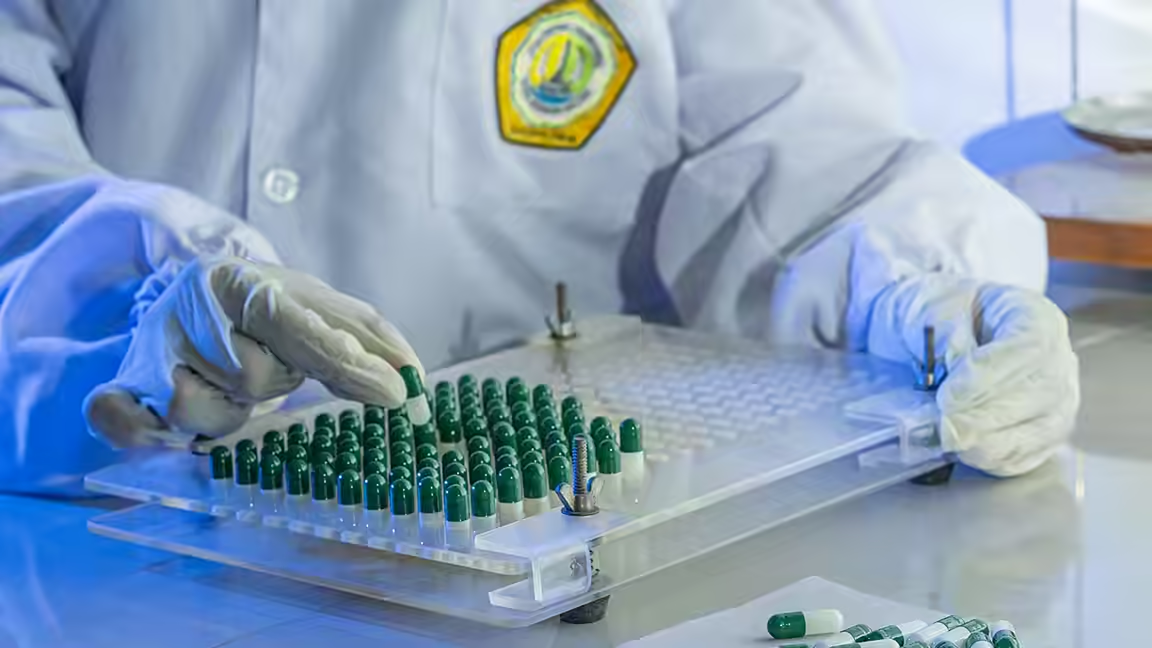
The campaign is split between two sets of shots and drops. Officials said 34.5 million children will receive measles and rubella vaccine, while 23.3 million children will be given polio drops. The size of the drive reflects the scale of the problem. Over the past three years, Pakistan has recorded more than 131,000 measles cases, and since January the country has reported 30 new polio cases. Those figures show why the authorities have chosen a broad, simultaneous response rather than a narrower campaign aimed at one disease at a time.
WHO said more than 140,000 health workers were trained to support the vaccination teams. That level of preparation suggests the drive is intended to reach beyond routine clinic visits and into a system that can move quickly across districts, schools and communities. Pakistan regularly runs polio campaigns, but measles and rubella drives are usually launched only every two or three years. The current effort therefore marks a notable escalation in response to the recent rise in case counts.
Measles remains especially dangerous for young children. The disease typically begins with high fever and a spreading rash, and while most children recover, WHO says it is still one of the leading causes of death among young children. That makes a measles campaign more than a preventive exercise; it is also an attempt to keep already strained health systems from being pushed by avoidable infections.
Pakistan's polio problem adds another layer of urgency. Along with neighboring Afghanistan, it is one of only two countries where the virus has not been stopped. That long-running failure has made the country a central focus of eradication efforts, but also a target for attacks. Militants have long claimed the campaigns are a Western plot to sterilize children, and more than 200 polio workers and police officers assigned to protect them have been killed since the 1990s.
The security risk is one reason vaccination drives in Pakistan often face obstacles beyond logistics. Health workers not only have to reach children, they also have to do so in an environment where rumors and intimidation can reduce coverage. The current campaign is a response to that challenge as much as to the medical caseload itself.
The broader public-health message is clear. Pakistan is trying to act before measles and polio spread further, but the success of the campaign will depend on access, trust and the ability to keep teams safe. The state has the scale and the manpower for a major push. What remains uncertain is how far those resources will reach in the face of persistent resistance.