Indonesian authorities said more than 170 people who were on Mount Semeru when it erupted were helped back to safety after the volcano sent ash and searing material down its slopes. The AP report says about 178 climbers, guides, porters, tourism officials and tourists started the ascent on Wednesday and became stranded at the Ranu Kumbolo camping area as the eruption unfolded on Java island's highest peak.
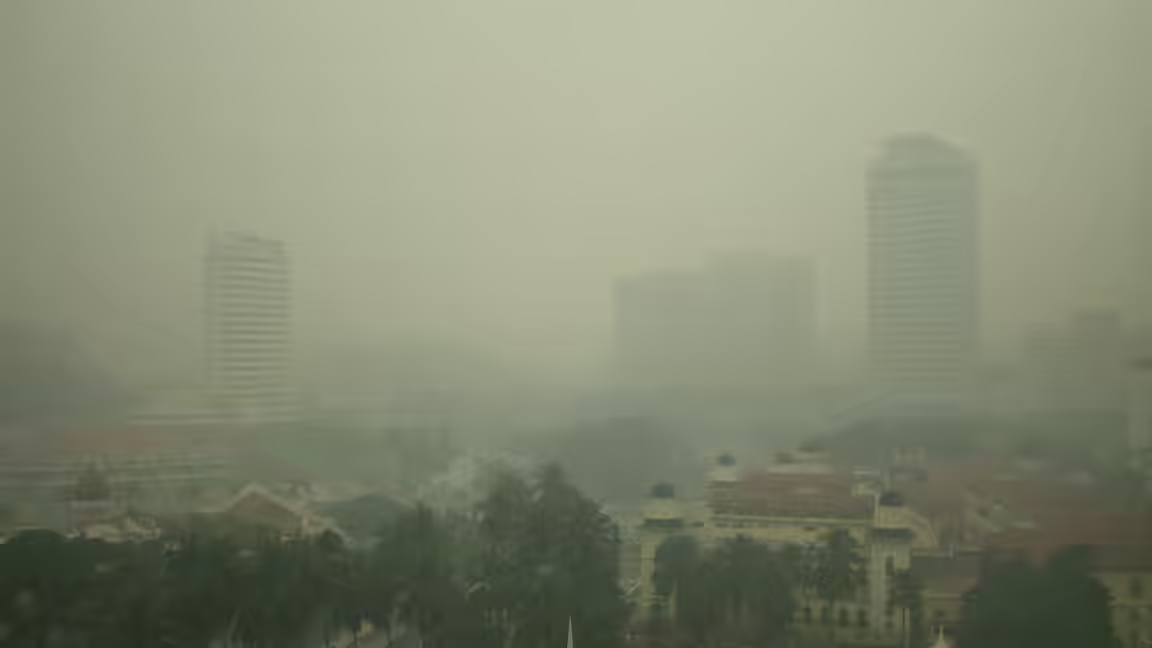
Officials described the camping area as safe because it sat outside the main danger zone, but that did not mean the group escaped the eruption untouched. The source says climbers may have been exposed to volcanic ash, and the eruption blanketed several villages while cutting sunlight and disrupting daily life in the surrounding area. Even when people are outside the direct flow of lava or hot clouds, ash can still make a rescue more difficult and create health risks.
The eruption itself was severe. The AP report says pyroclastic density currents traveled as far as 13 kilometers down the slopes, while a thick column of hot clouds rose two kilometers into the air. Indonesia's Geology Agency raised the alert to its highest level, and officials warned residents to keep clear of the Besuk Kobokan River valley, where searing gas and volcanic material moved through the landscape.
The local response was immediate. Nearly 1,000 residents in three villages at greatest risk were evacuated to government shelters, according to the disaster agency spokesperson. No casualties were reported in the supplied evidence, which is significant given the scale of the eruption and the number of people in the area. In a country with many active volcanoes, that kind of evacuation is often the difference between a frightening event and a deadly one.
The report also notes that local and social media showed ash sweeping through plantations and forested valleys. That imagery helps explain why officials were urging people to stay away from the danger zone even after the first blast. A volcanic eruption is not only a momentary event; ash, unstable slopes and the possibility of renewed activity can keep the danger alive for hours or longer.
What stands out in the AP account is how quickly a climbing route turned into an emergency response. The group on the mountain was apparently in a safe location relative to the main flow, but the eruption still triggered a rescue, a wider evacuation and a full alert response from scientists and disaster officials.
The emergency response also reflects how Indonesian volcano monitoring works in practice. Once Semeru's alert was raised to the highest level, officials were able to define a danger zone and direct people away from the valley most exposed to hot gas and lava flow. The AP report says scientists were even considering expanding the exclusion area, which shows that the response was still being adjusted as the eruption developed. In that setting, the climb turned into a race against ash, changing conditions and the need to move dozens of people off the mountain before the danger spread further.