# Hayli Gubbi Volcano Erupts in Ethiopia, Sending Ash Across the Red Sea
A long-dormant volcano in Ethiopia’s Afar region erupted on November 23, 2025, sending ash plumes across the Red Sea toward Yemen and Oman. AP reported that the Hayli Gubbi volcano erupted on Sunday morning and left the nearby village of Afdera covered in dust, turning a remote geological event into a regional hazard.
The eruption is notable first because of its scale and second because of its rarity. A local administrator, Mohammed Seid, said there was no previous record of an eruption by Hayli Gubbi. That means the event is not just another chapter in a well-studied eruption cycle; it is an unusual occurrence from a volcano that had been dormant long enough for people to regard it as effectively quiet.
The AP report says there were no casualties, which is encouraging, but it also warns of economic consequences for livestock herders in the area. Seid said many villages had been covered in ash and that animals had little to eat. That is a reminder that volcanoes do not need to kill people directly to create serious damage. They can disrupt grazing, movement and the local economy almost immediately.
The Toulouse Volcanic Ash Advisory Center in France also reported the eruption, using satellite imagery to confirm what was happening. That kind of outside monitoring is important because ash plumes can affect aviation and long-distance movement, not just the villages closest to the volcano. The source does not describe flight disruptions in detail, but the ash was clearly visible enough to be tracked beyond Ethiopia’s borders.
Residents described a dramatic experience. Ahmed Abdela said he heard a loud sound and a shock wave, and he compared it to a sudden bomb that threw smoke and ash into the air. That description captures how abrupt volcanic activity can feel to people on the ground, especially in a region already prone to earthquakes. The report says the village near the Danakil desert was still covered in ash the following day.
The local tourism impact was immediate too. Tourists and guides heading to the desert were stranded in the village, according to Abdela. That means the eruption affected not only residents and livestock herders but also the tourism routes connected to the Danakil desert, which is known as a destination in the region. The source does not quantify losses, but it shows that movement in and out of the area was interrupted.
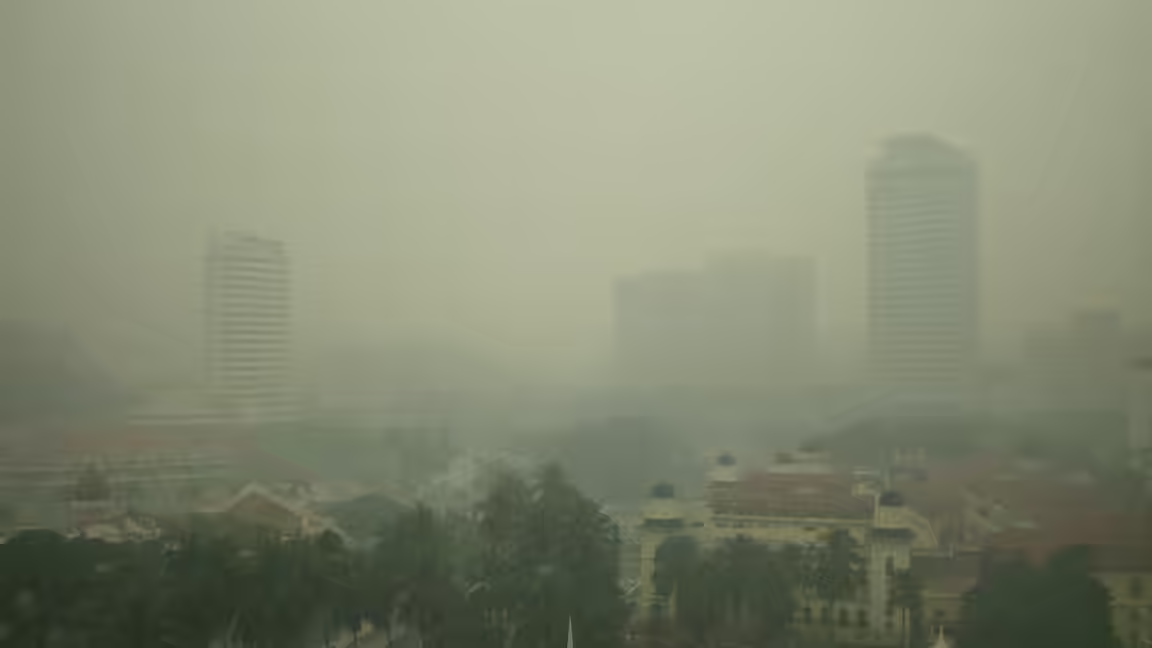
The photos and videos released by local authorities show a towering ash plume rising from the volcano. Those images matter because they confirm the scale of the event in a way that words alone cannot. A plume that can be seen and tracked from satellite is a regional event, not just a local tremor.
For now, the key facts are simple: a long-dormant volcano erupted, ash spread across a wide area, and communities near the site were left dealing with dust, disrupted travel and concern for livestock. The absence of casualties is fortunate, but the eruption still poses a serious environmental and economic problem for the people living closest to it.