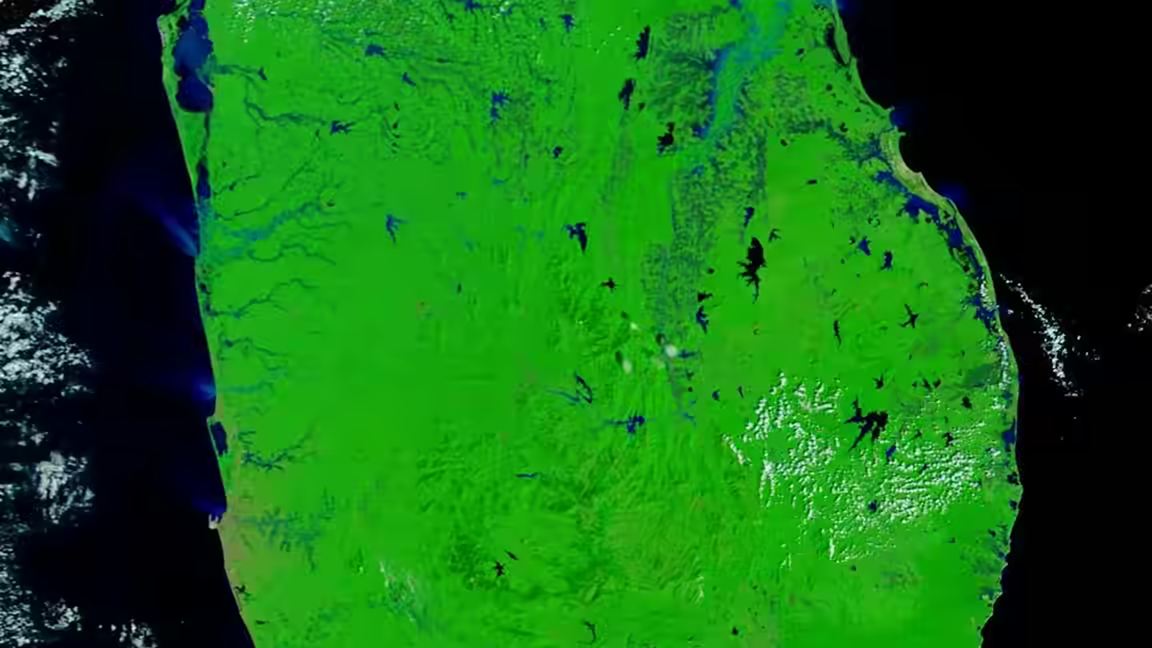
Sri Lanka was battling a severe stretch of weather on Nov. 27, 2025, after heavy rain triggered landslides and floods that killed more than 40 people and left 21 others missing, according to officials.
The government's disaster management center said 25 of the reported deaths occurred in the mountainous tea-growing districts of Badulla and Nuwara Eliya in the central province, about 300 kilometres east of Colombo. Ten people were injured. The same areas accounted for the missing people, showing how concentrated the damage was in the hill country where slopes, roads and rail lines are all vulnerable when rain saturates the ground.
Authorities stopped passenger trains in parts of the region and closed roads after rocks, mud and trees fell onto tracks and blocked key routes. Local television footage showed crews clearing debris from railway lines while floodwaters inundated some sections. The disruptions extended beyond transport alone because reservoirs and rivers overflowed, cutting access between provinces and trapping people in flood-hit areas.
The AP report described a series of rescue operations that underscored how widespread the flooding had become. An air force helicopter rescued three people stranded on the roof of a house marooned by floodwater, while navy and police boats ferried residents to safety in other areas. Near the eastern town of Ampara, about 410 kilometres from Colombo, a car was swept away by floodwater, killing three passengers.
The severe weather had been building for days. Officials said Sri Lanka began dealing with the storm system the previous week, then faced heavier downpours over the weekend that flooded homes, fields and roads. The result was a mix of landslides in the hills and flash flooding in lower areas, a combination that often overwhelms transport and emergency services at the same time.
Even with rescue teams on the move, the disaster management center warned that the toll could still rise because people remained unaccounted for in the hardest-hit districts. The figures offered a reminder that in Sri Lanka's central highlands, a single weather system can quickly become both a transport emergency and a mass-casualty event.
Sri Lanka's transport shutdowns show how quickly the weather system began to affect daily life. Passenger trains were halted after rocks, mud and trees fell onto tracks, while some roads were closed entirely. That kind of disruption matters because it slows evacuations, delays aid deliveries and makes it harder for families in the hill country to move away from unstable ground.
The rescue footage also captured the scale of the flooding. Boats, helicopters and roadside crews were all needed at the same time, which means the emergency response had to span mountains, rivers and low-lying towns. The AP report suggests the toll was still evolving as officials counted the missing, especially in Badulla and Nuwara Eliya, where steep terrain and saturated soil can turn heavy rain into landslides within hours.
The disaster center's numbers also show how uneven the damage was. A large share of the deaths came from just two districts, which suggests slope failures and blocked roads were the main killers rather than one single flood pulse. That pattern is common in Sri Lanka's central hills, where rain can turn everyday transport routes into traps.


