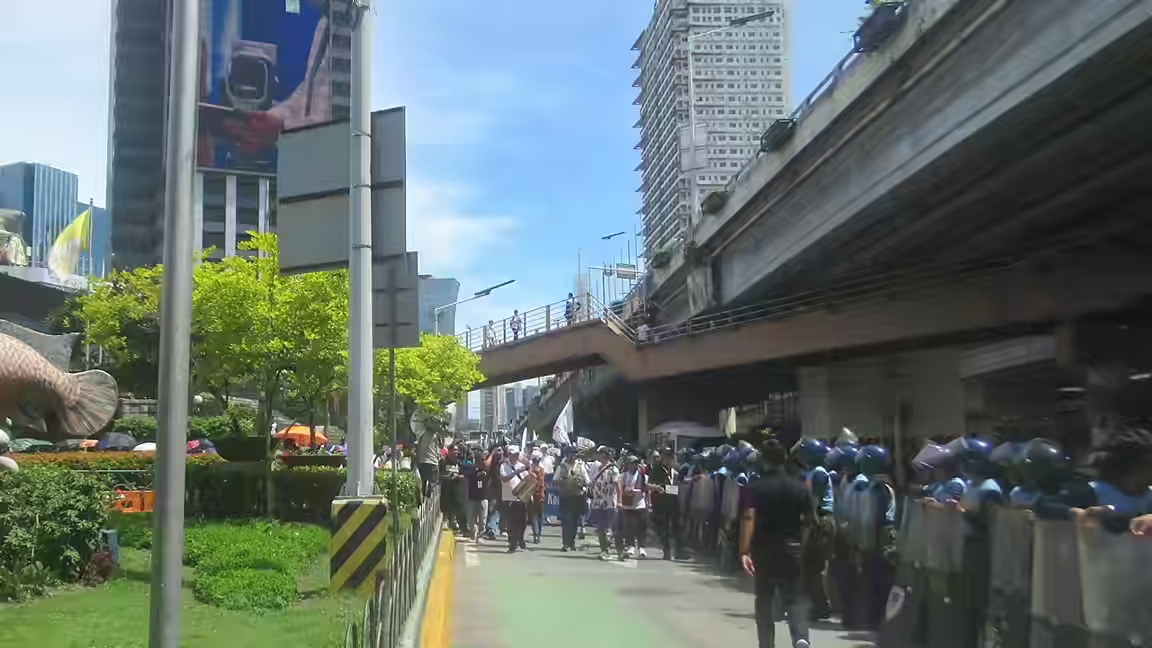
Thousands of people marched across the Philippines on November 30 to denounce corruption tied to the country’s flood-control scandal, according to the supplied DW report. The protests were spread across multiple locations, with a major rally in Manila and other gatherings led by religious groups and left-wing organizers. The scale of the mobilization reflected how deeply the issue had cut into public trust.
At the center of the anger were allegations that substandard, defective or non-existent flood control projects had been funded despite the country’s long exposure to deadly flooding. That matters in a place where infrastructure failures can have direct consequences for life and property. DW reported that President Ferdinand Marcos Jr. had been trying to calm public outrage for months, while investigators and prosecutors moved against several officials in the public works system.
The report says eight members of the Department of Public Works and Highways had been arrested just days earlier, with officials promising that bigger figures could soon face charges. That detail suggests the protest movement was not just about past wrongdoing but also about whether accountability would extend beyond lower-level employees. The demonstrations were therefore both a reaction to corruption and a demand for the justice system to keep going.
One of the most visible scenes came at the EDSA “people power” monument in the capital region, while other protesters gathered near Luneta Park close to the presidential palace. The report also says around 17,000 police officers were deployed in Manila. Those numbers show the government treated the day as a major public-order event, even though the core issue was political rather than violent. The fact that churches helped lead the protests also highlights the broad coalition behind the demonstrations.
What the supplied evidence makes clear is that the scandal had become bigger than a technical investigation into flood projects. It had turned into a national legitimacy test. Protesters were not only asking for punishment; they were demanding that the state prove it could police its own infrastructure system in a country where poor flood control can mean repeated disaster.
The police deployment and church involvement show how broad the public response had become. A corruption story about flood projects might normally stay inside bureaucratic or legal channels, but the DW report shows it had become a street-level political issue involving faith groups, activists and ordinary citizens. The choice of the EDSA monument as a rally site also gives the protests symbolic weight, since the location is associated with democratic struggle in the Philippines. The evidence does not say how the government will respond next, only that arrests have begun and more are expected. That makes the demonstrations an accountability test still in progress. That makes the demonstrations a pressure test for Marcos’s government as much as a protest against waste, because the public is now watching for whether the arrests lead to real prosecutions. The demonstrations therefore functioned as both a public rebuke and a demand for follow-through, with the next stage depending on whether prosecutors keep building cases. The political significance of the day lies in the fact that the scandal had already reached the street and now had to be answered in public rather than behind closed doors. That pressure on officials is likely to continue as long as flood-control money remains a symbol of abuse and unfinished work.


