# Anti-Sanchez Protest Draws Tens of Thousands in Madrid Amid Corruption Pressure
*Event date: 2025-11-30*
By IO Digest Desk
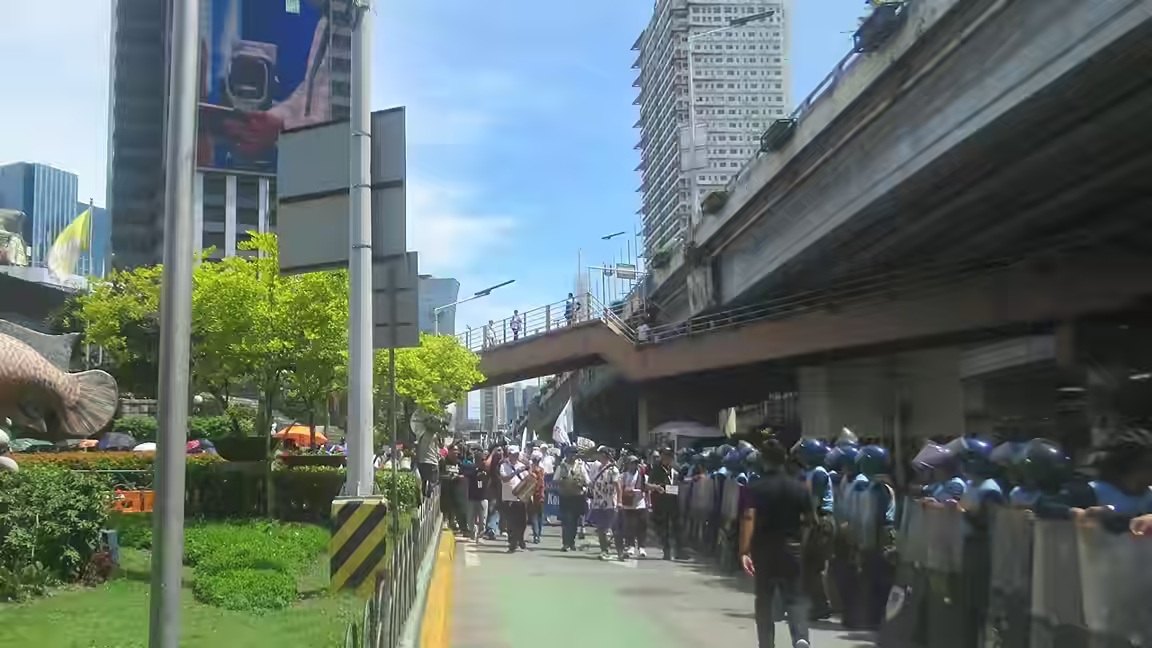
Tens of thousands of demonstrators gathered in Madrid on November 30, 2025 to demand the resignation of Spanish Prime Minister Pedro Sanchez, turning a corruption controversy around figures linked to his government into a fresh display of opposition strength on the streets. The rally, organized by the conservative People’s Party, brought together senior party leaders, right-leaning supporters and former officials under the slogan “Mafia or democracy?”
AP reporting carried by DW said protesters filled central Madrid carrying Spanish flags and placards that read “Enough is enough,” “Not another day,” and “Resign now.” The opposition People’s Party, led by Alberto Nunez Feijoo, estimated the crowd at around 80,000, while Spain’s Interior Ministry put the turnout closer to 40,000. Even using the lower estimate, the demonstration was one of the largest recent mobilizations against Sanchez, whose previous major protest challenge in the capital came in June.
The immediate catalyst was a Supreme Court decision earlier in the week ordering the pre-trial detention of Sanchez’s former transport minister Jose Luis Abalos and Abalos’s ex-adviser Koldo Garcia. The case intensified an already hostile political climate by giving the opposition a judicial development around which to rally. Feijoo’s party used the moment to connect allegations of corruption with broader voter frustration over living costs and housing.
That broader frustration was visible in comments from people at the rally. One attendee, 18-year-old student Daniel Noguera, told AFP that constant price increases and the worsening difficulty of finding housing had made the national situation feel untenable. His remarks pointed to how corruption scandals often gain traction not only because of the legal issues themselves, but because they reinforce a wider sense that government is failing on daily concerns.
Sanchez has tried to counter that narrative by arguing that attacks from right-wing parties are designed to weaken him politically rather than uphold accountability. In office since 2018, he has repeatedly said he does not intend to leave before the parliamentary term ends in 2027. That stance means the street protests are unlikely, on their own, to force a resignation. But they do matter as a measure of opposition energy and as a sign that the controversy has moved beyond party headquarters and courtrooms into mass politics.
The People’s Party ensured the symbolism was unmistakable. Madrid mayor Jose Luis Martinez-Almeida addressed the crowd, as did former prime minister Mariano Rajoy, giving the gathering the feel of a coordinated show of institutional and historical weight rather than a one-off demonstration. By placing senior figures on stage, the PP signaled that it wants to own the anti-Sanchez campaign and frame it as a democratic response to alleged corruption.
Whether the protest changes the balance of power in Madrid will depend on how the legal case evolves and whether the government can contain the damage. For now, the November 30 rally showed that Sanchez remains politically resilient but also highly exposed. The prime minister still controls the timetable of his government. The opposition, however, demonstrated that it can still put large numbers of people in the streets and turn a court ruling into a national referendum on credibility.


