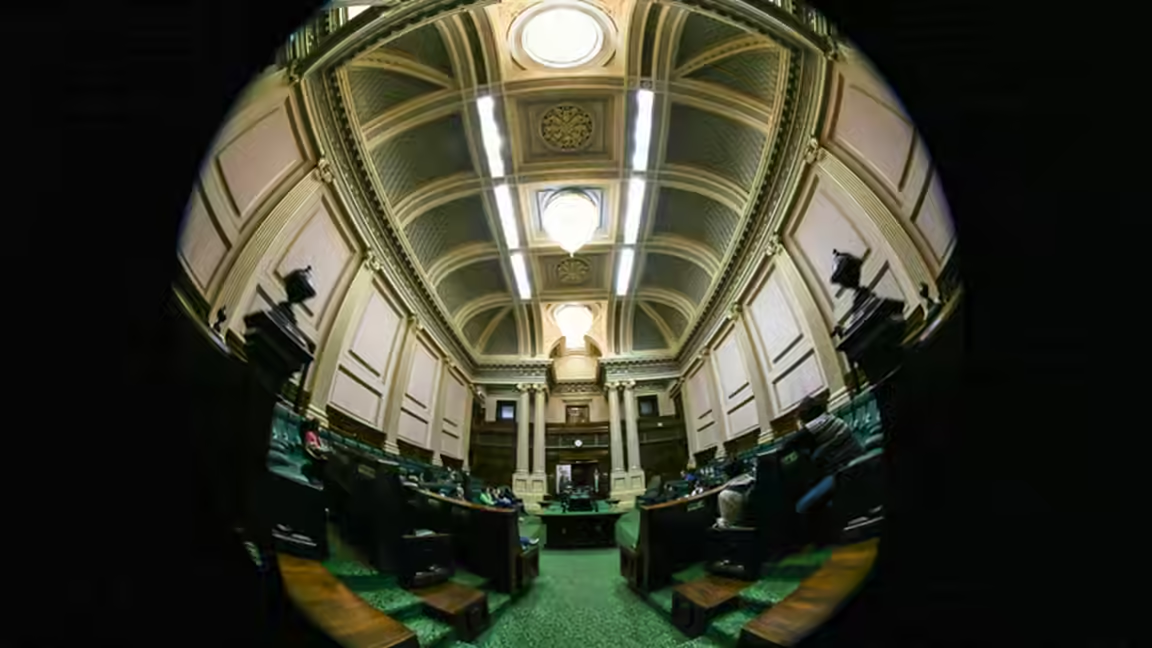
Falkland Islanders voted on Thursday to elect eight members of the Legislative Assembly in a contest that will shape the self-governing territory’s next governing team and its representation in the months ahead.
According to Falkland Islands Television’s election-night coverage, the count was still unfolding through the evening as officials prepared to announce turnout and constituency results. The broadcast log showed the Returning Officer, Dr. Andrea Clausen, preparing to announce the turnout figure before station-by-station results began coming in from Camp and then Stanley.
The election is one of the most important regular political events in the islands’ calendar because the assembly is the body through which local political authority is exercised. The vote determines who will sit in the territory’s legislature and helps set the direction of local policy and administration.
FITV’s live updates indicate that results were being announced after polling closed, with separate updates for Camp and Stanley as the count progressed. That format reflects the islands’ small-scale election administration, where local constituencies report in sequence and the full tally is assembled at the end of the night.
The election also matters because the Falkland Islands’ political system is small enough that each seat carries substantial weight. With only eight elected assembly members to choose, voters are effectively deciding not only individual representatives but also the balance of voices that will shape debates over public services, infrastructure, and relations with the United Kingdom.
The broadcast excerpt does not provide the final numbers, turnout rate or winning candidates, but it confirms the central procedural facts: polling took place, turnout was announced by the Returning Officer, and constituency results were expected to follow later in the night.
That makes the election less a question of dramatic national realignment and more one of local continuity and accountability. In a territory where political life is tightly focused on the practical concerns of a small population spread across islands and settlements, turnout and representation remain central measures of democratic engagement.
Further details from the count were expected after the live updates recorded by FITV. For now, the election has delivered the basics of democratic process: polling stations open, ballots cast, and the assembly seats on offer now moving toward a final result.
The official outcome will determine who occupies the eight elected positions in the Legislative Assembly and will give a clearer picture of the electorate’s priorities in a territory where local government remains closely watched and widely personal.


