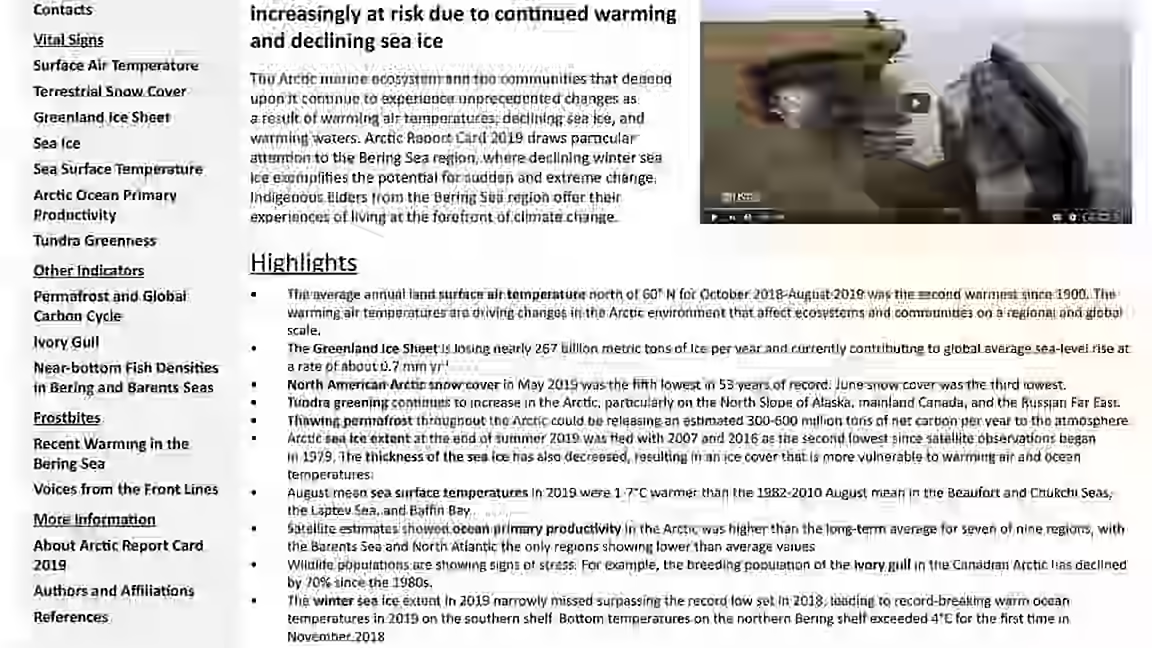
The Arctic has recorded its warmest year since measurements began, according to NOAA's annual Arctic Report Card, which the AFP report in the packet says found temperatures from October 2024 to September 2025 averaging 1.60 degrees Celsius above the 1991-2020 mean.
That is a large departure from the norm for a region already known to be warming faster than the global average. The report says the year included the Arctic's warmest autumn, second-warmest winter and third-warmest summer since 1900. Those seasonal records matter because they show the heat was not concentrated in one short spell; it spread across the annual cycle.
The packet also says the Arctic experienced the smallest peak sea ice extent in the 47-year satellite record in March 2025. That is a key signal because sea ice is one of the clearest indicators of Arctic change. When the spring maximum itself falls to a record low, the region enters the melt season with less frozen cover than before, making the summer outcome even more vulnerable.
Scientists quoted in the report describe the trend as alarming and rapid. The article says Tom Ballinger called it seemingly unprecedented in recent times and possibly even back thousands of years, while Walt Meier pointed to immediate implications for polar bears, seals and walrus that depend on ice for hunting, transport and raising pups. Those impacts turn an abstract temperature figure into a concrete ecological problem.
The report also explains some of the mechanisms behind the warming. Rising temperatures increase atmospheric water vapor, which traps heat, while the loss of bright sea ice exposes darker water that absorbs more solar energy. That feedback loop helps explain why the Arctic can warm so quickly once the ice begins to retreat.
The consequences are not confined to wildlife. The packet says sea ice loss and increased rainfall inject more freshwater into the North Atlantic, affecting ocean density and potentially hindering the Atlantic Meridional Overturning Circulation, including the Gulf Stream. It also says Greenland's land-based ice loss contributes to sea-level rise and that Arctic warming can weaken the temperature contrast that helps keep cold air near the pole, allowing more frequent cold-air outbreaks farther south.
Modeling cited in the report suggests the Arctic could see its first summer with virtually no sea ice by 2040 or sooner. That is a sobering projection, but it is presented as modeling rather than certainty, so the article should keep it in that frame. The point is not that the Arctic has already crossed that threshold, but that the observed warming is moving the region closer to it.
The story is therefore about more than a single record. It is about the Arctic moving through a chain of warming, ice loss and cascading effects that reach from local ecosystems to global weather systems. NOAA's latest report card does not just update the numbers; it reinforces the idea that the Arctic remains one of the fastest-changing parts of the planet.
In that sense, the report card is a warning about a system already in motion, not a single exceptional year.