# Australian bushfires kill one and destroy at least 300 properties as Victoria declares emergency
*Event date: 2026-01-11*
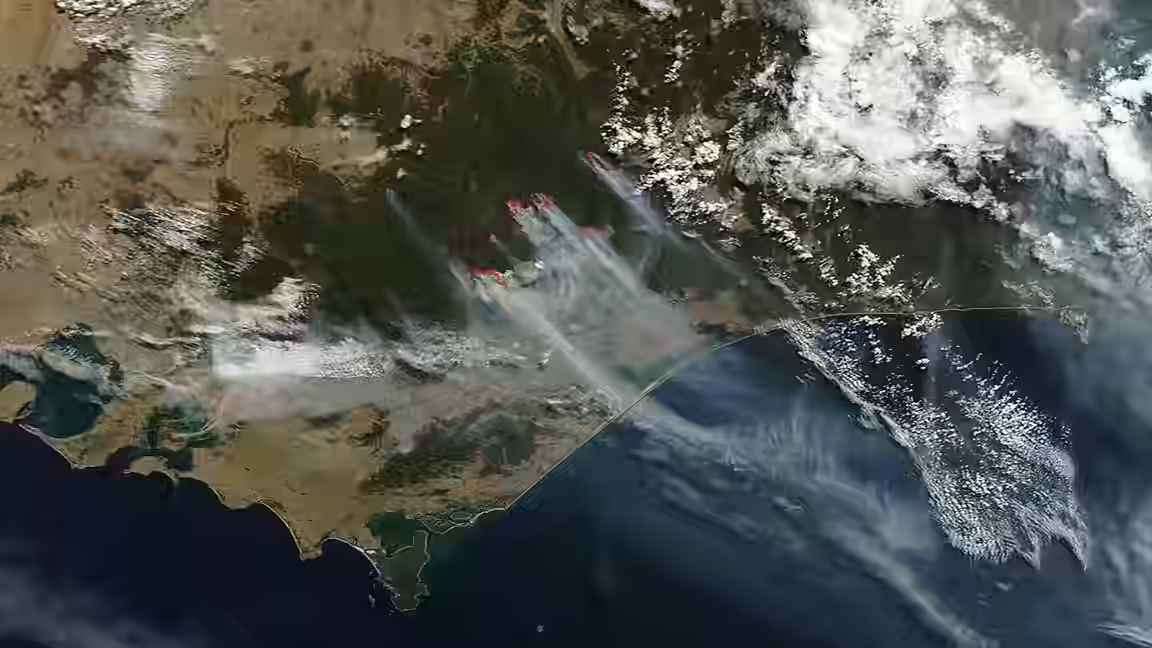
One person has died and at least 300 properties have been destroyed in bushfires tearing across southeastern Australia, with Victoria declaring a state of emergency as thousands of firefighters and more than 70 aircraft battled the blazes. BBC News reported that fires were burning in dozens of locations, mainly in Victoria but also in New South Wales, after several days of very hot, dry and windy conditions that officials fear could keep the crisis alive for weeks.
The scale of the fire zone is already immense. According to Victoria Premier Jacinta Allan, about 350,000 hectares had burned across the state by 8 a.m. local time on Sunday, with 30 active fires still burning and 10 of particular concern. Residents in more than a dozen communities were advised to leave their homes. Those figures make clear that the emergency is not confined to one isolated district but is instead a broad and shifting threat across multiple population centers and rural areas.
Police said human remains were found in the village of Gobur near Longwood, north of Melbourne, though the victim had not yet been identified at the time of reporting. Allan said the recovery effort was difficult and confronting for emergency workers, underscoring the human toll behind the statistics about acreage and structures lost. Smoke from the fires was also affecting air quality in many parts of Victoria, including metropolitan Melbourne, extending the impact well beyond communities in the direct path of the flames.
The BBC report highlighted Harcourt as one of the worst-hit towns, where firefighter Tyrone Rice lost his own home while he was out battling one of the fires. That detail captures the intensity of the emergency: even the people responding to it are vulnerable to catastrophic personal loss. Local officials and reporters described destruction in several towns as devastating, with some homes reduced to little more than collapsed roofing.
Authorities said these were the worst fires to hit southeastern Australia since the 2019-2020 bushfires that destroyed an area the size of Turkey and killed 33 people. The evidence packet does not support attributing any single blaze directly to climate change, but it does note the scientific consensus that climate change is making the hot, dry conditions conducive to bushfire more common. The confirmed news remains urgent on its own terms: one person is dead, hundreds of properties are gone, a state of emergency is in place in Victoria, and officials do not believe the worst of the fire danger has yet passed.