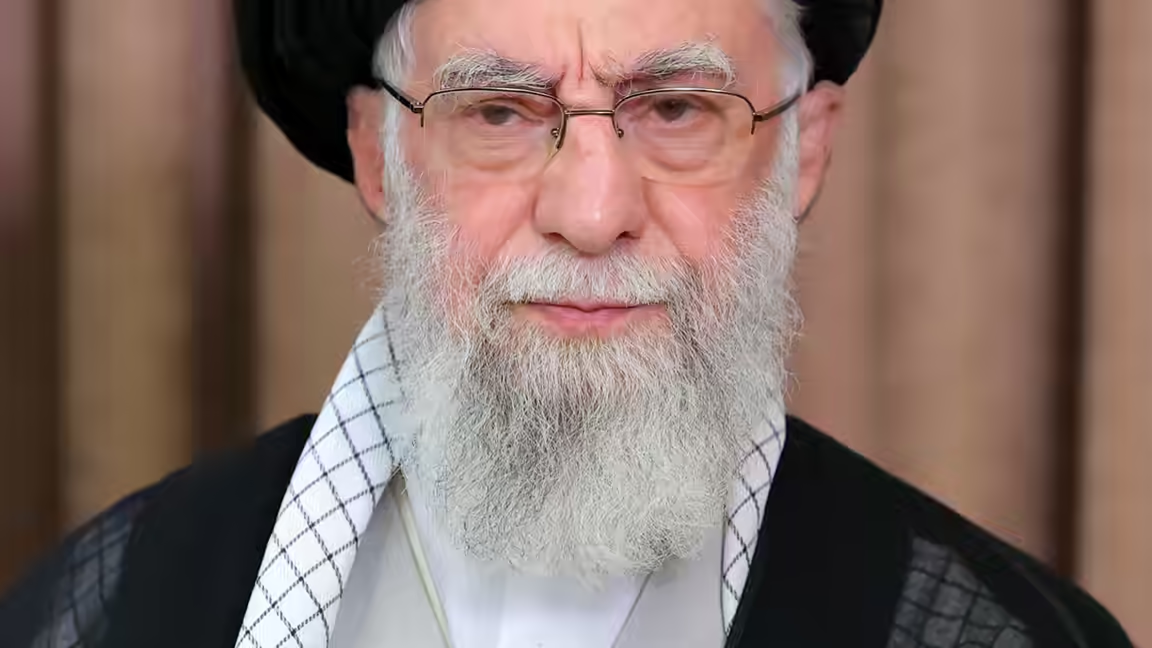
DUBAI, United Arab Emirates - Event date: March 8, 2026. Iran’s Assembly of Experts has named Mojtaba Khamenei, the son of the country’s late supreme leader, as the Islamic Republic’s next ruler, according to state TV and an AP report from the region.
The choice gives the leadership of Iran to a 56-year-old cleric with close ties to the Revolutionary Guard at a moment when the country is still trading attacks with the United States, Israel and Gulf Arab states. The source packet says he had long been considered a contender, even before the war killed his father, Ali Khamenei, and that he had never previously held an elected or appointed government post.
The AP account describes the selection as a major political decision inside a system that normally values clerical authority and regime continuity above open competition. The report also notes there was some internal dissent over making the top office seem hereditary, because critics compared it to the dynastic logic of the monarchy overthrown in 1979. Even so, the Assembly appears to have preferred a leader they believe can prosecute the war and preserve the system.
The implications are larger than domestic symbolism. The supreme leader controls Iran’s armed forces and has final say on the nuclear file. That matters because the report says Iran’s key nuclear sites were already damaged by U.S. bombing, but it still retains highly enriched uranium that is technically close to weapons-grade. In other words, the new leader inherits both a battlefield crisis and the possibility of a different nuclear trajectory.
The international reaction was immediate. President Donald Trump said the choice was unacceptable to him and suggested he wanted someone who would bring harmony and peace to Iran. Israel has already described the younger Khamenei as a potential target. Meanwhile, Iranian hardliners and the Revolutionary Guard publicly backed the selection.
The military situation around the appointment remains volatile. Iran has continued missile and drone attacks on Israel and Gulf states, and the AP report said the war has already driven oil prices above $100 a barrel while tightening gas supplies after Qatar cut production. Saudi Arabia has sharpened its warnings after intercepting a drone at a major oil field, saying it would be the biggest loser if Iran keeps attacking Arab states.
For Iran, the appointment may look like continuity. But in practical terms it is an attempt to consolidate authority during wartime, rally the security apparatus and prevent any vacuum at the top of the system. For the region, it means the conflict now has a new figurehead whose authority may endure, even if the fighting does not.


